
Football
Morocco–Spain–Portugal: The 2030 FIFA World Cup as a driver of an unprecedented economic partnership


In Rabat city, preparations for the 2030 FIFA World Cup are already translating into a tripartite economic dynamic between Morocco, Spain, and Portugal, with public and private stakeholders outlining the contours of a legacy set to extend far beyond the sporting arena.
At the Mohammed VI Football Complex—now a showcase of Morocco’s sporting and institutional development—the Morocco–Spain–Portugal Business Forum dedicated to preparations for the 2030 World Cup was held on Tuesday, February 10, 2025.

This economic gathering goes well beyond the sporting dimension, positioning itself within a framework of strategic cooperation among the three host countries of this historic edition, organized across two continents.
Co-organized by the General Confederation of Moroccan Enterprises (CGEM), the Spanish Confederation of Business Organizations (CEOE), and the Portuguese Business Confederation (CIP), the forum brought together public decision-makers, business leaders, and economic representatives from Morocco, Spain, and Portugal, in the presence of the Spanish Ambassador to Morocco, Mr. Enrique Ojeda Vila, and the Chargé d’Affaires of the Portuguese Embassy in Rabat, Mr. Nuno Gabriel Cabral.
From the opening session, emphasis was placed on the unprecedented nature of this World Cup, which will see, for the first time, three neighboring countries—linked by history and geography—coordinate their efforts to host more than 100 matches, within a framework of continuous mobility across the host cities and territories.
This organizational reality, which requires a high level of harmonization in infrastructure, transport, logistics, and security, was presented as an exceptional opportunity to structure long-term and sustainable economic partnerships.

Speaking at the forum, Mr. Fouzi Lekjaa, President of the Royal Moroccan Football Federation (FRMF) and Minister Delegate to the Minister of Economy and Finance in charge of the Budget, highlighted the strategic significance of the venue hosting the event, stating:
“This complex reflects the enlightened vision of His Majesty the King for the development of sport in general, as well as for designing and monitoring a development model for Moroccan youth, and indeed for youth at the continental and global levels.”
He recalled that the complex hosts a permanent FIFA office and has become a central hub for football development serving youth worldwide.
Mr. Lekjaa also praised the recent success of the Africa Cup of Nations organized in Morocco a few weeks earlier, noting that “everything was done, built, and organized by Moroccan companies and Moroccan professionals,” and describing the tournament as a major milestone on the path toward hosting the 2030 World Cup.
The Minister stressed the historical dimension of this edition, which will mark the centenary of the first World Cup held in 1930, recalling that “this will be the first World Cup ever organized across the African and European continents.”

According to him, the geographical proximity and the long-standing civilization, cultural, and economic ties between Morocco, Spain, and Portugal constitute a decisive asset for the success of this event.
He also emphasized the organizational complexity linked to the mobility of national teams across several cities and countries, explaining that “a national team may play its first match in Madrid, the second in Marrakech, and the third in Lisbon,” which requires exemplary coordination in logistics, transport, security, and infrastructure.
This reality, he stressed, calls for permanent complementarity among the three countries to ensure organizational consistency.
For his part, CGEM President Chakib Alj underscored the strategic importance of the forum, stating that “this highly anticipated event brings together companies and decision-makers from our three countries around a clear and shared ambition: to invest together, innovate together, and create value together.” He recalled that the World Cup must be viewed as a lever for growth, social cohesion, and sustainable development well beyond the sporting deadline.
Mr. Alj noted that the current international context—marked by the restructuring of global value chains—makes regional economic convergence indispensable, asserting that “moving forward alone is no longer an option.”
He recalled Spain’s experience, which underwent profound transformation through major sporting events such as the 1982 World Cup and the 1992 Barcelona Olympic Games, both of which acted as catalysts for modernization and international repositioning.
Regarding Morocco’s preparations, he detailed several structuring projects, stating that “the capacity of six major airports will be doubled, the highway network will be expanded by nearly 30%, and the high-speed rail line connecting Kenitra to Marrakech will become operational.”
He also mentioned strategic logistics projects such as Nador West Med and the Atlantic Port.
The CGEM President recalled that the 2025 Africa Cup of Nations served as a full-scale rehearsal, noting that “AFCON generated direct economic returns estimated at over €2 billion, against approximately €1 billion in investment in sports infrastructure,” and that “more than 60,000 direct and indirect jobs were created.”
He highlighted that over 3,000 Moroccan companies were mobilized and that thousands of young people benefited from training programs that sustainably enhanced their employability.
Finally, Mr. Chakib Alj emphasized cooperation opportunities in infrastructure, tourism, technology, health, and training, affirming that “the 2030 World Cup offers us a unique opportunity to materialize rich and diverse partnerships,” and reaffirmed CGEM’s determination to facilitate bridges between economic operators in the three countries.
The post Morocco–Spain–Portugal: The 2030 FIFA World Cup as a driver of an unprecedented economic partnership appeared first on Kawowo Sports.


Tuesday October 12, 2026
- Ntugasaze vs KCCA – Kira police arena, Kamwokya 4pm
- Lugazi vs BUL – Lugazi stadium, Najjembe 4pm
Abel Kikomeko will be in the spotlight when his Lugazi side host former pay masters BUL at Lugazi stadium, Najjembe on Tuesday.
The hosts enter this fixture desperate for a reaction after suffering consecutive defeats—a 2-1 loss at home to Police FC before the international break followed by a heavy 3-0 bruising at the hands of Maroons FC in Wankulukuku last week.
Kikomeko’s men currently sit 11th on the table with six points from five games (two wins and three losses).
However, bouncing back will require a monumental performance as they face a relentless BUL FC side that remains the only perfect team in the division. The table leaders have swept aside every opponent so far, racking up a maximum of 12 points despite having played one game less than some of the teams having missed out on the last match day.
Lugazi must find a way to breach BUL’s resolute structure while fixing their own defensive lapses if they are to halt the leaders’ rampage and ignite their own season.
Elsewhere, thirteen-time KCCA make a short trip to Kamwokya where league debutants Ntugasaze aiming to stretch their winning run to three matches after wins over Kataka and URA.
On the other hand, Ntugasaze also earned their first win of the season by beating BUL
Summary of match day six fixtures and results
Saturday & Sunday Results
- Kataka 1-2 Kitara
- Mbarara City 2-1 Blacks Power
- Vipers 1-1 Maroons
Wednesday October 13, 2026
- Kigezi Home Boyz vs NEC – Rwamwanja stadium, Kamwenge 4pm
- Police vs SC Villa – Kira Police Arena, Kamwokya 4pm
Thursday October 14, 2026
- Express vs UPDF – Hamz stadium, Nakivubo 4pm
- URA vs Entebbe UPPC – Hamz stadium, Nakivubo 7pm
- Kataka vs Vipers – BCS Sports Complex 4pm
The post Perfect BUL face limping Lugazi litmus appeared first on Kawowo Sports.

The Uganda Premier League (UPL) has secured a Shs204 million partnership with Centenary Bank, a milestone agreement that signals growing corporate confidence in local football as management aggressively pursues a sustainable commercial model.
The deal, which takes immediate effect, was officially unveiled on Monday at Centenary Bank’s headquarters at Mapeera House in Kampala. The partnership establishes the financial institution as the league’s official banking partner.
Funding breakdown and digital ticketing
The sponsorship package provides targeted financial support designed to elevate both matchday experiences and league management:
Shs100 million is allocated to general league operations.
Shs100 million is dedicated to boosting media and promotional activities.
Shs4 million is set aside directly for competition cash prizes.
Beyond direct funding, the partnership introduces a major technological upgrade for fans. Centenary Bank’s mobile payment platform, Gonza Pay, will officially power digital ticketing at league matches, streamlining stadium access and modernizing revenue collection.
A vote of confidence over cash
For UPL Chief Executive Officer Bernard Bainamani, the symbolic value of the agreement far outweighs the monetary figures on paper.
“I personally don’t look at the figures in the contract. It’s the confidence the sponsors have shown by investing their money. This is what we have to protect jealously,” Bainamani stated during the launch.
The CEO openly acknowledged that securing corporate backing has historically been an uphill battle due to structural issues and damaging internal politics.
“It has actually taken us so long to get partners because of the structures we were operating in,” Bainamani admitted. “But the biggest setback has been the negative stories around the Uganda Premier League. This has stalled us a lot in many spheres.”
He noted that corporate brands avoided the league in the past because of administrative infighting.
“There have been many wars, and many corporate partners don’t want to associate themselves with sports associations that are at war,” he explained. “But the wars have now ceased, and the next step in our strategy is to commercialise the sport while creating awareness among the fans and clubs to take the sport as a commercial product rather than a leisure investment.”
Eyes on future growth
With a stable administrative environment and improved playing facilities now anchoring the competition, the UPL Board is aiming to aggressively expand its commercial portfolio.
While television broadcaster StarTimes remains a foundational pillar of the league’s financial framework, leadership is actively scouting for new partnerships. The league has set its sights on attracting more major corporate players, specifically eyeing high-value sponsorships from the brewing and telecommunications sectors to further accelerate the commercialization of Ugandan football.
The post Uganda Premier League secures Shs204m landmark deal appeared first on Kawowo Sports.

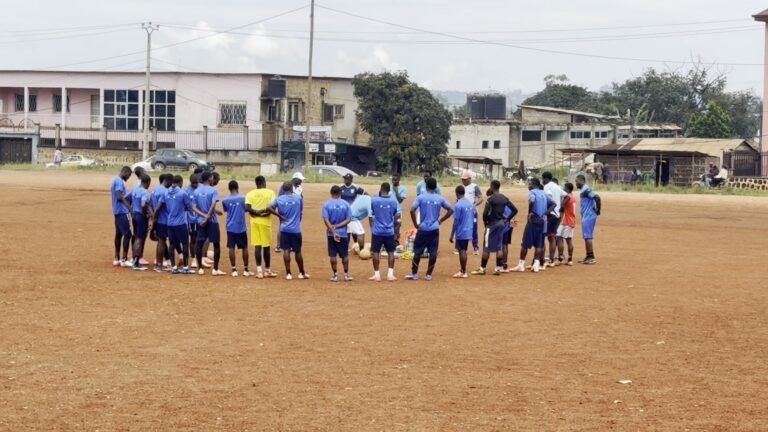
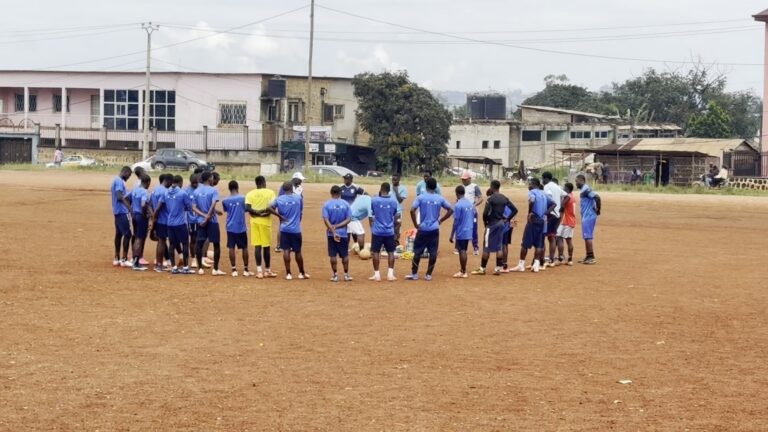
The team faced a delayed start to preseason due to a socio-economic crisis in northwest Cameroon, but players remain upbeat as they prepare for the new season which kicks off on October 17.
Oliver Ochieng, Marabou News Agency
Cameroonian Premier League side PWD Bamenda has stepped up preparations ahead of the start of the top flight, Elite One 2026/27 season. The team faced a delayed start to preseason caused by a two-week lockdown in the northwest region linked to the ongoing socio-political crisis.
The Abakwa Boys got their preparations underway later, leaving the technical staff with limited time to fine-tune the squad ahead of the opening game of the new season on October 17.
Despite the shortened preparation period, the mood within the camp appears positive, with both experienced players and newcomers embracing the work ahead. Among the new faces is Arrey Fernand, who joined PWD Bamenda from Dynamo de Douala, and Djembé Henry, who arrived from Ngoketunjia United.
Head coach Tama Wango acknowledged the challenges surrounding the delayed start to preseason, but remained focused on getting the team ready.
“And so, we are far behind time, we are very conscious of that, and we think that with the integrated training method that we are applying at this particular point in time, we believe that by the beginning of the championship, we are going to be ready,” he said.
“Yes, for now, it’s quite intense. The intensity and volume are high; density too is very high. We think that, and we have been training throughout the week, except on days that the political atmosphere does not permit us to work, to train.”
Captain Ngufor Terence highlighted the unity within the dressing room, stressing the willingness of the old and new players to work together under the coach and push towards the club’s objectives.
“This is a new season and we have been preparing so well, even though we have some new players that have joined the team, we’ll keep on working and we pray, let the coach do the best and choose the best team for us. For that, we trust our coach, even though some of the old players have left, but the new players that are coming in, they are up to the task, the task that the coach is going to give us.”
With October 17 fast approaching, PWD Bamenda are racing against time to make up for lost ground. The delayed preseason has presented an early challenge, but the Abakwa Boys are now focused on turning their limited preparation time into a strong start to the new Elite One campaign.
PWD Bamenda finished 7th on the 14-team log last season. Despite being based in a conflict zone, the team has represented Cameroon in the CAF Champions League and CAF Confederation Cup assignments twice.
The team participated in the CAF Champions League during the 2020/2021 season and the CAF Confederation Cup during the 2022/2023 season.
Both outings ended in the preliminary round eliminations against South Africa’s Kaiser Chiefs and Madagascar’s ASSM Elgeco Plus.
Marabou News Agency
Stringer: Tebo Berinyuy
Editor: George Mutero
The post Cameroon’s PWD Bamenda braves conflict to prepare for new season appeared first on Sports Network Africa.
-
 Athletics1 week ago
Abeokuta 10km Race winners praise organisers after ₦6m prize payout
-
Featured2 months ago
Bet9ja Foundation Ex-Internationals Cup: Babington Lift Giant Trophy, Pocket ₦2.5m After 3–1 Final Win
-
 Basketball6 months ago
PBA slaps ₱20k fine on Calvin Abueva for F2 upgrade vs Magnolia
-

 DLSU8 months ago
Shan Nunag shows composure beyond year in La Salle debut
-

 News8 months ago
Camilla Lamina shows calm leadership even off the bench
-
Football8 months ago
2026 Uganda Cup: The confirmed fixtures, venues & kick off times at round of 32
-
Foreign Pros8 months ago
‘Eric Chelle must pay compensation to quit Super Eagles post’
-
Football8 months ago
Divine Mukasa plays full time as Leicester City bows out of FA Cup to Southampton