
Football
CAF, AFCON 2027 co-hosts officially launch “Shield Inspired” logo


CAF alongside the 2027 AFCON 2027 hosts Kenya, Tanzania and Uganda have officially launched the TotalEnergies CAF Africa Cup of Nations (“AFCON”) PAMOJA 2027 Logo.
The logo is inspired by the shield, a timeless symbol deeply rooted in African heritage, identity and strength.

The new Logo, the anchor of the Brand Identity of the TotalEnergies CAF AFCON PAMOJA 2027, went live in all three Host Nations; Kenya, Tanzania and Uganda at 13h00 local time on Thursday, 19th November 2026.
It is exactly 212 days until the kick-off of Africa’s biggest sporting event on 19 June 2027 as the Official Logo marks a major milestone for the hosts, bringing the identity of their historic TotalEnergies CAF AFCON to life.

At the heart of the new identity is the message: Honouring Our Past, Celebrating Our Culture and Symbolising the Africa of Tomorrow.
Creative Inspiration: Celebration of Three Countries with Rich History
The Logo draws inspiration from the traditional East African shield, a timeless symbol of identity, protection, pride and belonging that has been part of the region’s heritage for generations.
The shield is a particularly powerful symbol of unity as it features in the national coats of arms of all three Host Nations, reflecting the shared history and traditions that connect the people of Kenya, Tanzania and Uganda.

Its distinctive shape, constructed from two intersecting circles of equal radius, creates the foundation of the new visual identity and a symbol that connects traditional African craftsmanship with the creativity and bold design of modern Africa.
At the centre of the shield stands the silhouette of the prestigious TotalEnergies CAF AFCON trophy, crowned by the outline of the African continent and carrying the CAF name.
The trophy represents the ultimate prize in African Football, while its position at the heart of the shield reinforces the tournament’s role in bringing together the continent’s cultures, identities and ambitions.
The design also celebrates East Africa’s extraordinary artistic heritage through colourful beadwork and geometric patterns inspired by traditional craftsmanship, textiles and weaving.
The colours of the three host nations come together in the Official Logo, with red and black at the top of the shield, green and yellow on either side of the trophy, and blue at its base.
3 Nations, One Vision
Each colour and pattern reflects the identity of the host nations, ensuring that Kenya, Tanzania and Uganda are represented in a single, unified emblem.
The new visual identity extends beyond the central Official Logo, with a family of 12 shield patterns reflecting the individual character of the three Countries.
Kenya’s identity draws on bold horizontal bands that express strength, heritage and belonging.
Tanzania’s design incorporates diagonal lines inspired by its national flag, reflecting movement, land and water.
Uganda’s identity uses warm, layered colours and the iconic crested crane to celebrate the country’s pride, culture and spirit.
Together, these elements create a distinctive visual identity that will be showcased across stadiums, digital platforms and tournament activities, bringing the colours, cultures and stories of East Africa to football supporters across the world.
The name PAMOJA, meaning “Together” in Swahili, a language shared across the three host nations, captures the spirit of the tournament and the historic partnership between Kenya, Tanzania and Uganda.
After match day four of the on-going AFCON 2027 qualification, six countries Benin, Burkina Faso, Cameroon, Mali, Morocco and Senegal booked their berths already.
The six join Kenya, Tanzania and Uganda, the three co-hosts of the championships.
*Additional information by CAF communications team
The post CAF, AFCON 2027 co-hosts officially launch “Shield Inspired” logo appeared first on Kawowo Sports.

By: Nicole Parallag
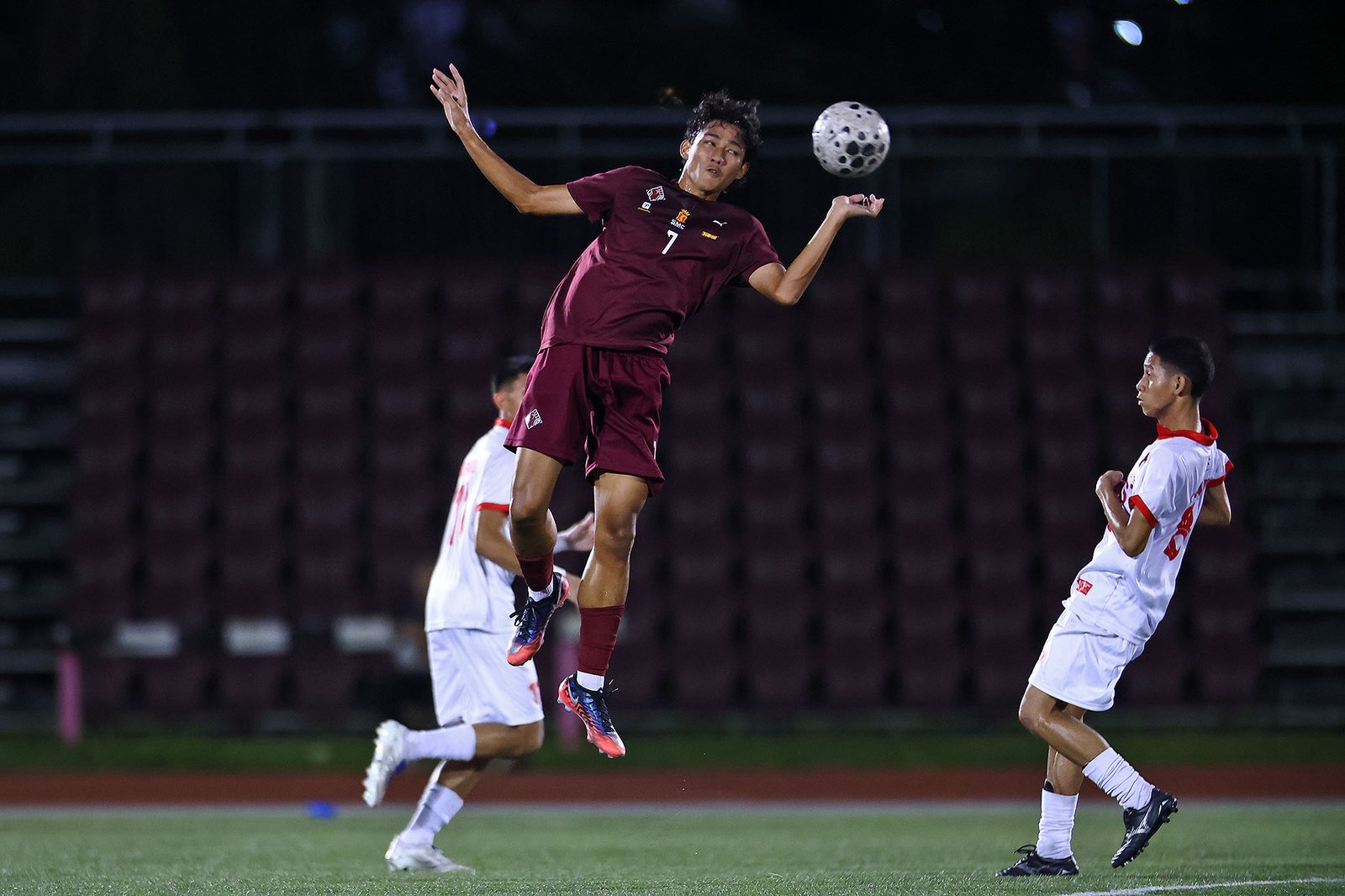
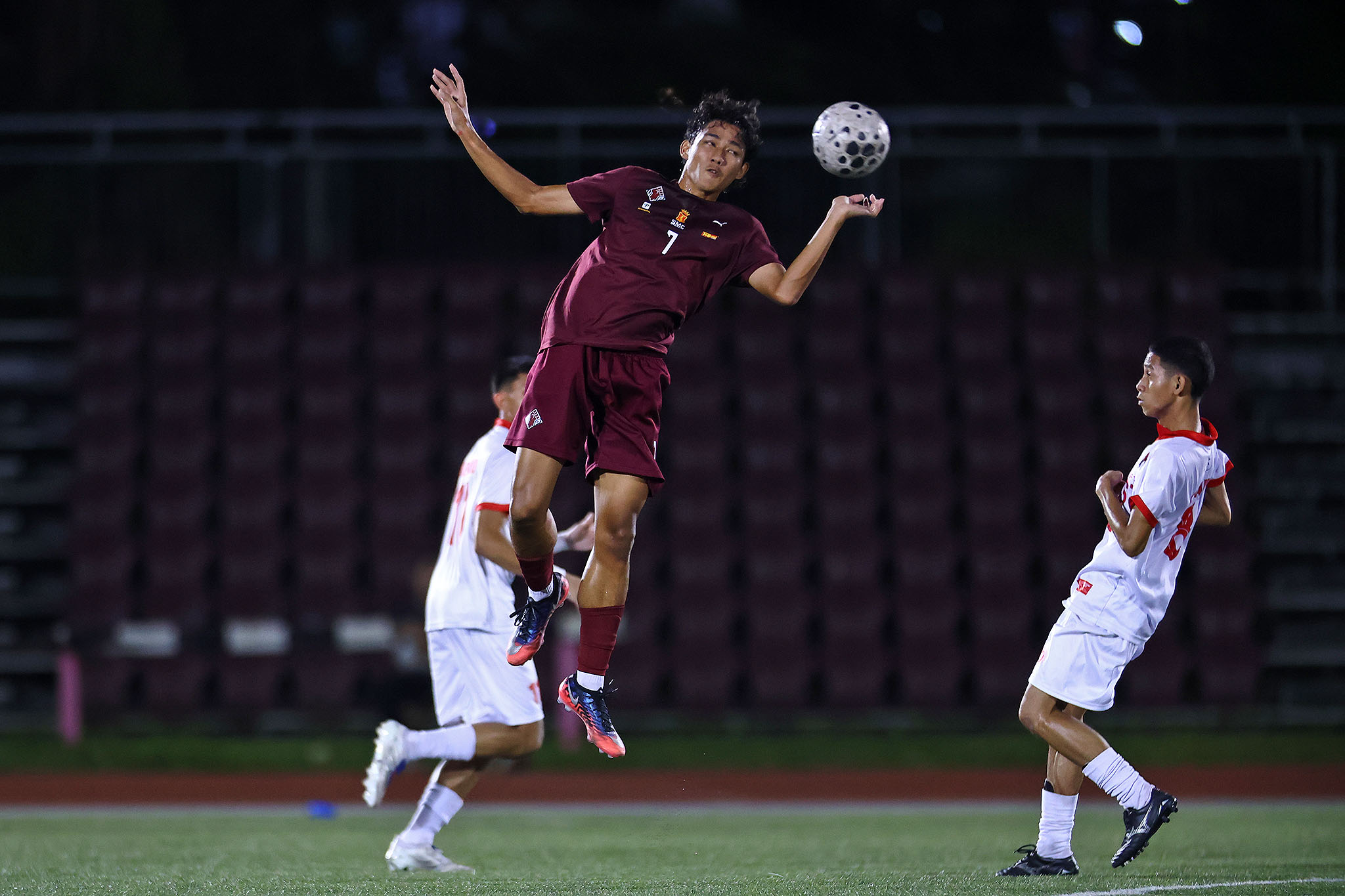
Jian Caraig and Joses Azur scored a goal each to propel the University of the Philippines to a 2-0 victory over the University of the East in the UAAP Season 89 Collegiate Men’s Football Tournament on Thursday at the UP Diliman Football Stadium.
Former De La Salle Zobel standout Caraig broke the deadlock just seven minutes into the match, putting the Fighting Maroons ahead early. Azur then provided the insurance goal in the 85th minute to seal all three points for the defending champions.
UE’s Carlos Amador had a chance to level the score in the 57th minute, but UP defender Joshua Meriño came to the rescue, helping goalkeeper Fonzy Gonzalez deflect the attempt to safety. Gonzalez returned to action after missing three games due to illness.
(C) UAAP Season 89 Media Team
Despite the victory, Fighting Maroons head coach Popoy Clarino was far from satisfied with his team’s performance, stressing that the result did not meet their objective of building confidence heading into the semifinals.
“We wanted to build confidence coming into the semifinals, but for me — for us — even with the win, it’s a loss because we didn’t hit the objective,” said Clarino.
UP has now moved past De La Salle University into second place in the standings with 21 points. The Green Booters, who have 20 points, are currently facing league-leading Adamson University (22 points) in the other Thursday fixture.
The Fighting Maroons will continue their push for a twice-to-beat advantage when they face La Salle in Sunday’s triple-header opener at 2 p.m. on their home pitch.

(C) UAAP Season 89 Media Team
“One of our objectives is to have confidence coming into the semifinals. We have to give credit to UE for their efforts. But yes, that’s football—we need to see what we can do. It’s a tight race for football; you don’t know who is going to top it, but then again, we still have two games and look towards the La Salle game this Sunday,” added Clarino.
Thursday’s victory marked UP’s second triumph over UE this season. The Fighting Maroons previously edged the Red Warriors, 1-0, on October 15, courtesy of Ramil Bation’s penalty kick.
Bation, however, was unavailable for Thursday’s match after accumulating yellow cards, with his booking in UP’s previous game against Far Eastern University triggering a one-match suspension.
Meanwhile, UE will look to close out its campaign on a winning note when it takes on fellow also-ran FEU this Sunday at 2 p.m.
The post UP blanks UE to boost twice-to-beat bid in UAAP men’s football appeared first on Tiebreaker Times.

The Valley Warriors return from Egypt without a medal after heavy late defeats, but their semi-final run and Shs1.2 billion payday have raised the bar for Ugandan women’s club football.
Kawempe Muslim Ladies’ maiden appearance at the CAF Women’s Champions League ended on a disappointing note after they suffered a 5-0 defeat to Cameroon’s Lekié Football Filles in Saturday’s third-place playoff.
The defeat, coupled with their 4-1 semi-final loss to South Africa’s Mamelodi Sundowns, meant the Valley Warriors conceded nine goals in their final two matches, a disappointing conclusion to an otherwise impressive continental campaign.
It was a stark contrast to the fearless performances that characterised their group-stage campaign, where they stunned Moroccan giants AS FAR Rabat and comfortably dispatched Mali’s USFAS Bamako.
Nevertheless, the six-time FUFA Women Super League champions have plenty to celebrate despite returning home without a medal.
Their fourth-place finish and the accompanying US$300,000 (approximately Shs1.2 billion) prize money mark a significant milestone for both the club and Ugandan women’s football.
Having broken through a barrier that Lady Doves, She Corporate and Kampala Queens had previously failed to overcome at the CECAFA regional qualifiers, Ayub Khalifa Kiyingi’s charges have demonstrated that Ugandan clubs can compete on Africa’s biggest stage.
Beyond the financial reward and historic achievement, Kawempe’s campaign offers important lessons that could shape the future of women’s club football in Uganda.
Here are four key takeaways from their Egyptian adventure.
- Uganda belongs on the continental stage
Few would have predicted that a debutant side from Uganda would make it to the semi-finals, particularly in a group featuring established continental outfits.
However, Kawempe quickly dismissed any doubts about their credentials. Their remarkable 3-2 comeback victory over defending champions AS FAR Rabat, sealed by Agnes Nabukenya’s 94th-minute winner, was arguably the defining moment of their campaign.
That result was more than just a victory. It showed that Ugandan clubs have the technical ability, attacking quality, and ambition to challenge Africa’s established sides.
With eight goals scored in three group-stage matches, the Valley Warriors also showcased an attacking identity that made them one of the tournament’s most exciting teams.
Their performance should renew belief among other Ugandan clubs aspiring to compete at the continental level.
- Defensive depth separates contenders from champions
While Kawempe’s attacking quality attracted plenty of attention during the group stages, their final two matches exposed weaknesses that must be addressed if they are to become genuine continental contenders.
Conceding four goals against Mamelodi Sundowns before shipping five past Lekié Football Filles highlighted the difficulty of sustaining defensive discipline against technically superior and physically imposing opposition.
The knockout-stage encounters exposed gaps in defensive organisation, squad depth and game management, particularly when opponents applied sustained pressure.
At this level, attacking brilliance alone is rarely enough. Teams need a balanced squad capable of maintaining concentration, adapting tactically and responding to difficult moments.
For Kiyingi and his technical team, strengthening the defensive department, improving squad rotation and preparing players for the physical demands of continental football should be priorities ahead of another campaign.
- Nabukenya and Nyinagahirwa have announced themselves
Kawempe’s historic run was also built on individual performances that underlined the quality of talent available in Ugandan women’s football.
Agnes Nabukenya emerged as one of the tournament’s standout performers, scoring four goals to earn a place in the CAF Women’s Champions League Group Stage Best XI and share the Golden Boot recognition.
Her decisive contribution, particularly the late winner against AS FAR, demonstrated her ability to deliver on the biggest stage.
Captain Shakirah Nyinagahirwa was equally influential. Her return from a lengthy injury layoff provided the team with much-needed leadership and experience throughout the campaign.
Jovia Nakagolo and Shadia Nabirye also made important contributions in front of goal, further highlighting the attacking talent within Kiyingi’s squad.
The performances of these players should attract greater attention to Uganda’s women’s football talent pool, while reinforcing the importance of developing and retaining homegrown players.
- Investing the Shs1.2 billion wisely is the real test
Perhaps the biggest opportunity arising from Kawempe’s continental adventure lies in the financial reward.
Their fourth-place finish guarantees the club US$300,000 (approximately Shs1.2 billion), a substantial amount that could transform its operations and establish a stronger foundation for future success.
However, the real measure of this achievement will not simply be the money received but how effectively it is utilised.
Investing in player welfare, improving training facilities, strengthening the technical department, enhancing physical conditioning and retaining key players should be central to the club’s plans.
The financial windfall also presents an opportunity to strengthen the club’s youth development structures and build a sustainable pathway for emerging talent.
For a club that has already demonstrated its ability to compete with some of Africa’s best, strategic investment could help turn this historic semi-final appearance into the beginning of sustained continental competitiveness.
The bigger picture
Kawempe Muslim may have fallen short of winning a medal in Egypt, but their campaign has changed the conversation around Ugandan women’s club football.
They have shown that the country can produce teams capable of challenging established African sides.
The next challenge is to build on that achievement, address the weaknesses exposed in Egypt and ensure that this historic breakthrough becomes a foundation for greater success.
For the Valley Warriors, the journey has only just begun.
The post Four key lessons from Kawempe Muslim’s historic continental debut appeared first on Kawowo Sports.
Football
Uganda Premier League Clubs set for UGX 751 Million FIFA Windfall: A new era of strategic value in International Player Development


Ugandan football is on the verge of an important financial opportunity, with eight domestic clubs projected to share UGX 751,139,620 (approximately USD 181,874) under the FIFA World Cup 2026™ Club Benefits Programme.
The anticipated allocation, arising from Uganda’s ten World Cup qualifying fixtures, highlights an increasingly important dimension of modern football management: the financial value of developing, recruiting and retaining players who represent their national teams.
Beyond the immediate financial reward, this development presents an opportunity for Uganda Premier League clubs to rethink their recruitment strategies, strengthen institutional structures and integrate international player development into their long-term sporting and financial plans.
The Financial Breakdown: Which Clubs Stand to Benefit Most?
According to the reported allocation, 77 verified matchday entries involving 28 individual players generated the anticipated benefits for eight Ugandan clubs.
The distribution, calculated at an indicative exchange rate of UGX 4,130 per US dollar, places Vipers SC at the top of the beneficiaries.
Vipers SC leads with an anticipated UGX 234.12 million, generated by nine players across 24 matchday entries. SC Villa follows with UGX 175.59 million from six players and 18 entries, while KCCA FC is projected to receive UGX 126.82 million through five players and 13 entries.
Kitara FC is expected to earn UGX 97.55 million, with BUL FC projected at UGX 78.04 million. NEC FC, Express FC and Myda FC complete the list with anticipated allocations of UGX 19.51 million, UGX 9.76 million and UGX 9.76 million respectively.
These figures demonstrate how national team representation can generate meaningful financial returns for clubs operating in a football economy where commercial sponsorship, broadcasting income and matchday revenues remain important but challenging sources of funding.
From International Recognition to Financial Sustainability
For UPL clubs, the FIFA Club Benefits Programme should be viewed as more than a compensation mechanism. It represents an additional revenue opportunity that can be incorporated into broader institutional planning.
Traditionally, clubs have sometimes viewed international call-ups primarily through the lens of player availability, match fitness and injury risks. However, the financial implications of the FIFA programme introduce another consideration: players who consistently feature in national team squads can also create measurable economic value for their employers.
Under the anticipated rate of USD 2,362 per player per match, a footballer featuring in all ten qualifying fixtures could generate approximately UGX 97.55 million for an eligible club. This makes international player development an increasingly attractive component of long-term squad-building strategies.
Nevertheless, clubs should avoid making recruitment decisions solely on the expectation of FIFA payments. National team selection is competitive, qualification criteria are specific, and future programme allocations may change.
Three Strategic Priorities for Uganda Premier League Clubs
1. Smarter Recruitment and Player Retention
Club recruitment departments should increasingly evaluate players through both sporting and commercial perspectives. Identifying footballers with the potential to break into the national team can provide a competitive advantage, particularly when combined with strong player development and retention policies.
2. Investment in Youth Development
Academy structures should become central to the long-term ambitions of Ugandan clubs. Developing young players capable of progressing into the Uganda Cranes setup offers clubs opportunities to benefit from FIFA solidarity mechanisms, future transfer fees and stronger squad performance.
3. Stronger Administration and Financial Governance
The financial benefits are dependent on meeting FIFA’s eligibility requirements, including verified matchday squad participation and the player’s registration status with the beneficiary club on the relevant fixture date. Clubs must therefore strengthen registration systems, maintain accurate player records and establish dedicated administrative procedures for tracking international appearances and submitting supporting documentation within applicable deadlines.
A Bigger Opportunity for Ugandan Football
The projected UGX 751 million allocation offers an important lesson for the future of the Uganda Premier League: sporting success and financial sustainability should no longer be treated as separate objectives.
Clubs that invest in talent identification, player development, institutional administration and strategic planning will be better positioned to maximise opportunities presented by international football.
Ultimately, the real value of this FIFA windfall will not be determined simply by how much money individual clubs receive, but by how effectively they convert the proceeds into stronger squads, improved academies, better facilities and more sustainable football institutions.
The next competitive advantage in the Uganda Premier League may not only come from winning matches on the pitch, but also from building clubs that understand how to turn player development and international representation into long-term financial value.
The post Uganda Premier League Clubs set for UGX 751 Million FIFA Windfall: A new era of strategic value in International Player Development appeared first on Kawowo Sports.
-
 Athletics2 months ago
Abeokuta 10km Race winners praise organisers after ₦6m prize payout
-
Featured3 months ago
Bet9ja Foundation Ex-Internationals Cup: Babington Lift Giant Trophy, Pocket ₦2.5m After 3–1 Final Win
-
 Basketball7 months ago
PBA slaps ₱20k fine on Calvin Abueva for F2 upgrade vs Magnolia
-

 DLSU9 months ago
Shan Nunag shows composure beyond year in La Salle debut
-

 News9 months ago
Camilla Lamina shows calm leadership even off the bench
-
Football9 months ago
2026 Uganda Cup: The confirmed fixtures, venues & kick off times at round of 32
-
Foreign Pros9 months ago
‘Eric Chelle must pay compensation to quit Super Eagles post’
-
ADMU9 months ago
Palarong Pambansa MVP Baterbonia commits to Ateneo