Athletics
Beyond Football: How Africa Can Build Sports Franchises and Futures



Africa has never lacked passion for sport. From dusty community pitches to packed stadiums, sport is woven into the continent’s social fabric. Football, in particular, has long been Africa’s most powerful cultural and emotional connector. Yet while the passion is unquestionable, Africa’s sports systems remain largely underdeveloped
The success of the Africa Cup of Nations (AFCON) has proven something fundamental: African fans are ready. They are engaged, emotionally invested, digitally active, and hungry for high-quality, locally produced sporting events. What Africa has not yet done is translate this passion into a fully-fledged sports industry.
And that is the real opportunity.
This conversation is not just about football. Across basketball, athletics, rugby, cricket, volleyball, golf, combat sports, and many other disciplines, Africa sits on an extraordinary reserve of talent and cultural energy. What is missing are professional leagues, strong franchises, modern governance, reliable data systems, and integrated commercial models capable of turning sport into sustainable businesses.
Africa does not simply need more tournaments. It needs sports franchises, and futures.
From Passion to Industry
Globally, sport is big business. It creates jobs, drives tourism, attracts investment, and builds global brands. In Africa, however, sport is still too often treated as an event rather than an industry. Success is measured in moments, qualification, hosting rights, or individual brilliance, instead of in systems that endure.
AFCON shows what is possible when organisation, storytelling, and fan engagement align. The next step is to replicate that success across other sports and at every level, from grassroots to elite competition. This requires a deliberate shift in mindset: from administration to entrepreneurship, from survival to sustainability.
Sport should not only produce athletes. It should produce coaches, analysts, administrators, media professionals, marketers, data scientists, and entrepreneurs. Every stadium should be part of a wider ecosystem. Every league should be a platform for innovation, not just competition.
This is how futures are built.
Pillar One: The Business of Sport
The foundation of any sports industry is professionalism. Leagues, clubs, and federations must be run as businesses, with clear structures, contracts, and accountability.
Revenue cannot depend solely on sponsorships and government subventions. Ticketing, broadcasting rights, merchandising, digital content, betting partnerships, and direct-to-fan platforms must all be part of the commercial mix. African sports organisations must also encourage entrepreneurship in sports technology, media production, fan engagement, and merchandising.
Sport cannot grow sustainably if it is always waiting for handouts.
Pillar Two: Governance That Builds Trust
Governance remains one of Africa’s greatest weaknesses in sport. Weak institutions, opaque decision-making, and inconsistent regulations have undermined credibility and scared away investors.
Strong, independent federations with transparent operations are essential. Standardised league management systems, clear player contracts, and credible disciplinary frameworks must become the norm. Public–private partnerships can help drive commercialisation and infrastructure development, but only if governance standards inspire confidence.
Without trust, there is no investment.
Pillar Three: Infrastructure That Serves People
Africa does not need 100,000-seat stadiums in every city. What it needs are fit-for-purpose, multi-use facilities.
Modern training centres, community pitches, sports science hubs, and modular stadiums can support multiple sports while serving schools and local communities. Infrastructure must be designed for daily use, not occasional spectacle. When facilities are accessible, grassroots talent thrives.
Infrastructure is not about grandeur; it is about function and inclusion.
Pillar Four: Education and Skills Development
A sustainable sports industry requires educated professionals who understand how sport works beyond the field of play.
In the United States, Canada, and much of Europe, experiential learning is embedded within the sports ecosystem. Education is fused with leagues, clubs, events, and governing bodies, producing graduates who are industry-ready from day one.
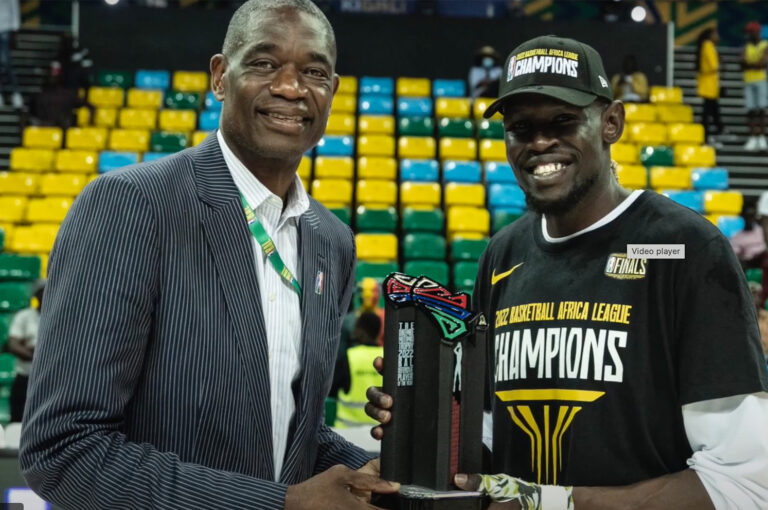
Africa is beginning to see the impact of this model. Basketball offers a powerful example. Leaders such as Amadou Gallo Fall of the Basketball Africa League, , and Thierry Kita of NBA Africa brought global experience back to the continent and helped shape a professional ecosystem almost from scratch and former Toronto Raptors President and co-founder of Giants of Africa – Masai Ujiri has been supporting along with the late NBA Legend, Dikembe Mutombo and Luol Deng
The same pattern is visible in football governance. CAF’s recent transformation has been supported by a growing contingent of highly trained professionals, many of them alumni of global programmes such as the FIFA Masters, Real Madrid Graduate School, and other elite sports MBAs. Their presence has strengthened competitions, communications, commercial strategy, security, and digital operations.
Yet too many Africans who gain world-class sports education and experience end up employed exclusively by international federations, leagues, and clubs abroad. Africa must create systems that attract this expertise home and develop far more of it locally.
This means investing in specialised sports degrees, diplomas, and short courses in management, marketing, media, analytics, and event operations. It means clear certification pathways for coaches, referees, medical staff, and administrators. It also means youth academies that integrate education with athletic development, preparing players for life beyond competition.
Professionalism must begin at the grassroots.

Pillar Five: History, Memory, and Storytelling
Africa has a rich sporting history, but too much of it is undocumented, unarchived, and forgotten.
Preserving sporting history through archives, museums, and digital libraries is not nostalgia, it is brand building. Stories create identity, rivalries, and emotional connection. They give fans a reason to care beyond the scoreline.
Africa must own and tell its sporting stories, rather than allowing others to define them.
Pillar Six: Data as a Competitive Advantage
Modern sport runs on data. Performance analytics, fan engagement metrics, and operational insights shape decision-making across the global sports industry.
African leagues and federations must invest in centralised, standardised data systems. This unlocks value for sponsors, broadcasters, fantasy sports platforms, and betting markets. Data is not a luxury; it is infrastructure.
If Africa does not control its sports data, others will.

Pillar Seven: Digital Media and Fan Engagement
Africa is a mobile-first continent with one of the youngest populations in the world. This should be its greatest advantage.
Streaming platforms, OTT services, social media storytelling, podcasts, documentaries, and behind-the-scenes content can take African sport to global audiences at relatively low cost. Fan engagement must extend beyond match days, using apps, polls, fantasy leagues, and interactive experiences.
Crucially, this cannot be limited to major events like AFCON or the Basketball Africa League. It must apply at league, club, and grassroots levels year-round.
Pillar Eight: Sponsorship That Builds Ecosystems
Sponsorship should be more than logo placement. It should be partnership.
African brands must step up and invest in African sports at every level, rather than focusing almost exclusively on European leagues. Naming rights, experiential activations, and community-based campaigns can deliver real value while strengthening local sport.
When African companies invest locally, they help build industries, not just impressions.
Pillar Nine: Strategic Partnerships
Africa does not need charity partnerships; it needs strategic ones.
The Basketball Africa League has shown what is possible when global expertise meets African ambition. Cricket’s SA20, rugby’s professional pathways, and golf’s development circuits offer further examples. Football’s short-lived African Football League hinted at what could be achieved with the right structure.
This franchise-based model can be replicated across multiple sporting codes, deliberately designed around professionalism, governance, and long-term sustainability.
Franchises, not federations alone, will be the engines of growth.
Pillar Ten: Lifestyle, Culture, and Entertainment
Sport does not exist in isolation. It thrives where culture thrives.
Music, fashion, film, and celebrity culture should be integrated into sporting experiences. Fan zones, festivals, merchandise, and lifestyle products turn matches into events and clubs into brands. Imagine a sports ecosystem where Afrobeats and Amapiano are not just opening-ceremony soundtracks, but everyday expressions of identity.
This fusion is where Africa can be truly original.
Pillar Eleven: Hospitality and Sports Tourism
Sport can power tourism and urban development.
Integrated hospitality, hotels, transport, catering, and event management, can turn tournaments into multi-day economic drivers. The idea of sports precincts or “sports cities” around stadiums offers Africa an opportunity to rethink urban planning through sport.
Every visiting fan is an economic opportunity.
Pillar Twelve: Grassroots at the Centre
Everything must begin at the grassroots.
Community and school sport must be organised professionally, not casually. Safeguarding, coaching standards, administration, and facilities at the lowest levels shape the quality of leadership at the top.
If Africa wants world-class sport, it must build it from the ground up.
The Bigger Picture
Africa does not just need sport. It needs a sports industry.
AFCON proves the passion exists. The challenge now is to build professional structures, commercial systems, and compelling narratives that turn talent into careers and games into businesses. By investing across these pillars, Africa can create franchises, sustainable jobs, and global sports brands that are proudly homegrown.
The dream is not just to play. It is to thrive, to invest, and to win on the continent, and on the world stage.
Africa has never lacked passion for sport. From dusty community pitches to packed stadiums, sport is woven into the continent’s social fabric. Football, in particular, has long been Africa’s most powerful cultural and emotional connector. Yet while the passion is unquestionable, Africa’s sports systems remain largely underdeveloped.
The success of the Africa Cup of Nations (AFCON) has proven something fundamental: African fans are ready. They are engaged, emotionally invested, digitally active, and hungry for high-quality, locally produced sporting events. What Africa has not yet done is translate this passion into a fully-fledged sports industry.
And that is the real opportunity.
This conversation is not just about football. Across basketball, athletics, rugby, cricket, volleyball, golf, combat sports, and many other disciplines, Africa sits on an extraordinary reserve of talent and cultural energy. What is missing are professional leagues, strong franchises, modern governance, reliable data systems, and integrated commercial models capable of turning sport into sustainable businesses.
Africa does not simply need more tournaments. It needs sports franchises, and futures.
From Passion to Industry
Globally, sport is big business. It creates jobs, drives tourism, attracts investment, and builds global brands. In Africa, however, sport is still too often treated as an event rather than an industry. Success is measured in moments, qualification, hosting rights, or individual brilliance, instead of in systems that endure.
AFCON shows what is possible when organisation, storytelling, and fan engagement align. The next step is to replicate that success across other sports and at every level, from grassroots to elite competition. This requires a deliberate shift in mindset: from administration to entrepreneurship, from survival to sustainability.
Sport should not only produce athletes. It should produce coaches, analysts, administrators, media professionals, marketers, data scientists, and entrepreneurs. Every stadium should be part of a wider ecosystem. Every league should be a platform for innovation, not just competition.
This is how futures are built.
Pillar One: The Business of Sport
The foundation of any sports industry is professionalism. Leagues, clubs, and federations must be run as businesses, with clear structures, contracts, and accountability.
Revenue cannot depend solely on sponsorships and government subventions. Ticketing, broadcasting rights, merchandising, digital content, betting partnerships, and direct-to-fan platforms must all be part of the commercial mix. African sports organisations must also encourage entrepreneurship in sports technology, media production, fan engagement, and merchandising.
Sport cannot grow sustainably if it is always waiting for handouts.
Pillar Two: Governance That Builds Trust
Governance remains one of Africa’s greatest weaknesses in sport. Weak institutions, opaque decision-making, and inconsistent regulations have undermined credibility and scared away investors.
Strong, independent federations with transparent operations are essential. Standardised league management systems, clear player contracts, and credible disciplinary frameworks must become the norm. Public–private partnerships can help drive commercialisation and infrastructure development, but only if governance standards inspire confidence.
Without trust, there is no investment.
Pillar Three: Infrastructure That Serves People
Africa does not need 100,000-seat stadiums in every city. What it needs are fit-for-purpose, multi-use facilities.
Modern training centres, community pitches, sports science hubs, and modular stadiums can support multiple sports while serving schools and local communities. Infrastructure must be designed for daily use, not occasional spectacle. When facilities are accessible, grassroots talent thrives.
Infrastructure is not about grandeur; it is about function and inclusion.
Pillar Four: Education and Skills Development
A sustainable sports industry requires educated professionals who understand how sport works beyond the field of play.
In the United States, Canada, and much of Europe, experiential learning is embedded within the sports ecosystem. Education is fused with leagues, clubs, events, and governing bodies, producing graduates who are industry-ready from day one.
Africa is beginning to see the impact of this model. Basketball offers a powerful example. Leaders such as Amadou Gallo Fall of the Basketball Africa League, , and Thierry Kita of NBA Africa brought global experience back to the continent and helped shape a professional ecosystem almost from scratch and former Toronto Raptors President and co-founder of Giants of Africa – Masai Ujiri has been supporting along with the late NBA Legend, Dikembe Mutombo and Luol Deng
The same pattern is visible in football governance. CAF’s recent transformation has been supported by a growing contingent of highly trained professionals, many of them alumni of global programmes such as the FIFA Masters, Real Madrid Graduate School, and other elite sports MBAs. Their presence has strengthened competitions, communications, commercial strategy, security, and digital operations.
Yet too many Africans who gain world-class sports education and experience end up employed exclusively by international federations, leagues, and clubs abroad. Africa must create systems that attract this expertise home and develop far more of it locally.
This means investing in specialised sports degrees, diplomas, and short courses in management, marketing, media, analytics, and event operations. It means clear certification pathways for coaches, referees, medical staff, and administrators. It also means youth academies that integrate education with athletic development, preparing players for life beyond competition.
Professionalism must begin at the grassroots.
Pillar Five: History, Memory, and Storytelling
Africa has a rich sporting history, but too much of it is undocumented, unarchived, and forgotten.
Preserving sporting history through archives, museums, and digital libraries is not nostalgia, it is brand building. Stories create identity, rivalries, and emotional connection. They give fans a reason to care beyond the scoreline.
Africa must own and tell its sporting stories, rather than allowing others to define them.
Pillar Six: Data as a Competitive Advantage
Modern sport runs on data. Performance analytics, fan engagement metrics, and operational insights shape decision-making across the global sports industry.
African leagues and federations must invest in centralised, standardised data systems. This unlocks value for sponsors, broadcasters, fantasy sports platforms, and betting markets. Data is not a luxury; it is infrastructure.
If Africa does not control its sports data, others will.
Pillar Seven: Digital Media and Fan Engagement
Africa is a mobile-first continent with one of the youngest populations in the world. This should be its greatest advantage.
Streaming platforms, OTT services, social media storytelling, podcasts, documentaries, and behind-the-scenes content can take African sport to global audiences at relatively low cost. Fan engagement must extend beyond match days, using apps, polls, fantasy leagues, and interactive experiences.
Crucially, this cannot be limited to major events like AFCON or the Basketball Africa League. It must apply at league, club, and grassroots levels year-round.
Pillar Eight: Sponsorship That Builds Ecosystems
Sponsorship should be more than logo placement. It should be partnership.
African brands must step up and invest in African sports at every level, rather than focusing almost exclusively on European leagues. Naming rights, experiential activations, and community-based campaigns can deliver real value while strengthening local sport.
When African companies invest locally, they help build industries, not just impressions.
Pillar Nine: Strategic Partnerships
Africa does not need charity partnerships; it needs strategic ones.
The Basketball Africa League has shown what is possible when global expertise meets African ambition. Cricket’s SA20, rugby’s professional pathways, and golf’s development circuits offer further examples. Football’s short-lived African Football League hinted at what could be achieved with the right structure.
This franchise-based model can be replicated across multiple sporting codes, deliberately designed around professionalism, governance, and long-term sustainability.
Franchises, not federations alone, will be the engines of growth.
Pillar Ten: Lifestyle, Culture, and Entertainment
Sport does not exist in isolation. It thrives where culture thrives.
Music, fashion, film, and celebrity culture should be integrated into sporting experiences. Fan zones, festivals, merchandise, and lifestyle products turn matches into events and clubs into brands. Imagine a sports ecosystem where Afrobeats and Amapiano are not just opening-ceremony soundtracks, but everyday expressions of identity.
This fusion is where Africa can be truly original.
Pillar Eleven: Hospitality and Sports Tourism
Sport can power tourism and urban development.
Integrated hospitality, hotels, transport, catering, and event management, can turn tournaments into multi-day economic drivers. The idea of sports precincts or “sports cities” around stadiums offers Africa an opportunity to rethink urban planning through sport.
Every visiting fan is an economic opportunity.
Pillar Twelve: Grassroots at the Centre
Everything must begin at the grassroots.
Community and school sport must be organised professionally, not casually. Safeguarding, coaching standards, administration, and facilities at the lowest levels shape the quality of leadership at the top.
If Africa wants world-class sport, it must build it from the ground up.
The Bigger Picture
Africa does not just need sport. It needs a sports industry.
AFCON proves the passion exists. The challenge now is to build professional structures, commercial systems, and compelling narratives that turn talent into careers and games into businesses. By investing across these pillars, Africa can create franchises, sustainable jobs, and global sports brands that are proudly homegrown.
The dream is not just to play. It is to thrive, to invest, and to win on the continent, and on the world stage.
The post Beyond Football: How Africa Can Build Sports Franchises and Futures appeared first on Sports Network Africa.



Ugandan distance-running sensation Jacob Kiplimo has strengthened his commitment to clean sport by voluntarily enrolling in an enhanced anti-doping programme ahead of his return to the streets of Chicago, where he will seek to defend his marathon crown on Sunday, October 11, 2026.
The reigning Bank of America Chicago Marathon champion has joined former marathon world-record holder Brigid Kosgei of Kenya in the athlete-led initiative administered by the Athletics Integrity Unit (AIU). The programme, funded by Nike and the athletes’ agency Rosa Associati, is designed to reinforce confidence in the integrity of elite marathon running through more frequent and comprehensive drug testing.
Kiplimo’s decision comes at a pivotal moment in his marathon career, with the Ugandan arriving in Chicago among the leading contenders following an impressive performance at the London Marathon in April, where he clocked 2:00:28 to finish third and become the third-fastest marathoner in history.
The enhanced programme goes beyond the standard testing requirements for athletes in the marathon testing pool. Participants must undergo at least 25 unannounced out-of-competition tests annually, generating between 100 and 120 analyses. By comparison, athletes in the regular testing pool average approximately six out-of-competition tests and 12–16 analyses per year.
All the required tests are conducted independently by the AIU in accordance with World Anti-Doping Agency (WADA) standards. Additional testing is tailored to individual athletes using intelligence and data to determine the most appropriate testing methods and timing.
Kiplimo and Kosgei entered the programme immediately after their respective spring marathons, adopting an annual testing schedule that the AIU considers more sustainable than the compressed approach previously used by Kenyan marathon star Sabastian Sawe ahead of his Berlin Marathon campaign.
Sawe underwent his 25 required tests over a period of two to three months. For the 2026 programme, the AIU recommended spreading the same testing volume across an entire year, a model now being followed by Kiplimo and Kosgei.
For Kiplimo, the decision is rooted in a desire to protect the credibility of the sport and assure fans that performances on the road are achieved fairly. “For me, I decided on extra tests because I want clean sport and people can trust and know that we are running clean,” Kiplimo said.
Kosgei has similarly embraced the initiative, explaining that the frequent testing she has experienced in Kenya is intended to set an example for younger athletes.
“They’ve been testing me three times per week, sometimes two times per week, in Kenya. It’s to prove to the juniors and young generation that I am clean,” she said.
Their participation comes against a backdrop of heightened scrutiny in marathon running. Kosgei set a women’s world record of 2:14:04 when she won the Chicago Marathon in 2019, a mark that stood until Tigst Assefa improved it in 2023. Ruth Chepngetich subsequently lowered the record in Chicago in 2024 before later receiving a doping ban following a positive test.
By voluntarily submitting to more rigorous testing, Kiplimo and Kosgei are seeking to demonstrate their commitment to transparency and strengthen public confidence in elite distance running.
Beyond his commitment to clean sport, Kiplimo faces an important competitive challenge as he prepares to defend the title he claimed in 2025.
The Ugandan won last year’s Chicago Marathon in 2:02:23, an exceptional performance achieved during only his second career appearance over the marathon distance. His subsequent run at the London Marathon in April, where he registered a personal best of 2:00:28, further underlined his ability to compete among the very best marathon runners in the world.
Kiplimo’s credentials extend well beyond the marathon. He is a former half-marathon world-record holder, having established a ratified mark of 57:20 at the Lisbon Half Marathon in 2026. He also boasts an outstanding cross-country and track record, including senior World Cross Country titles in 2023, 2024 and 2026, alongside Olympic and World Athletics Championships medals.
His return to Chicago, therefore, presents an opportunity not only to retain his title but also to build on the momentum generated by his historic performance in London.
Kiplimo’s preparation for the title defence has reportedly involved substantial training volumes, reflecting the demands of competing at the highest level of marathon running.
The Ugandan has been covering approximately 220 kilometres (137 miles) per week, doubling on most days except during long-run sessions. His longest run has reached 40 kilometres, almost the full marathon distance.
The Chicago Marathon’s flat and fast route winds through 29 neighbourhoods in the American city, starting and finishing in Grant Park. The 48th edition is expected to attract approximately 55,000 runners and 1.7 million spectators, making it one of the major fixtures on the international road-running calendar.
Kiplimo will face a competitive field that includes Kenya’s Amos Kipruto, who finished second in Chicago in 2025 and third in 2024, with a personal best of 2:01:39. Ethiopia’s Milkesa Mengesha, the 2025 Shanghai Marathon champion, will also make his Chicago debut, while American Clayton Young arrives seeking strong home-country performances after competing at the Paris 2024 Olympics.
With the men’s course record standing at 2:00:35, set by Kelvin Kiptum in 2023, the race also offers the possibility of a historic time if conditions and competition align.
For Kiplimo, the immediate target is clear: successfully defend his Chicago Marathon title and become the first man to achieve that feat since the late Sammy Wanjiru won consecutive editions in 2009 and 2010.
The post Kiplimo embraces enhanced Anti-Doping Programme ahead of Chicago Marathon title defence appeared first on Kawowo Sports.
Athletics
From Lagos Tracks to Nigeria’s Fastest Man: Ajayi’s Five-Year Rise Shows Value of Grassroots Athletics *
Five years ago, Kayinsola Ajayi was one of the young athletes emerging through athletics competitions organised in Lagos.
Today, he is Nigeria’s fastest man.
Ajayi returned to Lagos this weekend as the country’s men’s 100m record holder, with his journey from local competitions to the international stage providing another example of how quickly young Nigerian talent can develop when given an opportunity to compete.
Born in Ikorodu, Ajayi began attracting attention through Lagos State organised championships before his career moved beyond the domestic scene.
His rise has since taken him to some of athletics’ biggest stages.
Ajayi reached the men’s 100m semi-finals at the Paris 2024 Olympic Games before finishing sixth at the World Championships in 2025.
His progress continued in 2026, with appearances at the Diamond League, Commonwealth Games and World Ultimate Athletics Championship.
But his return to where that journey began also places attention on the competitions that first provide young athletes with opportunities to be noticed.
For every Nigerian athlete competing internationally, there are younger competitors still racing at school, state and grassroots events hoping for their own breakthrough.
Ajayi was one of them only a few years ago.
During his Lagos homecoming, the sprinter encouraged emerging athletes to remain disciplined, committed and ready to take advantage of opportunities.
His own career provides a clear example of that pathway.
Nigeria has a long history of producing elite sprinters, but discovering the next generation depends partly on creating enough competitive opportunities before athletes reach the international level.
Ajayi’s progression from Lagos competitions to national record holder shows how quickly that journey can unfold.
The young athletes who met him this weekend were not simply looking at an international star.
They were looking at someone who once stood where they now stand.
Five years changed Ajayi from a promising Lagos athlete into Nigeria’s fastest man.
The question is who could be next?.
The post From Lagos Tracks to Nigeria’s Fastest Man: Ajayi’s Five-Year Rise Shows Value of Grassroots Athletics * appeared first on Sports247 Nigeria.
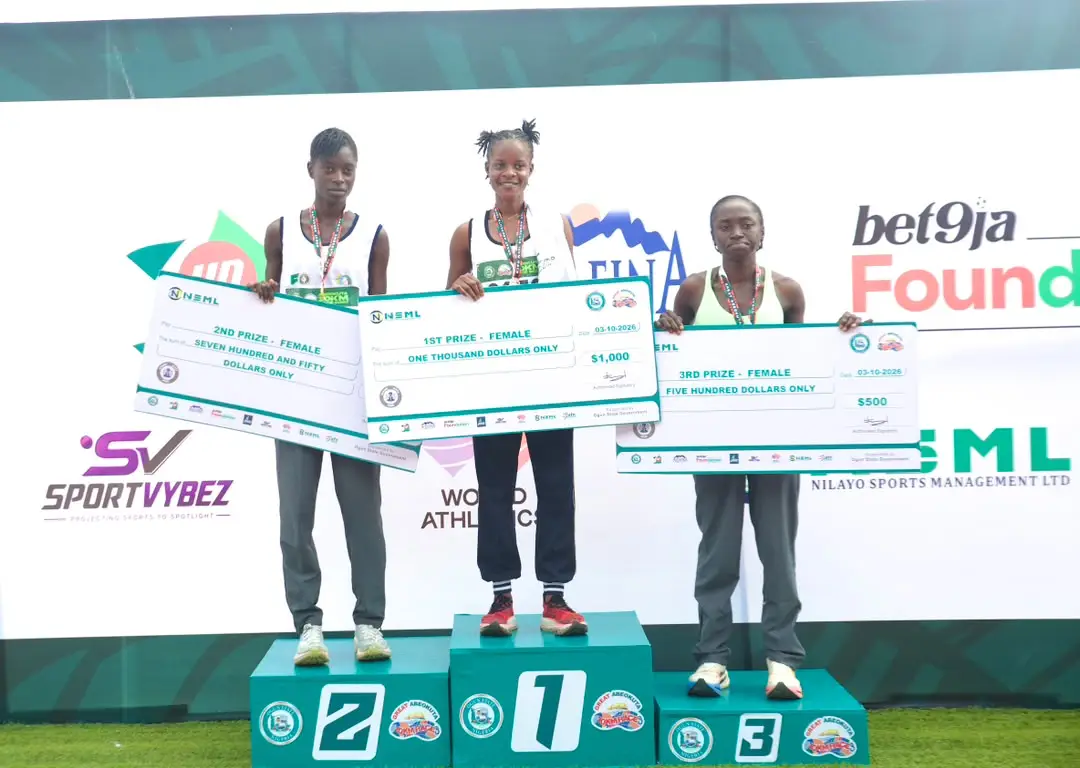
ABEOKUTA (Made In Africa Sport) – The winners and podium finishers at the 2026 Abeokuta 10km Race have praised the organisers after six athletes shared $4,500 in prize money, equivalent to ₦6.075m at an exchange rate of ₦1,350 to the dollar.
Musa Francis James and Akanbi Aderonke Olufunmilayo won the men’s and women’s categories respectively at the fifth edition of the race, held in Abeokuta, Ogun State, on Saturday.
James won the men’s race in 30:25.33, finishing ahead of Ilya Raymond, who clocked 30:38.06, while Gyang Sunday took third place in 30:47.00.
Raymond received $750 for second place, while Sunday collected $500.
In the women’s race, Akanbi finished first in 35:00.69, ahead of Bulus Mary Jah in 35:58.71 and Nwantiyi Teyei Davou in 36:03.09.
Akanbi and James each received $1,000 for their victories, taking the total prize money shared by the six podium finishers to $4,500.
James said the victory was a reward for his preparation and hard work, while also acknowledging the organisers for providing a platform for athletes to compete.
“I’m very happy with the victory. It feels good to see all the hard work and preparation pay off. I’m grateful for the opportunity to compete here, and I want to appreciate the organisers for putting together such a good race and giving athletes like us the platform to compete and challenge ourselves,” he said, according to PeakPlay Media.
Raymond was also pleased with his performance and praised the race for creating an opportunity for athletes to test themselves.
“I’m glad and excited to have been a winner. It feels really good to see all the effort and preparation pay off. I’m grateful for the opportunity to compete here, and I want to appreciate the organisers for putting together a race that gives athletes like us the platform to compete and challenge ourselves,” he said.
Sunday, who completed the men’s podium, said he was pleased to finish among the leading athletes and expressed hope that the race would continue to grow.
“I’m just happy to be one of the people to grace the podium. It is a good feeling to finish among the top athletes, especially in a race like this. I appreciate the organisers for giving us the opportunity to compete, and I hope this initiative continues to grow and attract even more athletes in the years ahead,” he said.
Akanbi leads women’s field
Akanbi also praised the organisers after claiming the women’s title, saying the victory made the preparation worthwhile.
“I am very happy to have won the women’s race. It was not easy, but I am glad that all the hard work paid off. I commend the organisers for creating this opportunity and for the effort they put into making the race a success. I hope the Abeokuta 10km Race continues to grow and gives more athletes the chance to compete at this level,” she said.

More than 3,000 participants took part in the fifth edition, which started at Macjob Grammar School, Onikolobo, and finished at the MKO Abiola International Stadium.
The race featured five water stations, fruit points and medical and security arrangements along the route, while a post-race concert was held at the finish area.
Abeokuta 10km Race organisers promise continued growth
Managing director of Nilayo Sports Management Limited, Yetunde Olopade, said the response to this year’s race reflected the growing interest in road running in the country.
“We are delighted with the outcome of this year’s Abeokuta 10km Race. The quality, organisation and enthusiasm shown by the participants have once again demonstrated what can be achieved when everyone comes together.
“We appreciate the Ogun State Government, our sponsors, partners and everyone who contributed to making this race a colourful and successful event. Nilayo Sports Management Limited will continue to uphold the class and quality that the company is known for,” Olopade said.
She thanked the Ogun State Government, sponsors and partners including Phlo, Bet9ja Foundation, 7UP and Aquafina.
The post Abeokuta 10km Race winners praise organisers after ₦6m prize payout appeared first on Made In Africa Sport.
-
Featured2 months ago
Bet9ja Foundation Ex-Internationals Cup: Babington Lift Giant Trophy, Pocket ₦2.5m After 3–1 Final Win
-
 Athletics1 week ago
Abeokuta 10km Race winners praise organisers after ₦6m prize payout
-
 Basketball6 months ago
PBA slaps ₱20k fine on Calvin Abueva for F2 upgrade vs Magnolia
-

 DLSU8 months ago
Shan Nunag shows composure beyond year in La Salle debut
-

 News8 months ago
Camilla Lamina shows calm leadership even off the bench
-
Football8 months ago
2026 Uganda Cup: The confirmed fixtures, venues & kick off times at round of 32
-
Foreign Pros8 months ago
‘Eric Chelle must pay compensation to quit Super Eagles post’
-
Football8 months ago
Divine Mukasa plays full time as Leicester City bows out of FA Cup to Southampton