
Football
Institutional vs Community Clubs, Magogo Right this time!


Football in Uganda naturally attracts passionate and organic support. Despite this deep connection with fans, the game has been struggling for nearly two decades as match attendance continues to dwindle, especially in the Uganda Premier League and Big League. Clubs that were once household names such as SC Villa, Express FC, Mbale Heroes, Masaka LC, Iganga FC, and Lyantonde FC are now barely visible, surviving mostly on history. Even the more recent success stories like Onduparaka FC, Nyamitobora FC, and Arua Hill have fallen back into lower divisions.
This decline is not surprising. A simple look at the current top-flight league shows that the clubs that are holding fort are mainly institutional teams. These include KCCA, NEC, Police FC, UPPC FC, URA, BUL, UPDF, and Maroons. The only non-institutional club that appears to be operating steadily is Vipers SC, and SC Villa, though even for them, the question of sustainability is still open.
Although I have fundamentally disagreed with FUFA President Moses Magogo’s approach to football development, particularly his long-term undermining of the league structure, in favour of overreliance on the national team, I fully support his recent proposal to phase out institutional clubs and instead require institutions and companies to sponsor community clubs. I hope he has finally realised that the national team is a reflection of the League (which is a feeder). Those who focus on the garden will get good harvests.
My support for this idea comes from experience. As the former chairman of URA FC until 2017, I witnessed firsthand the advantages and constraints of running an institutional club. Under my leadership, URA FC won three national trophies, one regional title—the Mapenduzi Cup—and participated twice in the CAF Champions League but hardly raised any fans. I also founded Nyamityobora FC, a community club that spent over eight years in regional football before rising to the Big League and eventually earning a season in the Uganda Premier League, before it was eventually relegated just after one season. Having managed both types of clubs, I understand their differences and operational challenges.
One truth stands out. Nyamityobora, despite its limited resources, had a level of community ownership and identity that institutional clubs often lack. Yet the latter have the resources and corporate structures that community clubs are yearning for.
Institutions/companies invest in football for brand affinity, and good will acceptability. The communities need identity and pride. The two interests are complementary and can co-exist. This is the main reason why Magogo’s proposal deserves support. If nothing changes, the league may eventually be filled only with institutional clubs while traditional giants disappear entirely. Transforming the league into a commercially attractive product requires giving ownership back to communities. Football survives on numbers, and true numbers come from fan-driven clubs.
Around the world, even clubs that began as company teams eventually transitioned into community-oriented structures. Bayern Munich is one of the best-known examples. The strongest leagues in Europe, the United States, South America, and even Saudi Arabia are built around community-rooted systems despite being surrounded by large corporations. Nowhere do companies run clubs successfully without a strong fan base at the centre. Without community support, there is no sponsorship value, no strong branding, and no emotional connection. This is exactly what Ugandan football has been missing.
Consideration for other strategic interventions – such as incentives that grant companies tax credits for sports expenses and investments, waivers for sports inputs, and investments in Corporate Social Responsibility (Sports), being one of the criteria for award of public contracts, and land allocations. These should be integrated into legal National Provisions like Sports and Tax laws.
Magogo’s proposed shift is a necessary step. Supporting this reform could be the spark needed to revive Ugandan football, restore community identity, and rebuild the competitiveness and passion that once defined the game in this country.
The post Institutional vs Community Clubs, Magogo Right this time! appeared first on Kawowo Sports.


Newly signed URA FC winger Alex Yiga says he is fully committed to giving his all to help the Tax Collectors achieve their target after wrapping up his move from KCCA FC.
The versatile forward sealed a two-year contract on deadline day, becoming the latest addition to Head Coach Jimmy Kintu Mwera’s side ahead of the 2026/27 Uganda Premier League season.
Speaking to the club’s media following his unveiling, the former Uganda Cubs international expressed immense gratitude for the opportunity to join the four-time league champions.
“I am very happy to join URA FC and I am grateful for the opportunity to be part of this great club. I am ready to work hard, learn and continue improving as a player,” Yiga stated.
With competition for places expected to be fierce in URA’s renewed attacking unit, the young attacker emphasised his intent to support the team’s ambitions on the pitch.
“I know the club has important targets this season, and I want to play my part in helping the team achieve them. I will give my best in training and whenever I get the opportunity to represent URA FC,” he added.
Yiga’s arrival offers Coach Kintu significant tactical flexibility in the final third, with the attacker comfortable operating on either flank or through the centre.
The post Alex Yiga sets sights high after joining URA FC appeared first on Kawowo Sports.

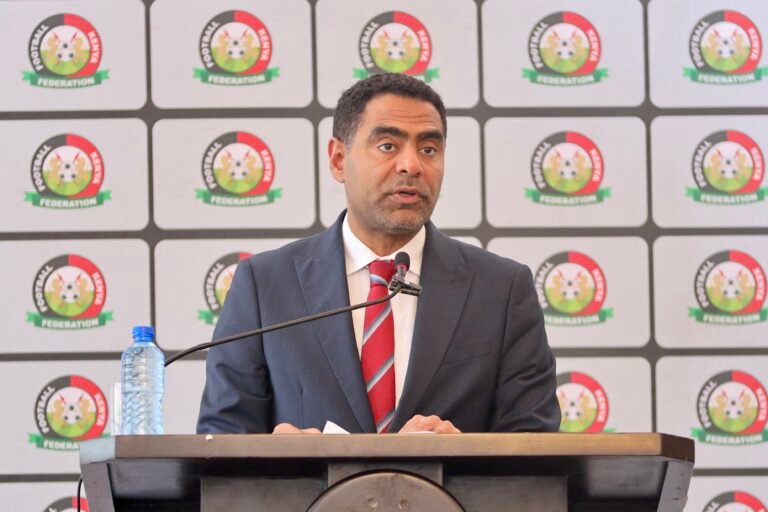
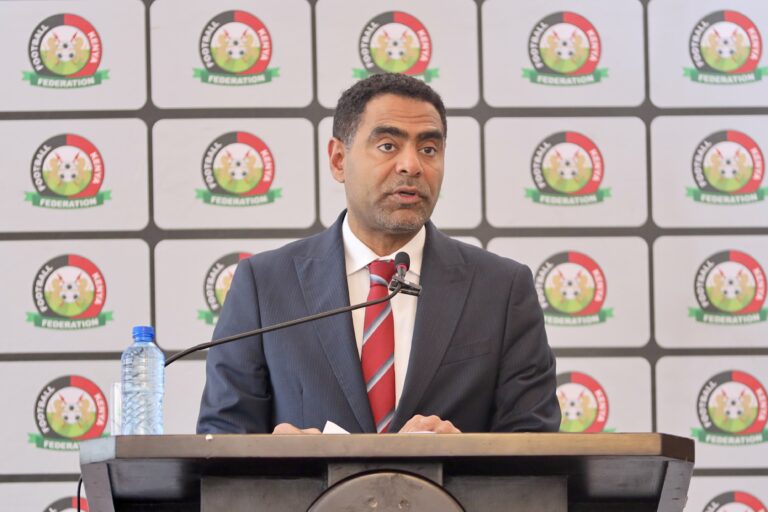
The new Premier League season was scheduled to kick off on September 19, but a late court order halted the commencement of the competition amid a promotion and relegation dispute.
Bonface Osano, Marabou News Agency
The Football Kenya Federation (FKF) leadership has appealed to the Kenyan Judiciary to help resolve the legal stalemate that has stalled the start of the 2026/27 FKF Premier League season.
In an address to the nation on Monday, September 21, 2026, FKF president Hussein Mohammed appealed to Chief Justice Martha Koome to intervene and ensure that court processes are not abused to the detriment of Kenyan football.
“I hereby plead with the Judiciary and the President, the Chief Justice Martha Koome, to understand the unique situation we operate in and disallow abuse of processes that ultimately harm all Kenyans,” Hussein pleaded.
The new FKF Premier League season was scheduled to kick off on September 19, but a late court order halted the commencement of the competition amid a promotion and relegation dispute involving FKF, Kariobangi Sharks and Mombasa United.
The dispute centres on whether Mombasa United should be admitted as the 18th team in the league or play off against Kariobangi Sharks for a place in the top flight.
Kenya’s Sports Act 2013 established the Sports Disputes Tribunal, or SDT, to hear and determine sports-related disputes. However, jurisdictional overlaps have seen some stakeholders turn to the High Court to challenge or seek stays of decisions made by the Tribunal.
Hussein says the resulting legal uncertainty has significant consequences for the football ecosystem.
“While access to justice is a fundamental right, repetitive, calculated, and contradictory legal interventions on the eve of competitions cause immense financial and emotional harm. They disrupt club planning, athlete livelihoods, losses for vendors, broadcasters, and commercial partners. Football dispute resolution must balance legal rights with the stability required to run a functional national league,” he said.
However, FKF has itself faced criticism over its use of the High Court on previous occasions to challenge or seek stays of decisions that have gone against the federation.
Hussein is now calling for football disputes to be resolved through the sport’s internal dispute-resolution mechanisms, as provided for under FIFA, CAF and FKF statutes.
“For this reason, FIFA, CAF, and FKF statutes do not allow football-related disputes to be prosecuted in ordinary courts. We must immediately revert to internal dispute resolution mechanisms within the football administrative structures if we are to protect the growth, integrity and development of the game.”
The FKF Premier League remains suspended as the federation engages the affected parties and explores a legal resolution to the dispute.
Marabou News Agency
The post FKF appeals to Kenyan judiciary to unlock football stalemate appeared first on Sports Network Africa.

2026 CECAFA U-20 championship (AFCON U-20 Qualifiers)
- Semifinal 2: Tanzania 2-0 Burundi
- Semifinal 1: Uganda 2-3 Sudan
Tanzania took the second CECAFA Zone slot to the AFCON U-20 finals, joining Sudan at next year’s fiesta in Accra, Ghana.
This was after a 2-0 victory over Burundi in the semifinal of the CECAFA U-20 Championship at the Uhuru Stadium, Dar es Salaam, on Tuesday evening.
Juma Abushiri and Faraji Kayanda scored the goals that inspired Mario Rivera Campesino’s charges.

Abushiri, a player at Young Africans Sports Club, scored directly from a corner kick past Burundi goalkeeper Omari Niyonkuru on the opening quarter-hour mark.
Simba’s Bashiri Salum Kibaila set up Dodoma Jiji’s Kayanda for the second goal in the 33rd minute to establish a 2-0 lead.
From then on, Tanzania played a cautious game and maintained the lead to progress to the final for Thursday’s final against Sudan.
The final will be preceded by the bronze medal match between Uganda and Burundi.
Uganda lost 3-2 to Sudan in the other semifinal.

Team Lineups:
Tanzania XI: Shabano Bakari (G.K.), Ismail Ally, Abubakar Othman, Shomvi Rajabu (Captain), Faraji Kayanda, Bashiri Salum Kibaila, Farid Mzalendo, Ahmad Ahmad, Abdulnassir Abdallah, Juma Abushiri, Evastus Lukanima
Subs: Telvin Mfuse (G.K), Roony Gerry, Abdallah Mnumba, Arafat Masoud, Kelvin Revokatus, Jofrey Malecha, Machela Machela, Juma Sagwe, Omar Mdachi
Head coach: Mario Riveria Campesino (Spain)

Burundi XI: Omari Niyonkuru (G.K.), Radjabu Nzeyimana, Cadeau Ndayishimye, Sympathique Majidi, Abedi Irakoze, Amini Nshimirimana (Captain), Ali-Ali Sadiki, Dieudonne Ndikumana, Abdallah Ndikumana, Roy Amissi, Ally Magambo
Subs: Papy Victoire Mude (G.K.), Djibane Kwizera, Lionel Bigirimana, Abdoul Rahim Ndizeye, Yussuf Nshimirimana, Aubin Ntwari, Jacques Irankunda, Theogene Minani, Hamissi Nahimana
Head coach: Jean De Dieu Rukundo (Burundi)

Match officials:
- Referee: Ephrame Debele Kabeta (Ethiopia)
- Assistant Referee 1: Abobakr Abdalbagi Ahmed Abofalg (Sudan)
- Assistant Referee 2: Mustefa Meki Mohammed (Ethiopia)
- Fourth official: Amro Alsayed Mohammed (Sudan)
- Commissioner: Amir Hassan (Somalia)
- General Coordinator: Francois Regis Uwayezu (Rwanda)
The post Tanzania edge Burundi to qualify for U-20 AFCON appeared first on Kawowo Sports.
-
 DLSU7 months ago
Shan Nunag shows composure beyond year in La Salle debut
-

 News7 months ago
Camilla Lamina shows calm leadership even off the bench
-
Football7 months ago
2026 Uganda Cup: The confirmed fixtures, venues & kick off times at round of 32
-
Foreign Pros7 months ago
‘Eric Chelle must pay compensation to quit Super Eagles post’
-
Football7 months ago
Divine Mukasa plays full time as Leicester City bows out of FA Cup to Southampton
-

 Cricket News7 months ago
T20 World Cup 2026: 'We've got to stay positive' – Afghanistan coach Jonathan Trott remains hopeful of reaching Super 8 despite back-to-back losses
-
 Basketball5 months ago
PBA slaps ₱20k fine on Calvin Abueva for F2 upgrade vs Magnolia
-
Others8 months ago
Sarah Babirye Kityo: The majestic return to 12th Parliament, to front sports talent development