
Cricket News
IPL 2026: Rajasthan Royals vs Sunrisers Hyderabad, Match 36 – Who Said What?

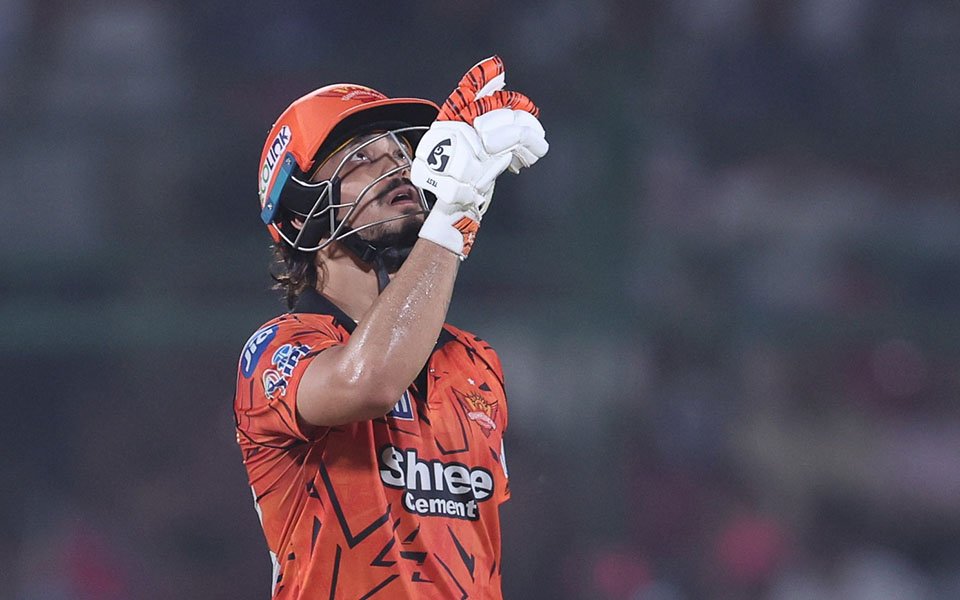
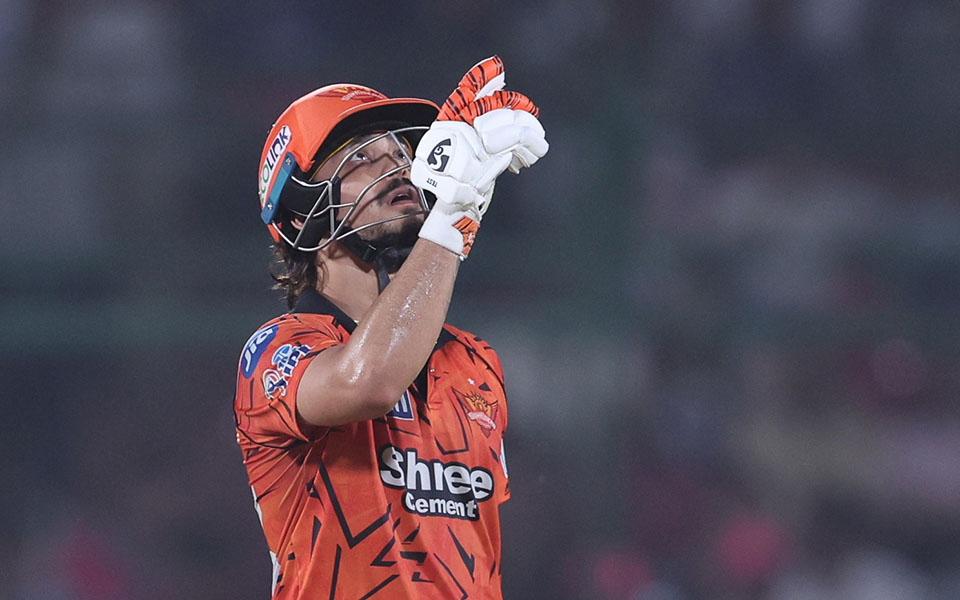
Sunrisers Hyderabad chased down a 229-run target with five wickets and nine balls to spare against the Rajasthan Royals at the Sawai Mansingh Stadium on Saturday, April 25.
Opting to bowl first after winning the toss, Sunrisers got the wicket of Yashasvi Jaiswal early. However, Dhruv Jurel joined forces with Vaibhav Sooryavanshi and the talented duo forged a 112-run stand off 62 balls. The latter was the wrecker-in-chief in the stunning partnership.
Riyan Parag once again failed to make it count with the bat. Shimron Hetmyer was also dismissed cheaply. However, Donovan Ferreira showed a glimpse of his scintillating ball-striking talent during a 33-run cameo off 16 balls.
However, it was Sooryavanshi who made the fans and experts at the Sawai Mansingh Stadium stand up on their feet to applaud his talent after he slammed a 35-ball century. Sakib Hussain eventually dismissed him for 103 off 37 balls. His magnificent knock played a massive role in helping Rajasthan post a daunting total of 228/6.
In the second innings, Sunrisers would have hoped for a quick start from the opening pair of Travis Head and Abhishek Sharma. However, Jofra Archer dismissed the former off the fifth ball. He was unlucky not to get him off the first ball as Jurel failed to take a regulation catch.
After Abhishek and Ishan Kishan joined forces, the Rajasthan bowlers were being hit to all areas of the park. The home side was sloppy on the field, with Shimron Hetmyer and Ravindra Jadeja missing straightforward chances. Abhishek and Ishan’s partnership yielded 132 runs off just 55 balls.
After Abhishek departed in the 10th over for a 29-ball 57, Heinrich Klaasen came out to the crease. Kishan hit a few lusty blows before being dismissed by Archer for a 31-ball 74. Nitish Kumar Reddy and Klaasen continued the onslaught and took their team closer to the target.
Brijesh Sharma dismissed the two right-handed batters in the 18th over, but it was too little too late for the Royals. Salil Arora and Aniket Verma took the Orange Army home in 18.3 overs with five wickets still in the bank.
Talking points:
1. ‘Wonderkid’ Vaibhav Sooryavanshi wows cricket fraternity once again
Vaibhav Sooryavanshi had a field day out in the middle. He batted with great composure and unleashed a brutal display of power-hitting. It seemed as if he was treating the SRH bowling attack as a group of net bowlers. What was excellent to see was the method he had to the madness. There was very little slogging involved during his 103-run stand off 37 balls. He hit five fours and 12 sixes, finishing with a strike rate of 278.38.
2. Ishan Kishan-Abhishek Sharma torment RR bowlers
Ishan Kishan and Abhishek Sharma’s blistering partnership wasn’t free from blemishes. However, as the saying goes, ‘Luck favours the brave.’ The two southpaws made Rajasthan pay for the fielding lapses. Abhishek hit 11 fours and one six during his 57-run knock off 29 balls. Meanwhile, Kishan amassed 74 off 31 deliveries, with 11 fours and three sixes to his name.
3. Fielding lapses cost the Rajasthan Royals
Errors in the field cost Delhi Capitals the afternoon fixture against the Punjab Kings. A similar story unfolded in the second game on Saturday. The likes of Ravindra Jadeja, Dhruv Jurel, and Shimron Hetmyer missing fairly simple chances meant that Rajasthan could never really put the opposition under pressure. They will have to go back to the drawing board and come back stronger in their next game.
Who said what
Riyan Parag, Rajasthan Royals captain:
I think skill-wise, we executed pretty nicely, but I think we dropped a few too many catches. And quality players like Abhishek and everyone who batted, I feel you can’t really drop catches of them and you can’t really give them second chances. And they took them, so credit to that. But we could have been better on the field. (what will Trevor Penney make them do next for their fielding today?) I mean, that’s going to be a sight to behold, hopefully not too harsh, but I think it’s one part of the game yes, but like I’ve been saying, we’ve got to be clinical and fielding plays a major part in that. So I feel next game, we’ll try and step it up. We’ve got a day’s break, I feel, mentally refresh and then come back next game. (satisfied with 228?) I think we left like 10-15 on the table. To be honest, they bowled really well in the 18th and the 19th over. They bowled like, executed really good yorkers. I felt not much we could have done. But best-case scenario, I think we would have liked another 15 runs. (what determined when Bishnoi came in?) Well, I think there were two lefties and I thought me and Don had a better chance of getting a wicket and then I wanted Klaasen to come in and then get Ravi and Jaddu bhai in. But the wicket was not really spin-friendly. So I just had to manage four overs. Maybe less of an economy I would have liked that, but then it was a wicket where the pacers had to take wickets and the spinners had to just be there and control the economy. Didn’t really go to plan, but would do the same thing next time as well. (on Archer) Absolutely, I think he’s been such a sensation this whole season. Another classical performance for him. Unlucky as well, a lot of top-edges in between the keeper and the fielders. So yeah, a few unlucky chances, a few chances that we gave away. Hopefully, we don’t repeat that next time. (on PK next) I think different venues everyday, different games, different ways to approach it. I feel we don’t know how Chandigarh is going to be as of now. I mean, they chased down a big score, yes, in Delhi, but Chandigarh is a new ground and a new wicket, a new soil. So hopefully, it doesn’t go to that extent. We’d like to restrict them for lower, but then that’s again another day’s thought and I have got some time to regroup, think about this and then move ahead.
Pat Cummins, Sunrisers Hyderabad captain:
(Returning to cricket after a long break) I’m really happy. You are never quite sure how it’s gonna come out first game. But the preparation was good. And I think I have played enough to maybe pick it up a bit earlier than I would have 10 years ago when I first started. I don’t know. (Today a record number of runs score in both games. Where are the bowlers going to go?) I don’t know! Start working on our batting (laughs). It’s incredible cricket. I mean, the good thing is it’s so high scoring that you do feel like even if you have a couple of bad overs or a couple of big overs, someone like, Praful (Hinge), you can bounce back and have a real impact on the game. So it’s just the way T20 cricket’s going, it’s good fun. (About young bowlers doing well in his absence) Yeah, awesome. Ishan (Kishan) led the beautiful way. Obviously we’ve got Harshal (Patel) and Jaydev (Unadkat) who started the season as well. So I feel like we’ve got a good, you know, dugout there full of bowlers for the young guys being awesome. They’ve got really clear plans on the next kid as well. (Feeling at the halfway) (We were) Quite calm. I think it could have gone away from us if it had gone up to 250. So 220, get ahead of it in the first six overs and hopefully it’s only 10 off or so an over which Ishan and these guys eat up pretty quickly at the moment. So very calm and confident group and yeah, really good win.
Ishan Kishan, Player of the Match:
(Relieved of captaincy duties, is that what does that to you?) No, I think as a wicket-keeper also you’ve got to do the same job. So I was just keeping it simple because I felt, that it’s a very good wicket to bat on and we just tried to restrict them under 230 and we were able to do that. So yeah. (How was it handing over the reins back to Pat Cummins?) It was quite fun leading the side for seven games and Pat coming in, giving us that extra bowling power. So I was really happy when he was coming in the team anyway because he’s such a tremendous captain anyway. So I was just thinking about my batting and wicket-keeping more than leadership. (What is it playing against these boys, the boys in pink?) You just have to keep on watching the ball and play your shots. You can’t get into a zone where you have a fear of failure when you’re doubting yourself or something. You just have to keep it simple and play your game. (The first ball was an absolute nasty one) I think I also it [was] pretty quick and got this extra bounce than what I expected, but yeah, I’m happy to get six runs out of this. Sometimes, I think fortune favors the brave. So you just have to watch the ball and keep on going. I think that was a good learning session for me. (Chasing a big score like this) I think we were pretty calm and the most important thing when you’re chasing a total like 228 is you need a good powerplay first of all. And having Head and Abhishek as an opener they make the job pretty easier for the rest of the batsmen, even if they bat for four overs. So I was just batting with them, communicating with Abhishek. He was well aware of the game, what’s happening, what run rate is going on. So I was just playing my shots and we both, did a great partnership in the middle, which helped our team. (But where does that calmness come from?) Yeah, I think calmness is about the skill set is always there. You have to be in good head spaces about just watching the ball and not being predetermined about what shots we have to play. So I was just thinking like, let’s just watch the ball. It’s a big ground. I’ll get some more gaps, big gaps. I think bigger ground means you will always get big gaps. So, you know, when the ball is not there, maybe you can push it in the gap and you keep the run-rate going. So that was the job and I think it was a pretty good wicket. Not much thinking to do, just bat, just bat and just enjoy it. (Are you batting at your best at the moment?) No, I think my best is yet to come.
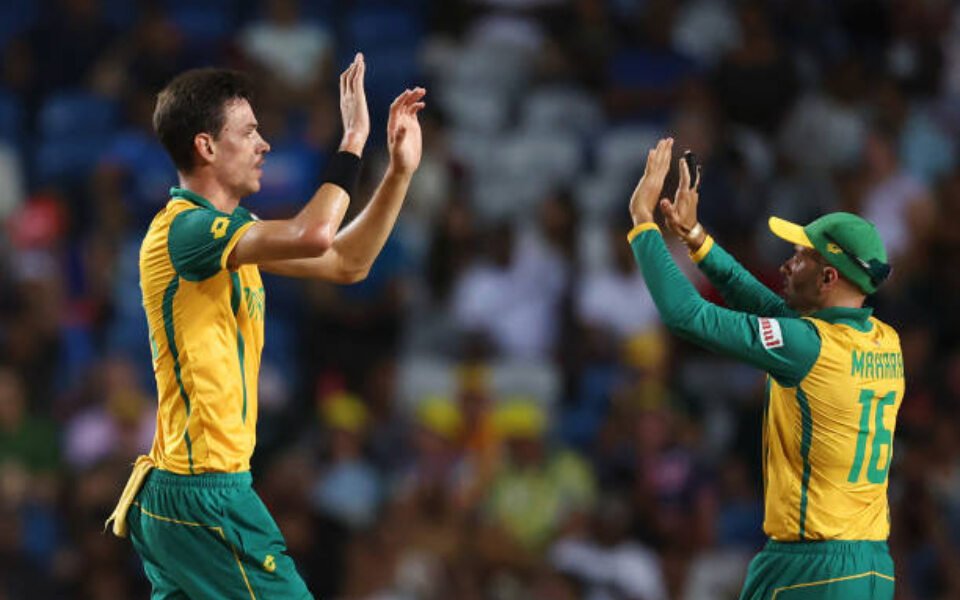
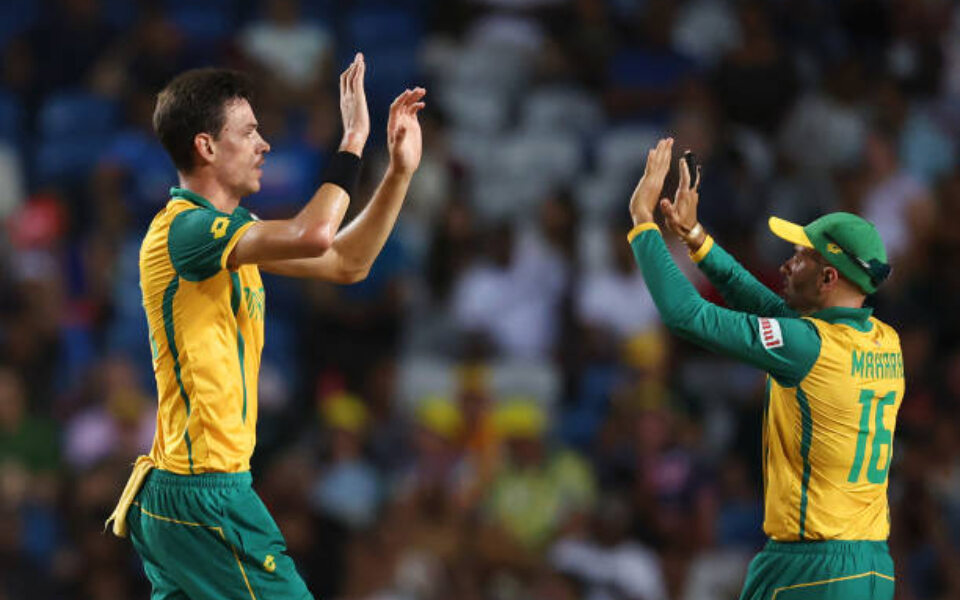
South Africa defeated Australia by 67 runs in the first ODI of the Australia in South Africa 2026-27 series at Kingsmead, Durban. The hosts, playing without Kagiso Rabada, Lungi Ngidi, Ottneil Baartman and Kwena Maphaka, produced a complete team performance to open their home international summer with a commanding victory.
Matthew Breetzke, who became the leading run-scorer in ODI cricket after 14 innings, struck the second century of his career to anchor the South Africa innings. Marco Jansen equalled his career-best score of 75 and took four catches, including a spectacular one-handed effort on the boundary. Left-arm spinners Keshav Maharaj and Bjorn Fortuin shared six wickets between them as Australia fell 67 runs short, losing their last nine wickets for 101.
How did South Africa build their total?
Australia chose to bowl first and had the measure of South Africa for the first two-thirds of the innings. Josh Hazlewood bowled a fuller length and proved difficult to get away, Nathan Ellis used wobble seam and slower balls effectively, and Adam Zampa took two wickets in his first four overs to keep the middle overs quiet.
The home side shuffled their batting order due to the absence of Aiden Markram for personal reasons, with Tony de Zorzi opening alongside Quinton de Kock. De Zorzi was dismissed for a seven-ball duck, and de Kock was caught behind off Ellis to leave South Africa at 29 for 2 in the eighth over. Temba Bavuma worked hard for a 48-ball 30 before being caught behind off a Zampa leg-break. Ryan Rickelton, batting at No. 5, the lowest position in his ODI career, showed promise before being caught by Matt Renshaw off Zampa.
David Miller struggled, managing only 9 off 24 balls before a leading-edge off Ellis ended his innings. South Africa were placed at 168 for 5 in the 34th over when Jansen arrived at the crease and joined Breetzke.
Jansen played aggressively from the start, hitting Mitchell Starc through midwicket and sending Zampa over long-on with a no-look six. He raced to 41 off 31 balls before eventually reaching his fifty. Breetzke, who was on 76 from 79 balls when Jansen came in, entered the 90s with a punch over point in the 43rd over and reached his hundred with a single in the next over.
Jansen reached fifty when he hit Starc to long-on, where Cooper Connolly attempted a sliding catch but could not hold on. South Africa entered the last five overs on 243 for 5, plundered 30 runs off the next two overs and also benefitted from Australia’s slow over-rate, which meant the visitors had to bowl the last two overs with a fielding penalty. The pair added 107 runs together to help South Africa get to 297/8.
How did South Africa dismiss Australia in the chase?
Set the second-highest successful chase at Kingsmead, Australia started at a rapid pace. Mitchell Marsh and Travis Head put on 90 inside 10 overs. Marsh was particularly severe on Jansen’s third over, which went for 17 runs, and reached his fifty off just 31 balls, bringing it up with a 104-metre six over the leg side. Head had less strike early, scoring 7 off 11 balls in that period, but accelerated when Corbin Bosch came on.
Keshav Maharaj was brought on to slow the chase and his first spell of four overs yielded 1 for 13. He dismissed Marsh, who drove to Breetzke at cover. Jansen returned in the 15th over and dismissed Head, who top-edged to deep third attempting to turn the ball to leg. Josh Inglis gloved a reverse-sweep to slip to give Fortuin his first wicket. Connolly then slog-swept Fortuin high to long-on, where David Miller took a sliding catch, and South Africa had clawed their way back into the contest.
Maharaj then had Cameron Green caught at long-on and Jack Edwards caught at slip. At that point, Australia were 188 for 6 and still needed 110 runs off 20.3 overs. Renshaw, on 31, and Starc took 14 runs off Jansen’s sixth over to bring the target into double figures. South Africa tightened their grip as Maharaj bowled a maiden, Jansen and Fortuin conceded just two runs in two overs, and Gerald Coetzee delivered another maiden filled with yorkers.
The decisive moment came when Coetzee dropped short, Renshaw pulled, and Jansen took a one-handed catch on the rope with his right arm at full stretch and his fingers gripping the ball inches off the ground. Australia were 215 for 7 at that stage and needed 83 runs in 82 balls. Bosch picked up two wickets late in the innings, and Maharaj claimed the final wicket when Zampa slog-swept to Breetzke.
Maharaj was the pick of the bowlers for the Proteas, as he finished with remarkable figures of 4/20 in 9.2 overs, including two maidens.
Cricket News
'It's about how mentally strong you are' – Gautam Gambhir warns India's young batters ahead of BGT

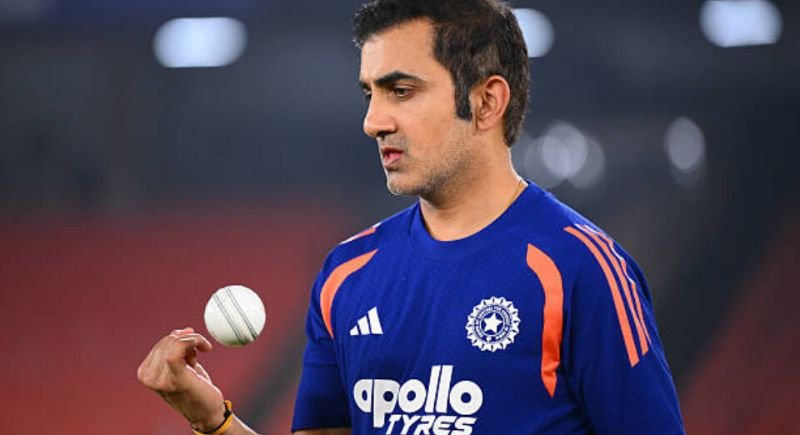
India’s head coach Gautam Gambhir has highlighted mental strength as a defining factor for the team’s young batters ahead of the Border-Gavaskar Trophy, scheduled from January 21 to March 3, 2027. The five-match series will be played across Nagpur, Chennai, Guwahati, Ranchi and Ahmedabad.
Australia’s bowling attack presents a significant challenge, featuring experienced campaigners Pat Cummins, Mitchell Starc, Josh Hazlewood and Nathan Lyon. These bowlers bring extensive Test cricket experience against India’s young batting lineup. Gambhir acknowledged the challenge while emphasising what separates success from failure in the format.
“Looking forward to it. That is probably one thing which I’m absolutely looking forward to, because playing against Australia at home, and obviously it wasn’t the best when we went to Australia. And for me, I think it is going to be India versus Australia, but before that, it is New Zealand. But the other challenge against Australia will be their experienced bowling attack. They’ve got the likes of obviously Starc, Nathan Lyon, Cummins, and Hazlewood,” Gambhir said as quoted by NDTV Sports.
“Obviously they’ve got so much experience of playing Test cricket against our young batting lineup. So it’s going to be a great experience for these guys. More importantly, in Test cricket, it’s about the skill, but it’s about how mentally strong and how much pressure you can absorb. The more pressure you absorb, and the more pressure you embrace, it’s going to give yourself the best chance,” he added.
Preparation will give you results: Gambhir
Preparation time has emerged as a critical factor in India’s Test performance. During the recent tour of Sri Lanka, India secured more than 400 runs in both innings of both Test matches. The team arrived 10 days before the first Test match, allowing adequate preparation against spin bowling. This contrasted sharply with earlier series where preparation time was limited.
“But you could see that in Sri Lanka, we played two Test matches, and we got more than 400 runs in both the innings. And the reason was that we prepared extremely well. We went 10 days before the Test match, we could prepare playing spin, and then you could see the results as well. The thing is, I’m not going to give any excuses, but that’s the reality,” Gambhir said.
“When we played the Test series against South Africa, we were coming after playing a T20 series from Australia. And we had two days before the first Test match. I remember coming from Brisbane, and then we reached Calcutta. We had two practice sessions, and we were straightaway into the Test match against South Africa,” he added.
We need to plan for spin: Gambhir
The importance of early arrival and spin preparation was underscored by Gambhir’s analysis of the Sri Lanka tour. Playing in Sri Lanka’s conditions against experienced spinners required specific preparation. The improvement shown by India’s batters in scoring 400-plus runs in both innings of both Test matches demonstrated the value of adequate preparation time.
“When we went to Sri Lanka early, you could see the way guys played spin, because Sri Lanka isn’t easy conditions. In their own backyard, the weather, their spinners, their experienced spinners against our batting lineup. If you can get 400-plus in both the innings in both the Test matches, that just shows that there is a lot of improvement happening. So we will have to prepare well before New Zealand and before Australia, and obviously the focus is on spin, yes, that how well can we manage and how well can we negate spin,” Gambhir said.
Test cricket need to be divine: Gambhir
Young cricketers Devdutt Padikkal and Manav Suthar have been cited as examples of players who prioritise red-ball cricket. Gambhir emphasised the importance of the next generation valuing Test cricket in an era dominated by T20 cricket’s financial rewards and media attention. The development of young players through structured pathways has been crucial to their growth.
“Extremely important, because both of them are young, both of them are hungry, both of them value Test cricket. It is so important for the next generation who’s coming in to value Test cricket, because in today’s day and age, with so much of focus and so much of limelight and so much of monetary gains that are associated with T20 cricket, how we can keep Test cricket divine, and above the other two formats is going to be key. Also, how much value a young generation or the new guys coming in gives that red-ball cricket is going to be key. That’s why I said, a strong Test-cricketing nation is going to be a strong cricketing nation,” Gambhir said.
“When it comes to Manav and Dev, I think they value Test cricket, they’re disciplined, hungry, and prepare really well. And Manav, we’ve seen that I’ve got to give selectors and BCCI a lot of credit because the way they’ve handled Manav, for the amount of opportunities he’s got, the way he’s been groomed over such a long period of time, the amount of A tours he’s done and bowled in different conditions… So my belief is that the better we prepare, the better opportunity we have to deliver,” he concluded.
Cricket News
'You will have to give your batters a break' – Gautam Gambhir hints at white-ball rest ahead of NZ tests

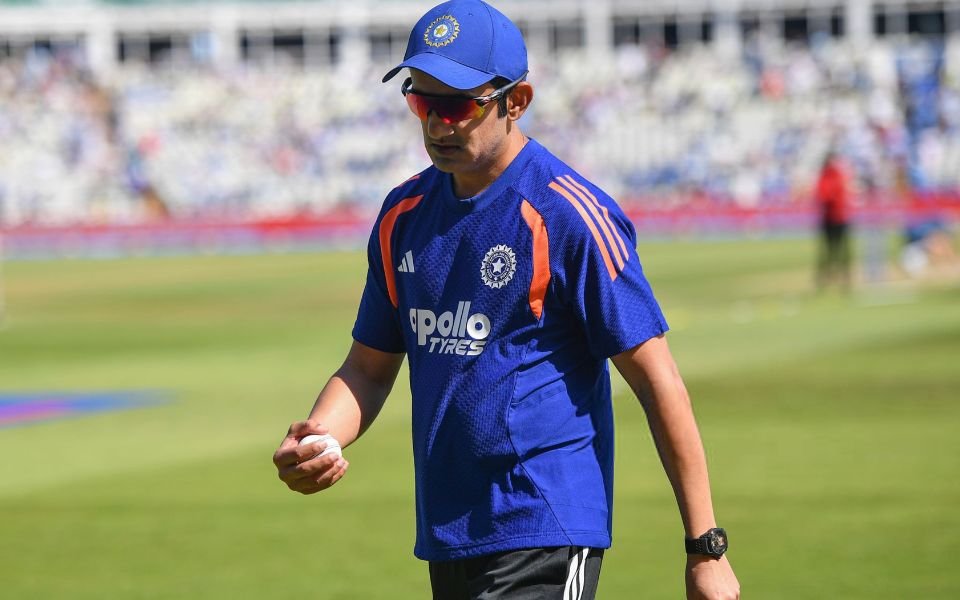
Gautam Gambhir has indicated that some of India’s leading batters may need a break from ODI cricket to focus on Test preparations during the upcoming multi-format tour of New Zealand. The India head coach highlighted the challenge of switching from 50-over to five-day cricket within a compressed schedule, where the transition demands significant mental and technical adjustment.
The tour presents a significant scheduling challenge for India’s squad. The first Test in Wellington is set to begin on November 19, merely three days after the fifth and final ODI concludes in Tauranga. Across all formats, the marathon tour will feature 12 games, requiring careful management of player workload and preparation time.
“Often for Test match preparation, you will have to give your batters a break as well from the white-ball to move into Test cricket, because coming from T20 to one-day cricket is easy,” Gambhir said as quoted by India Today.
Why batters need a break from white-ball cricket?
Gambhir acknowledged the tension between maintaining continuity across formats and the practical need to rotate players strategically. He recognised that coaches and selectors ideally want players competing in all three formats, yet the modern schedule makes this increasingly difficult to achieve.
“Look, ideally for any coach it is very important that as many players play all three formats, the better it is, because continuity in international cricket is very important,” Gambhir said.
Balancing format rotation with Test priorities
Gambhir emphasised that building a strong Test cricketing foundation remains central to India’s long-term strategy. The head coach has consistently prioritised the longest format as a marker of overall cricketing strength, particularly when introducing younger players to international cricket.
“When you are getting the new guys in, obviously trying to make them feel how important Test cricket is, because I’m a very big believer that a strong Test cricketing nation is a strong cricketing nation,” Gambhir said.
During his two years as India’s head coach, Gambhir has overseen both significant achievements and challenging defeats.
“I think I’ve had my own share of ups and downs, I think I’ve had my own failures and success. But again, I’ve always believed that when you take up that kind of a responsibility, there will always be ups and downs,” said Gambhir.
-

 DLSU7 months ago
Shan Nunag shows composure beyond year in La Salle debut
-

 News7 months ago
Camilla Lamina shows calm leadership even off the bench
-
Football7 months ago
2026 Uganda Cup: The confirmed fixtures, venues & kick off times at round of 32
-
Foreign Pros7 months ago
‘Eric Chelle must pay compensation to quit Super Eagles post’
-
 Basketball5 months ago
PBA slaps ₱20k fine on Calvin Abueva for F2 upgrade vs Magnolia
-
Football7 months ago
Divine Mukasa plays full time as Leicester City bows out of FA Cup to Southampton
-

 Cricket News8 months ago
T20 World Cup 2026: 'We've got to stay positive' – Afghanistan coach Jonathan Trott remains hopeful of reaching Super 8 despite back-to-back losses
-
Others8 months ago
Sarah Babirye Kityo: The majestic return to 12th Parliament, to front sports talent development