
Cricket News
Paddy Upton explains how Yashasvi Jaiswal's sledging affected Niroshan Dickwella

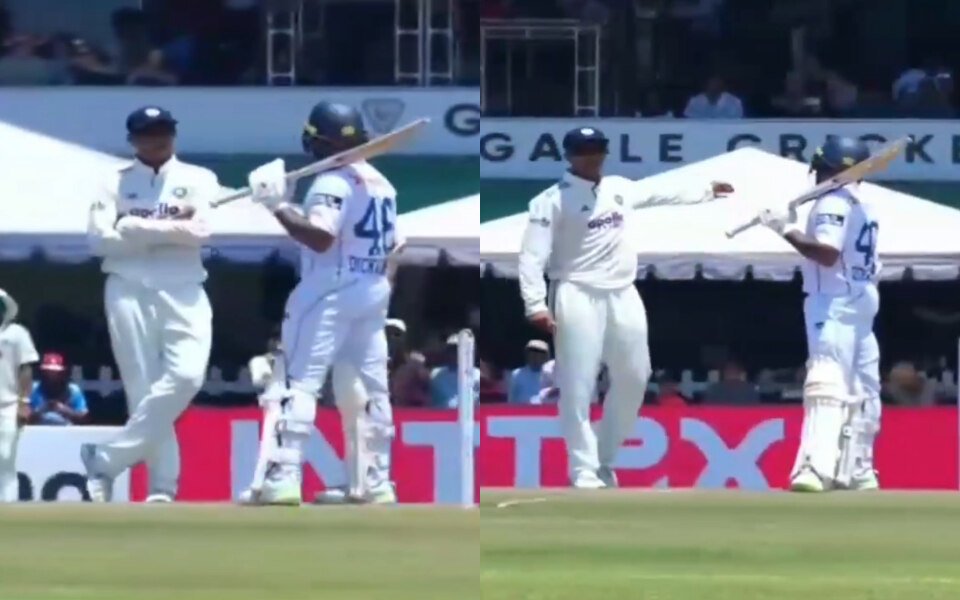
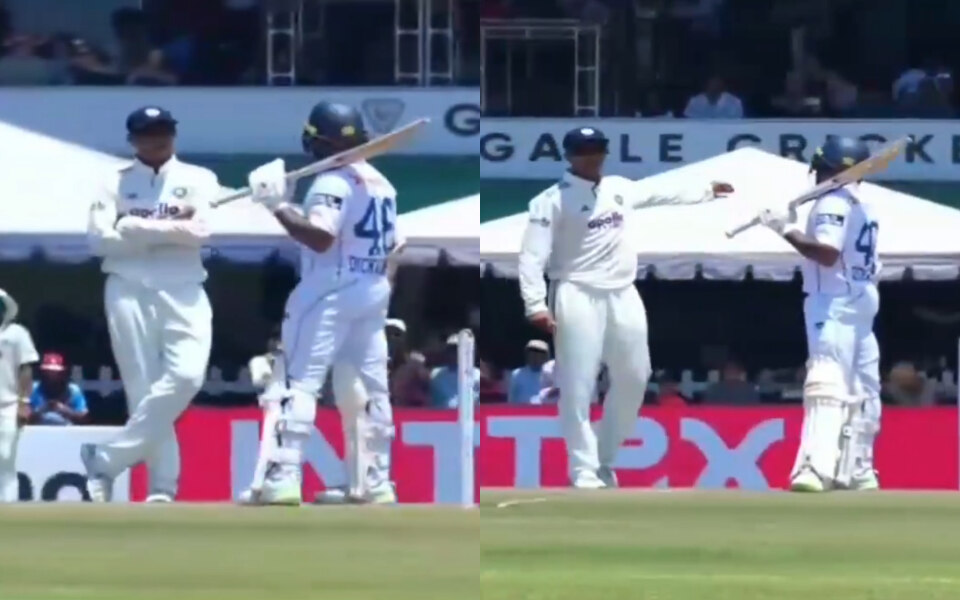
Yashasvi Jaiswal sledged Niroshan Dickwella with an IPL promise during the final day of the first Test between India and Sri Lanka at Galle, and Dickwella was dismissed by Prasidh Krishna shortly after the exchange. India went on to win the match by 165 runs, taking a 1-0 lead in the series.
Jaiswal’s exchange with Dickwella was a deliberate attempt to shift the batsman’s attention away from the ball and onto the conversation. Former India mental conditioning and strategic leadership coach Paddy Upton explained the mechanics of such banter in Test cricket, noting that the timing and nature of the comment are central to whether it works.
“So when it comes to banter, there are three dynamics at play. First of all, it’s the nature of the comment. It might be a silly comment, a clever comment or an abusive comment. The second one is the person delivering the comment. And the third one is the batsman that it is directed at. And the interplay of those three is really important,” Upton told the Indian Express
What was the purpose of Jaiswal’s banter with Dickwella?
Upton elaborated on the impacts of banter and jibes on a batter’s concentration in the middle, with fielders trying their best to get the batters’ attention away from the ball and disrupt their focus. He further stated that Test cricket is a longer format, where it is easier to get into a batter’s head, the way Jaiswal was able to achieve with Dickwella.
“Banter generally happens in that period, to see if the fielder can get into the batsman’s head and get them thinking about engaging in that comment, and get the batsman focused on what the person said rather than the ball. So that’s the purpose. Obviously, Test cricket is a much longer format; there’s much more time to try and get the batsman focused on sideshows rather than the main show, which is the ball. What a batsman needs to be doing is focusing really intensely on the ball, for about three seconds, just as the bowler is about to approach the umpire. Sometimes a clever comment can be much better for a batsman who’s an overthinker,” Upton added.
How do modern Indian players approach sledging compared to earlier generations?
Upton also addressed how the current generation of Indian cricketers handles on-field banter differently from their predecessors. He observed that exposure to social media and a more connected world has made younger players more at ease with this aspect of the game.
“Modern-day Indians are more comfortable with banter; youngsters tend to be much more worldly-wise. They’ve been exposed to it largely through social media; they watch a lot of impetuous, cheeky behaviour that has made that more acceptable,” Upton said.
The Galle exchange between Jaiswal and Dickwella illustrated this shift, with Jaiswal initiating the banter confidently from square leg rather than reacting to it. Upton’s broader point was that the effectiveness of any comment depends on the type of remark, who delivers it and the specific temperament of the batsman receiving it.
Cricket News
'In sport, you are allowed to fail' – Bharat Arun backs young Indian pacers amid recent criticism

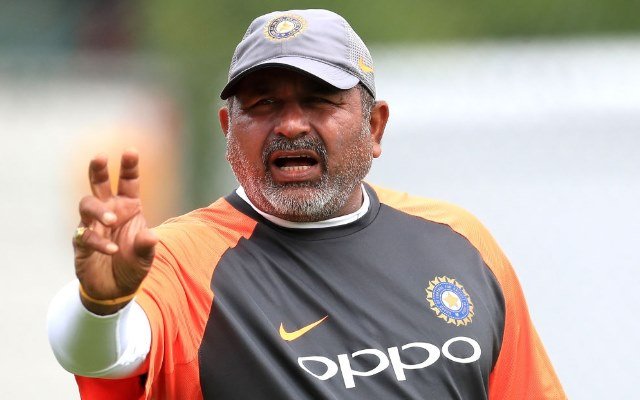
Bharat Arun, the former India bowling coach and current bowling coach of Lucknow Super Giants ahead of IPL 2026, has strongly defended India’s young pace unit against recent criticism. The makeshift Indian bowling attack without Jasprit Bumrah struggled on flat pitches against an in-form, explosive West Indies batting unit led by Shai Hope. Apart from Mohammed Siraj and Arshdeep Singh, the pace unit lacked experience across the white-ball series, prompting observers to describe the bowling as toothless.
Arun objected to this viewpoint, noting how the Indian bowling unit successfully defended a total in the third T20I against West Indies on a flat pitch with short boundaries. He emphasised that it is unfair to dismiss the current crop of bowlers without recognising their potential and the circumstances they faced.
“I feel, if you look at the overall Indian pace attack, it looks pretty healthy to me. It is just a question of the combination. When one bowler comes into the team. When somebody exprienced like Bumrah walks into the team, the whole bowling attack looks totally different. When they are trying out, this is the question that is most asked, different bowlers in different circumsances, one is they are gaining in experience. Yes, it is okay for a bowler to get hit. In sport, you are allowed to fail. But the failure to me is an investment to tell me how do I reinvent myself. So, if that is going to be the case, if the bowler is going to understand where he stands and if he is going to reinvent himself, I think that is great preparation for the big event. And I hope the team management is doing just that,” Arun said while answering CricTracker’s query during an interaction arranged by Sony Sports Network.
Arun highlighted that the absence of experienced bowlers like Bumrah significantly changes the composition and effectiveness of the attack. He stressed that young bowlers gaining experience through different circumstances is a natural part of their development, and setbacks should be viewed as learning opportunities rather than failures. Four pacers have recently made their debuts, while an experienced group remains available, though heavy rotation has been necessary due to workload management and fixture congestion.
Arun also pointed out that there are enough young bowlers in India who can swing the ball, and it falls to the selectors and team management to identify and nurture those talents. The T20I series in New Zealand begins on October 22, providing the young Indian pace unit with an opportunity to apply lessons from their recent experiences and demonstrate their capability on a fresh stage.
Arun reflected on India’s recent tour of England, where the Men in Blue lost both the ODI and T20I series, and mentioned how that experience shapes the team’s approach to conditions in New Zealand.
“New Zealand picking predominantly a pace attack, they could be taking a leaf out of what India fared in England. But also, it is an experience for this Indian team for the conditions that were prevalent in England. They will be thinking how they could have used the conditions much better than they did in England. Then there is going to be a really, really good battle there. I think these teams learn pretty fast these days,” Arun said.
“And that is going to be the biggest challenge for any team is to understand different conditions and adapt to it. So, yes, England was an experience for this Indian team. But you cannot write them off just because the England experience didn’t go too well. They can use that same experience to do better elsewhere,” he added.
Cricket News
‘Having Bhuvi on the tour is going to be invaluable’ – R Sridhar on Bhuvneshwar Kumar's comeback
.jpeg)
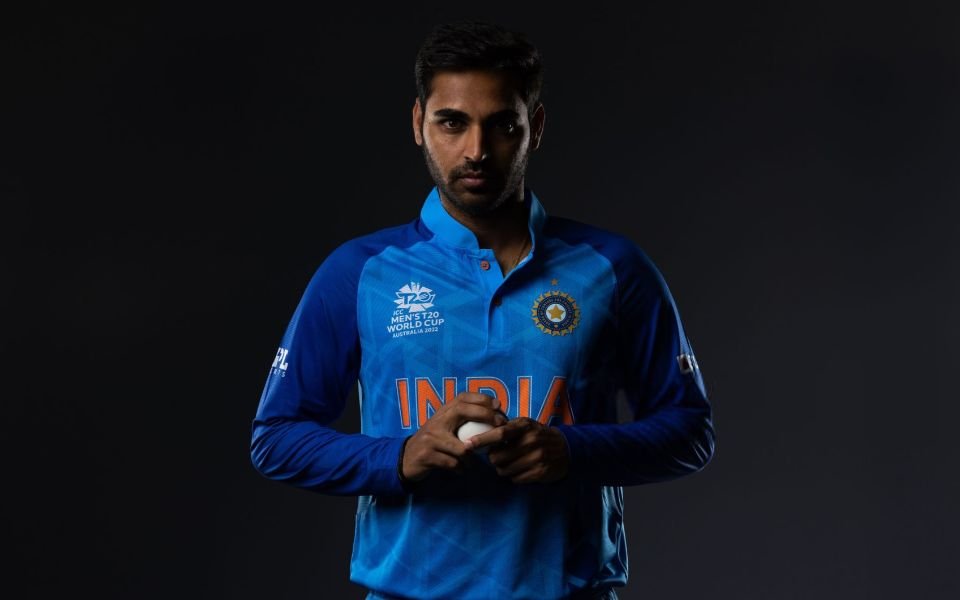
Bhuvneshwar Kumar has made a sensational comeback to the Indian cricket team for the five-match T20 series against New Zealand, marking his return nearly four years after his last international appearance in November 2022. The series runs from October 22 to November 1, and Bhuvneshwar’s inclusion alongside young pace options Arshdeep Singh, Mayank Yadav and Prince Yadav has drawn attention for its potential developmental value.
R Sridhar, India’s former fielding coach, spoke about Bhuvneshwar’s role in the squad. Sridhar emphasised that beyond his function as a backup bowler, Bhuvneshwar’s presence offers significant mentoring opportunities for the younger fast bowlers in the squad.
“I think I didn’t mention it; I just thought about Bhuvi being a backup bowler for us in this series, but also just the fact that he’ll be able to mentor a few young fast bowlers who are in the squad itself is exciting for me, for them to watch how he’s handling pressure. How… Clear is about his execution. How he’s got multiple options for the same field set. How… He is always out thinking the batter, one step ahead of the batter,” Sridhar responded to CricTracker’s query during an interaction arranged by Sony Sports Network.
Backup bowler and mentor for young pacers
Sridhar explained that young bowlers can observe and learn from Bhuvneshwar’s approach to handling match situations and pressure. The former fielding coach highlighted how Bhuvneshwar’s ability to recover after being hit for boundaries and finish overs effectively demonstrates qualities that developing fast bowlers need to understand.
“On the field, these are the things that they can observe about what Bhuvi is doing and also discuss with him. You know? A young bowler may not see different options in front of him and they lose clarity at the top of the mark when they are under the pressure. But someone like Bhuvi, despite being under pressure, the way he comes back after being hit for a boundary. Or the way he finishes the over with the last ball,” Sridhar added.
Informal learning during the tour
Sridhar stressed that the learning opportunities extend beyond match situations to informal settings during the tour. He noted that young fast bowlers can gain valuable insights from Bhuvneshwar through conversations and interactions in various settings.
“So these are the things our young bowlers can observe closely from Bhuvi and learn from him and talk to him, pick on his brains during bus journeys, during airport lounges, during the breakfast table. During coffee chats. So I think these are the times when our young fast bowlers can really pick on Bhuvi’s experience and learn a lot from him. So having Bhuvi on the tour is going to be invaluable for these young bowlers,” he concluded.
Bhuvneshwar’s recent form in the IPL 2026 demonstrated his continued effectiveness as a bowler. He took 28 wickets at an economy rate of 7.95 during Royal Challengers Bengaluru’s successful title defence, finishing as the second-highest wicket-taker in the tournament. The squad for the New Zealand series is led by captain Shreyas Iyer, with Tilak Varma as deputy.
Cricket News
‘Feeling more motivated than ever’ – Jos Buttler provides update after hamstring surgery, faces lengthy lay-off


Jos Buttler had surgery on his left hamstring on October 12, 2026, and now faces a lengthy lay-off. No timeframe for his return has been provided by the medical team.
Buttler, 36, shared the news through an Instagram post on Monday, October 12, appearing on a hospital bed with his left leg in a brace and giving a thumbs up.
He wrote in the caption, “Succesful [sic] surgery and on the road to recovery,” and added, “Feeling more motivated than ever!”
The hamstring problem first surfaced on September 24, 2026, when England lost the second ODI against Sri Lanka at Headingley. Buttler left the field after being hurt mid-innings but returned briefly to bat on before eventually pulling up again. He had made 69 from 49 balls in that knock, hitting five sixes, before the injury ended his involvement.
Which assignments could Buttler miss because of the surgery?
Buttler had already been withdrawn from England’s tri-series assignment in Pakistan before the operation, with the touring party set to leave later this week. The surgery on October 12, 2026, now casts doubt over several further commitments across the coming months.
The ECB was scheduled to name its squad for the Australia white-ball tour on October 13, 2026, and Buttler appears certain to be absent from that series in November. His franchise contract with Durban’s Super Giants for the SA20, a competition that opens on January 17, 2027, is also now uncertain given that no recovery date has been set.
Notably, on the same day as his operation, the ECB confirmed one-year contract extensions for both Buttler and leg-spinner Adil Rashid. Buttler’s revised deal will run out ahead of the 2027 50-over World Cup, which is scheduled to be held in South Africa.
What form had Buttler shown before the injury struck?
Buttler had been producing some of the most consistent white-ball batting of his career in the period leading up to the Headingley match. Across nine white-ball internationals after the T20 World Cup, he accumulated 466 runs, a sequence that included the 69-ball knock at Headingley that ended with him leaving the field.
Earlier in 2026, Buttler contributed 87 runs as England reached the semi-final of the T20 World Cup. At domestic level, he captained Manchester Super Giants to the Hundred title and became the first male cricketer to reach 15,000 career T20 runs, a landmark that underlined his standing in the shortest format.
This is not the first occasion Buttler has been troubled by his left hamstring. A comparable injury to the same area kept him sidelined during the 2024 IPL season, and the recurrence is understood to be a concern for the England medical staff. No official statement on the nature or extent of the surgical procedure has been released.
-

 Athletics1 week ago
Abeokuta 10km Race winners praise organisers after ₦6m prize payout
-
Featured2 months ago
Bet9ja Foundation Ex-Internationals Cup: Babington Lift Giant Trophy, Pocket ₦2.5m After 3–1 Final Win
-
 Basketball6 months ago
PBA slaps ₱20k fine on Calvin Abueva for F2 upgrade vs Magnolia
-

 DLSU8 months ago
Shan Nunag shows composure beyond year in La Salle debut
-

 News8 months ago
Camilla Lamina shows calm leadership even off the bench
-
Football8 months ago
2026 Uganda Cup: The confirmed fixtures, venues & kick off times at round of 32
-
Foreign Pros8 months ago
‘Eric Chelle must pay compensation to quit Super Eagles post’
-
Football8 months ago
Divine Mukasa plays full time as Leicester City bows out of FA Cup to Southampton