
Cricket News
'I would prefer to be the first Aaryavir, not the second Sehwag' – Aaryavir Sehwag on comparisons with Virender Sehwag

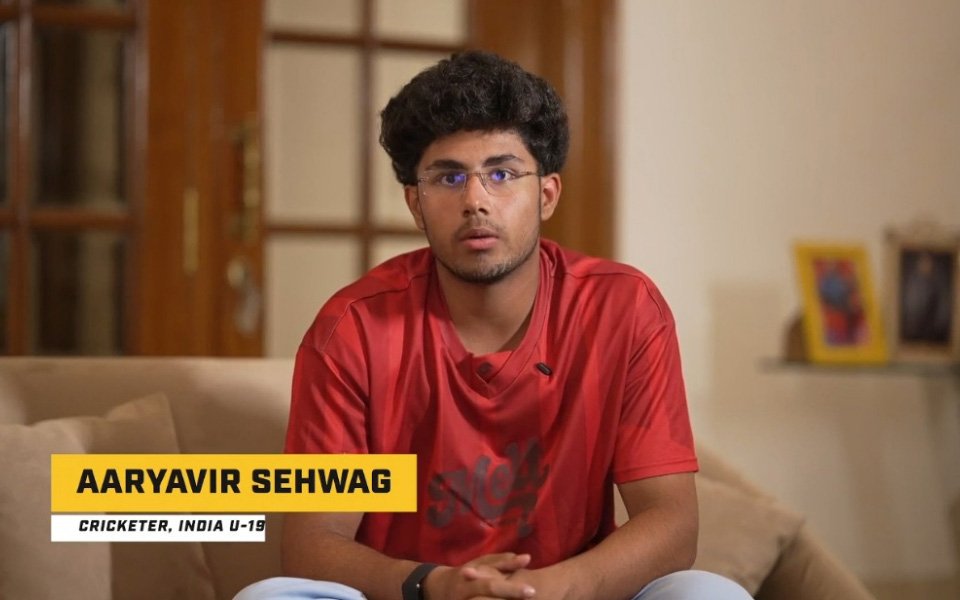
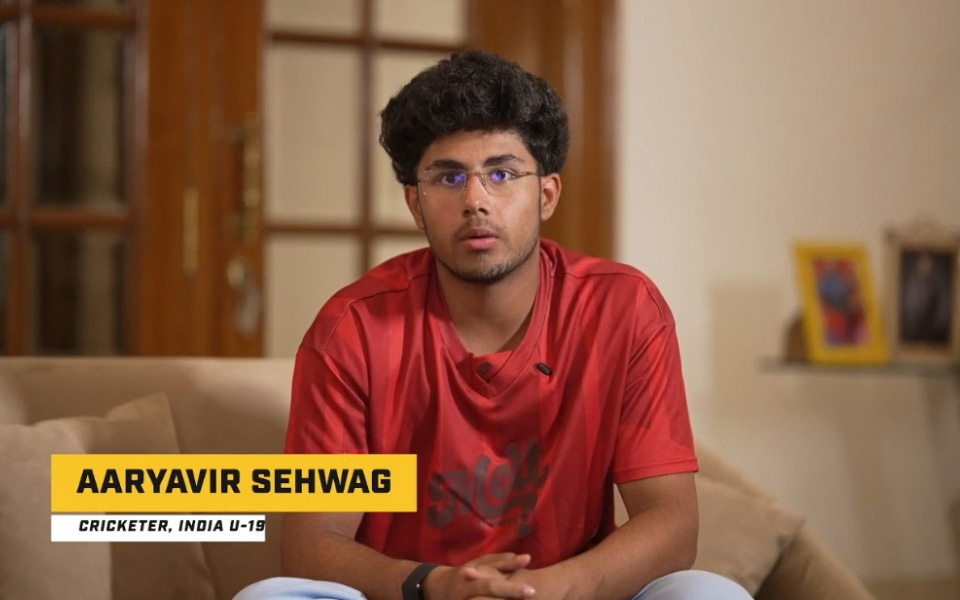
Against UAE in the Under-19 Asia Cup 2026, Aaryavir Sehwag compiled 160 runs from 168 deliveries as India U19 accumulated 309 for 7. His innings contained 17 fours and seven sixes, showcasing controlled aggression despite challenging batting conditions. The young right-hander reached his half-century in 69 balls and progressed to three figures in 131 deliveries. Once established, he accelerated sharply, adding 60 runs in just 37 balls to build momentum for India’s total.
Oman presented distinct challenges throughout the tournament. Early overs typically featured pronounced seam movement lasting 10 to 15 deliveries, with turn developing as the innings progressed. Against UAE, Sehwag adapted by spending considerable time at the crease before accelerating once he felt secure at the wicket. This measured approach allowed him to negotiate the difficult surface and capitalise when conditions became more favourable.
“I don’t label myself as a stroke player or any kind of player. I just want to play according to the situation. As I’ve said earlier, I am a huge Virat Kohli fan, and I want to do what the team requires and needs at that time. I’m glad that I could play the way I did. Initially, those 10 to 15 overs have always been a challenge in Oman throughout the Asia Cup,” Aaryavir said as quoted by JioStar.
“In those first 10 to 15 overs, the plan was to see off the seam movement, and after that, shockingly, there was turn as well in that match against UAE. It was a strange kind of wicket, but I’m glad that I could spend a good amount of time on that wicket and once I got set, I just kept batting and the runs kept coming. I was not thinking too far ahead, just looking to play each ball on its merit and take the singles and twos. The 160-run knock was special because it came on a difficult wicket where batting was not easy,” he added.
What is Aaryavir Sehwag’s stance on comparisons to Virender Sehwag?
Comparisons to his father, former India opener Virender Sehwag, have shadowed Aaryavir throughout his cricket journey. The young batter has come to terms with this inevitable scrutiny and addressed it directly, making clear his intention to forge his own identity rather than live in the shadow of his father’s legacy.
“I have accepted the fact way earlier in my career that I will always be compared to my father and it’s inevitable, and I can’t do anything about it. And if people find similarities, those are their opinions and their love for my dad. But I’m not here to be Sehwag 2.0, I’m here to be Aaryavir Sehwag, and I would prefer to be the first Aaryavir, not the second Sehwag,” Aaryavir said.
How has Aaryavir Sehwag’s approach to cricket evolved?
Sehwag’s approach to his career has shifted significantly following earlier disappointments. He no longer relies on extensive planning or high expectations, having learned that such methods led to frustration in previous years. Instead, he focuses on incremental improvement and seizing opportunities whenever they arise, whether at club, state or national level.
“I don’t believe in too much planning or expectations, because two or three years ago I did a lot of planning and had a lot of expectations for my cricket career, and nothing worked out. It just gave me disappointment. So, I’m just looking to improve day by day. Every day I want to be a better version of myself,” Aaryavir said.
“If opportunities come, I will look to do well, whether it is the Senior Ranji Trophy, Syed Mushtaq Ali, the IPL, the Indian team, or wherever I get a chance, including the Under-19 level. I just want to do well. Every game for me, whether it is club level, state level, or for the national side, is important, and I want to score runs in every game. I am hungry to score runs everywhere,” he added.
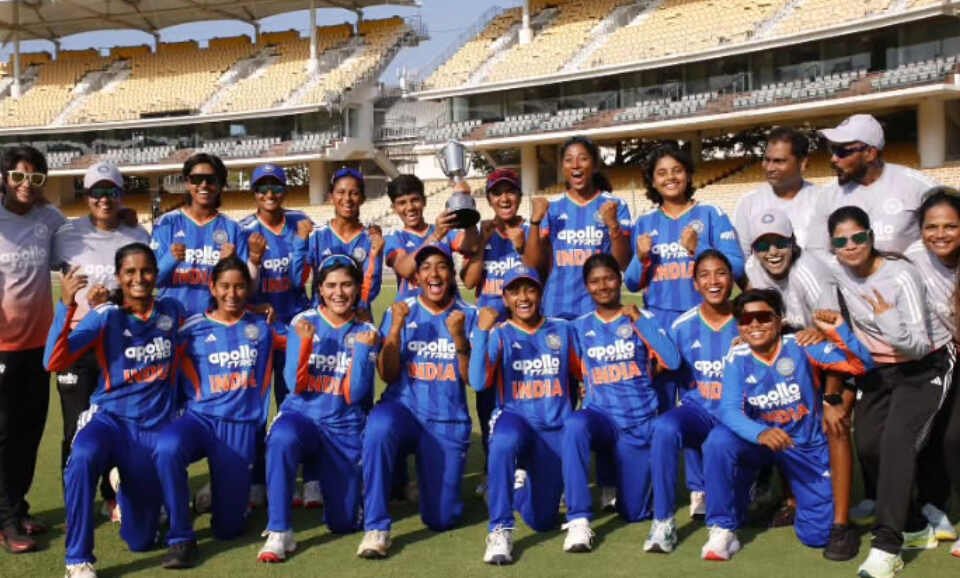
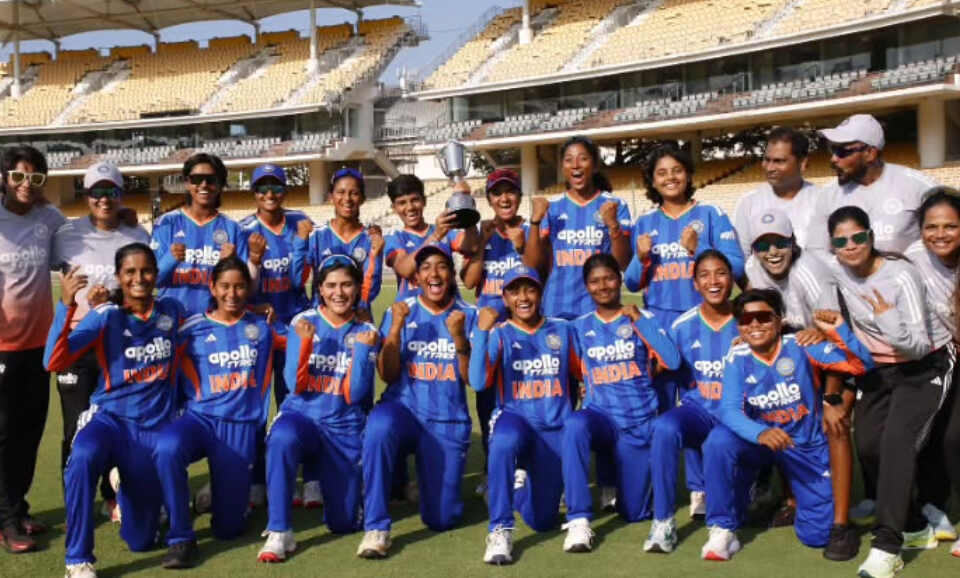
The Women’s Selection Committee of the BCCI announced a 15-member India U19 squad on November 21, 2026, for the England Women U19 Tour of India. The Muthoot FinCorp T20 series comprises five matches spread across Vadodara and Surat between November 26 and December 6, 2026, and will serve as a key preparatory assignment ahead of the ICC Under-19 Women’s T20 World Cup in January 2027.
Wicketkeeper-batter Bhavika Ahire has been named captain of the side, with Anaadi Tagde appointed as her deputy. The 15-member group gives the selectors a broad mix of batting and bowling options, blending experienced names with emerging talent from across India.
Where and when will the five T20s be played?
The series opens at Vadodara, where the 1st T20 is scheduled on November 26, 2026, and the 2nd T20 follows on November 28, 2026, at the same venue. The tour then moves to Surat for the final three fixtures: the 3rd T20 on December 1, 2026, the 4th T20 on December 3, 2026, and the 5th and concluding match on December 6, 2026. Hosting matches across two different venues gives the squad exposure to varied playing surfaces and conditions within a single home series.
|
Date |
Time |
Match |
Venue |
|
26-Nov-26 |
6:00 PM |
1st T20 |
Vadodara |
|
28-Nov-26 |
1:00 PM |
2nd T20 |
Vadodara |
|
01-Dec-26 |
6:00 PM |
3rd T20 |
Surat |
|
03-Dec-26 |
6:00 PM |
4th T20 |
Surat |
|
06-Dec-26 |
1:00 PM |
5th T20 |
Surat |
How does this series help India U19 women prepare for the World Cup?
With the ICC Under-19 Women’s T20 World Cup set for January 2027, the five-match home assignment against England U19 arrives at a critical point in the build-up calendar. Five competitive T20s across Vadodara and Surat will give the squad meaningful match practice in home conditions before they travel to that global showpiece. The format and intensity of the Muthoot FinCorp T20 series are expected to sharpen the group’s readiness, with Ahire and Tagde leading a side that the selectors have assembled with both the bilateral series and the World Cup in mind.
India U19 women full squad for T20 series against England U19
Bhavika Ahire (C) (WK), Ira Jadhav, Nidhi Mahto, Purva Siwach, Mehek Narwase, Maitri Maniar, Ishwari Awsare, Deeya Yadav, Shreya S Chawan (WK), Samaira Raghav, Kumari Palak, Uma Kashvi, Achsah Parmar, Anaadi Tagde (VC), Palak Singh.
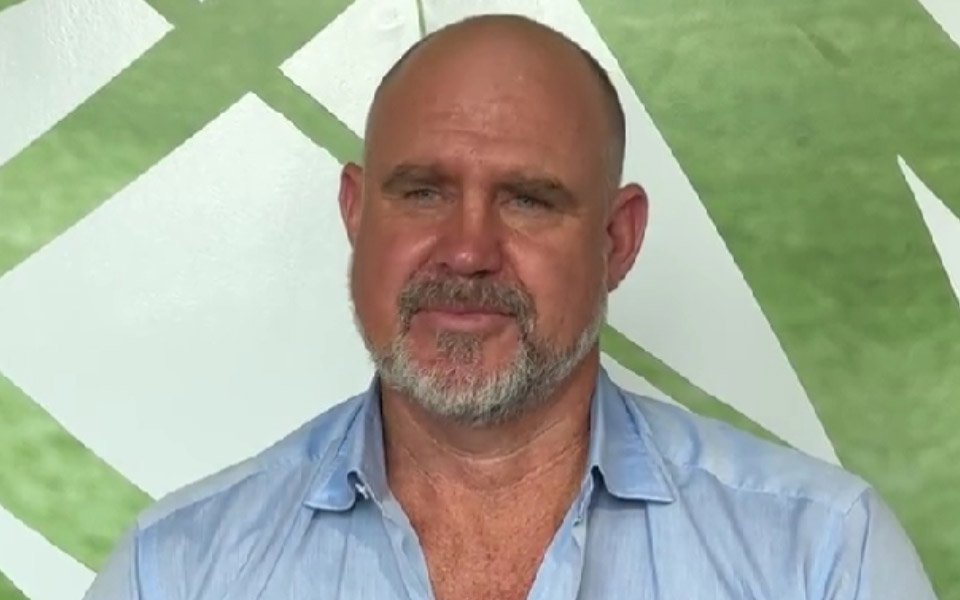

The Sandpapergate controversy has reignited following the release of Usman Khawaja’s autobiography Sabr, in which the batter claimed the entire Australian team knew about the 2018 ball-tampering scandal. Pat Cummins, the Australian captain, responded with a 68-minute press conference on November 13, 2026, where he addressed the allegations directly. Cummins described Khawaja’s claims as utter nonsense and stated that Khawaja was 100 per cent wrong in suggesting collective knowledge of the incident.
During the press conference, Cummins made personal remarks about his friendship with Khawaja, saying that friends are not casual with each other’s lives and reputations. Former Australia batter Matthew Hayden has now weighed in on how the captain handled the dispute, offering a sharp critique of Cummins’ approach.
“Pat Cummins has come out and basically thrown Usman under the bus. He’s raised very personal issues regarding their friendship and how casually he believes that friendship has been treated,” Hayden told JioStar.
Why Hayden believes Cummins’ approach will backfire in India?
Cummins indicated during his press conference that he would answer questions for approximately 90 minutes before drawing a line under the matter. Hayden highlighted the practical difficulties with this stance, noting that the Australian captain’s intention to cease discussing Sandpapergate would prove unrealistic when the team travels to India for the Border-Gavaskar Trophy.
“He’s gone on record saying, ‘I’ll answer questions for an hour and a half, but after this, I’m not answering any more questions about it.’ That basically means that when Australia travels to India for the Border-Gavaskar Trophy, he won’t want to answer questions about Sandpapergate, which is wishful thinking at best,” Hayden said.
Unresolved tensions within the Australian dressing room represent a significant fault line that opponents could exploit during high-stakes international matches. Hayden warned that the controversy could be weaponised against Australia by rival teams seeking to destabilise the camp.
“This is a major pressure point within the Australian dressing room. If you wanted to get under Australia’s skin, you would keep raising this issue because there will immediately be a reaction,” Hayden said.
Attempts to deflect questions about Sandpapergate would only invite further scrutiny, Hayden suggested. He noted that refusing to engage with the topic would itself become a focal point for media and opposition teams.
Cricket News
'The ball wasn't moving a lot' – Akash Deep reveals how he planned Glenn Phillips' dismissal on Day 2 of Wellington Test

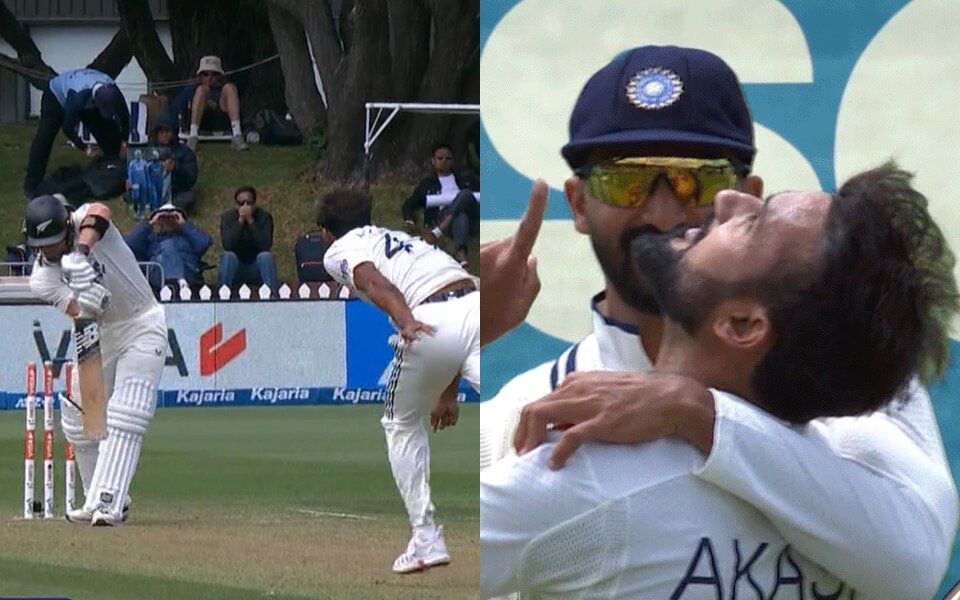
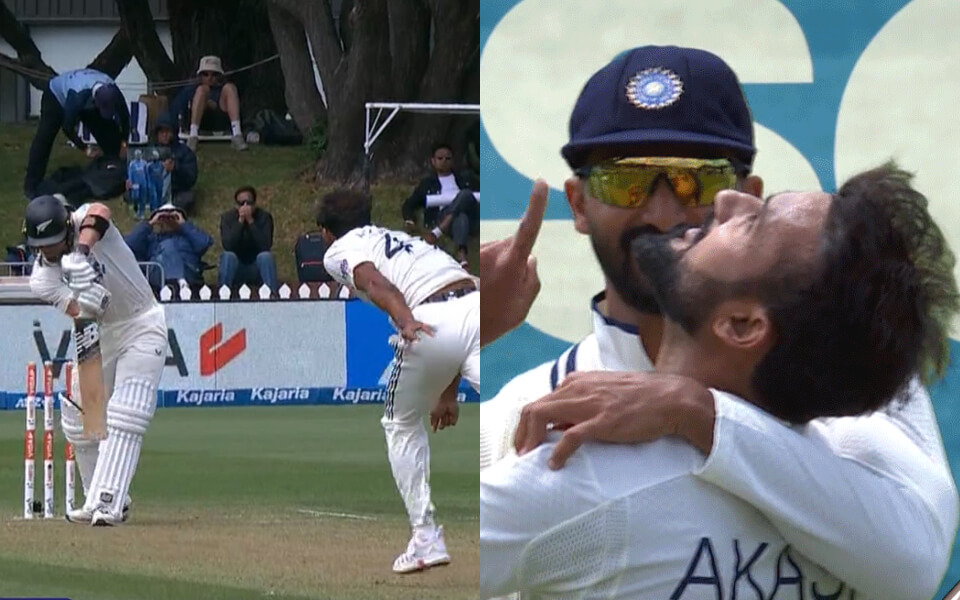
At Basin Reserve in Wellington, India’s pace attack made early inroads into New Zealand’s batting on Day 2. Akash Deep, the Bengal pacer, played a key role in dismantling the home side’s middle order, finishing with figures of 3 for 53 across 23 overs. New Zealand reached 368 all out in 121 overs, a total built substantially on a sixth-wicket partnership between Glenn Phillips and Henry Nicholls that had begun on Day 1 when the Kiwis were 70 for 5.
Phillips had compiled 118 off 216 balls with 14 fours before Deep dismissed him. The breakthrough came when Deep bowled a 137.6 kph good-length delivery that pitched on middle stump, moved away after pitching and went past Phillips’ outside edge before hitting the top of off stump. This dismissal ended an unbeaten 216-run stand between Phillips and Nicholls at the start of Day 2.
The ball bowled by Deep to get rid of Phillips was a beauty. The Bengal seamer explained how he plotted the dismissal.
“It was not like I thought about one particular ball and bowled it. I was constantly trying to bowl in one area. The ball wasn’t moving a lot, but I stayed patient. I put in some extra effort on that delivery (Phillips wicket) and got the desired result,” Deep told reporters at the press conference after Stumps on Day 2.
The pacer elaborated on the shift in conditions between the two days and how the quality of the ball affected his bowling plans. He acknowledged that working with an older ball presented distinct challenges that required a different mindset from the bowler. His assessment came after the Indian bowlers failed to make further inroads on Day 1 after having the Kiwis at 70/5 but bowled much better on Day 2 with the second new ball.
“In the last two sessions on day one, the ball became old. Today, with the new ball, we were fresher. Bowling with the old ball is a challenge. First option is to stop runs and then bowl to a plan. All we can do is stay disciplined and keep bowling in good areas. You can’t expect too many wickets during that phase,” he added.
-

 Athletics2 months ago
Abeokuta 10km Race winners praise organisers after ₦6m prize payout
-
Featured3 months ago
Bet9ja Foundation Ex-Internationals Cup: Babington Lift Giant Trophy, Pocket ₦2.5m After 3–1 Final Win
-
 Basketball7 months ago
PBA slaps ₱20k fine on Calvin Abueva for F2 upgrade vs Magnolia
-
 DLSU9 months ago
Shan Nunag shows composure beyond year in La Salle debut
-
 News9 months ago
Camilla Lamina shows calm leadership even off the bench
-
Football9 months ago
2026 Uganda Cup: The confirmed fixtures, venues & kick off times at round of 32
-
Foreign Pros9 months ago
‘Eric Chelle must pay compensation to quit Super Eagles post’
-
ADMU9 months ago
Palarong Pambansa MVP Baterbonia commits to Ateneo