
Cricket News
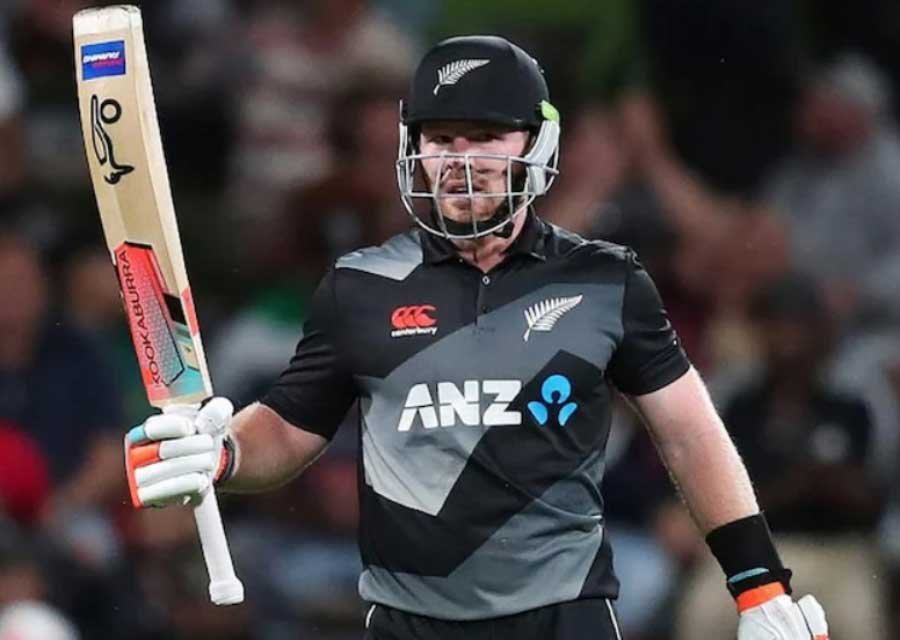
'Learning from previous games' – Tim Seifert on how New Zealand bounced back in final two T20Is against India


(Source: NDTV)
At Seddon Park in Hamilton on November 1, 2026, New Zealand secured a seven-wicket victory over India in the fifth and final T20 International of the series. Chasing India’s total of 191 for 8 in 18 overs, the hosts completed their run in 18 overs as well. Tim Seifert played the decisive role with an aggressive 93 off 50 balls, guiding New Zealand to victory despite the team having lost the opening three matches of the bilateral series.
The turnaround in the final two matches demonstrated New Zealand’s ability to adapt and execute under pressure. However, the series ultimately went to India 3-2, with the visitors claiming the trophy despite the hosts’ strong finish. Seifert reflected on the team’s journey through the five-match contest and the lessons that emerged from the earlier defeats in Christchurch.
“Yeah, I think it was the learning from the previous games. You know, we were close in Christchurch (1st and 2nd T20Is). It’s just about winning those little margins when the game is on the line. I think the bowlers, the batters have stepped up and adapted to the wickets that we’ve played on,” Seifert said in post-match press conference.
How did New Zealand turn around the series after losing the first three T20Is?
Despite falling short of a maiden T20I century, Seifert acknowledged that New Zealand had played competitive cricket throughout the series. The team’s performances in the opening two matches at Christchurch had been strong, yet crucial moments slipped away. Seifert explained that the final two victories proved the team had addressed the shortcomings that cost them earlier.
“Look, that’s (winning) your main goal at the start of the series. But when you look back at the series, I think we played good cricket in Christchurch. We just didn’t win the final moments,” Seifert said.
The wicketkeeper-batter emphasised how narrow the margins had been in the first two T20Is. Had New Zealand executed better in the closing stages at Christchurch, the series complexion would have been entirely different. Seifert pointed out that the team could have built a commanding position early in the contest.
“Walking away from Christchurch, you know, we could have easily been 2-0 up or at least 1-all. So, I think, you know, these last two games especially have just kind of put the nail in the coffin about, you know, those final moments that we didn’t quite nail in the first two games,” Seifert said.
India’s third T20I performance in Wellington showcased exceptional batting prowess. Abhishek Sharma struck a century while Vaibhav Sooryavanshi contributed significant hitting as India won by 6 wickets with 40 balls remaining. Seifert managed only 2 in that encounter, falling to an ambitious shot that he later reflected upon.
“And look, Wellington, take your hat off, they (India) batted unbelievable. And you can have games like that in T20 cricket. So I think, on the whole, it was a good series for us, but obviously, unfortunately, we didn’t win,” Seifert said.
How does Seifert approach aggressive batting in T20 cricket?
When discussing his approach to aggressive batting in T20 cricket, Seifert defended the positive intent that characterises the format. He acknowledged that one particular shot in Wellington was perhaps overly ambitious, yet stressed the importance of maintaining confidence and playing with conviction rather than becoming tentative.
“I think so. It is T20 cricket. You can also fall back on that a little bit by, you know, there was probably one shot in Wellington (Seifert was out for 2) which was a bit of a slog. But at the end of the day, you’ve still got to be confident. You know, you’d rather get out like that than nicking off or something like that.” Seifert said.
In the decisive fifth T20I, New Zealand’s bowling attack proved instrumental in restricting India. Pacer Adam Milne delivered the standout performance with figures of 4 for 19, creating the platform for the successful chase. Glenn Phillips contributed an unbeaten 65 to complement Seifert’s aggressive innings. Across the entire bilateral series, Phillips accumulated 341 runs, the highest individual tally in the contest, underlining New Zealand’s batting depth despite the series loss.

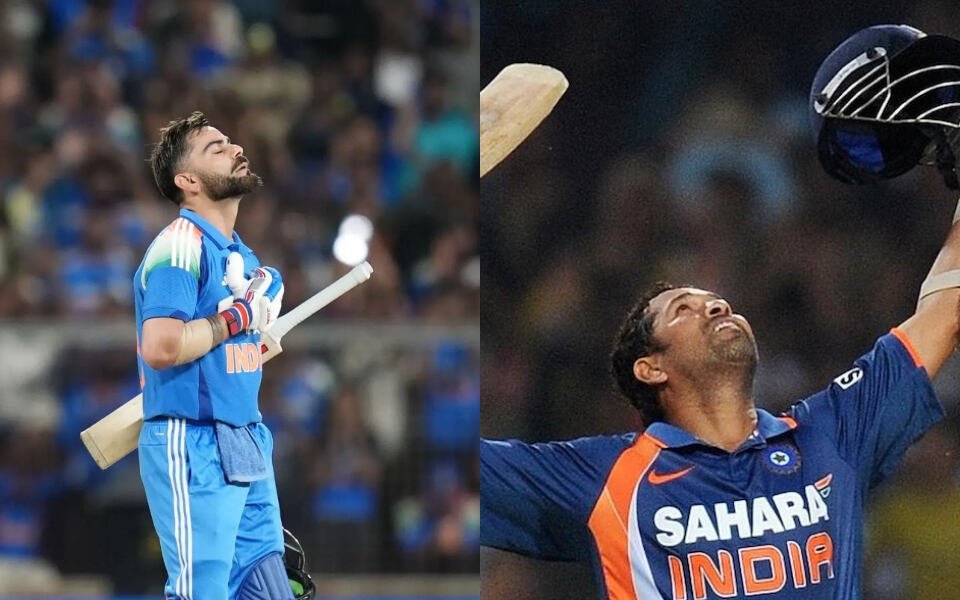
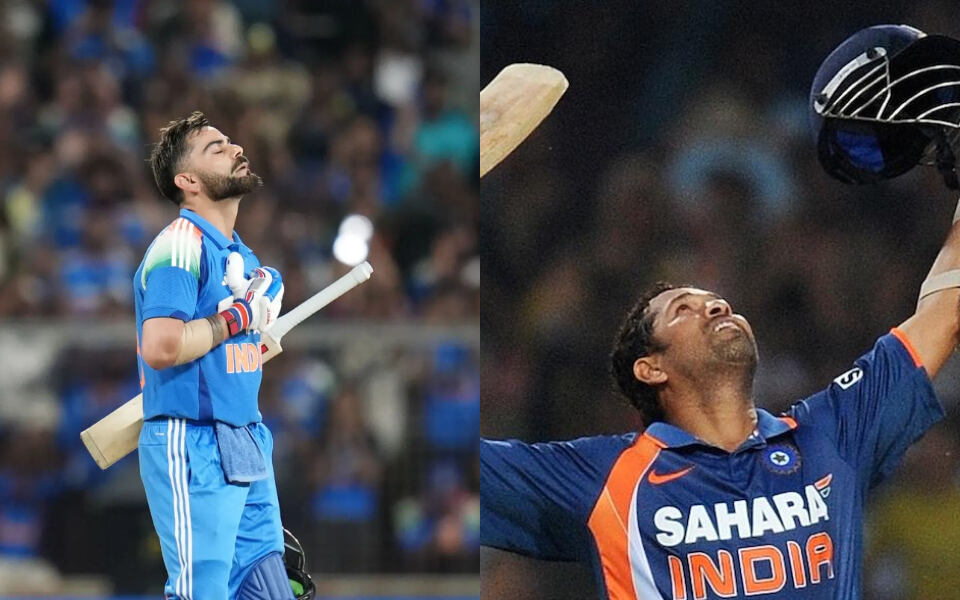
Virat Kohli became the batter with the most runs in ODI run chases on November 4, 2026, surpassing Sachin Tendulkar‘s long-standing record during the first ODI between India and New Zealand at a rain-interrupted Eden Park in Auckland. A boundary off Blair Tickner in the 16th over carried Kohli past Tendulkar’s tally, and by the close of India’s successful chase, Kohli had accumulated 8,741 runs in ODI chases against Tendulkar’s previous mark of 8,720.
Kohli’s contribution to the chase was a composed 74 runs off 51 balls, which included 13 fours and one six. His innings provided the platform India needed, and the visitors sealed the first ODI by five wickets. The record-breaking boundary, struck off New Zealand pacer Tickner, arrived in the 16th over of India’s pursuit.
The gap between Kohli and the rest of the all-time ODI run-chase list is substantial. Rohit Sharma occupies third place with 6,801 runs, while Sri Lanka’s Sanath Jayasuriya is fourth with 5,742 runs. South Africa’s Jacques Kallis rounds out the top five with 5,575 runs in ODI chases.
How does Kohli’s run-chase average compare with Tendulkar’s?
The volume of runs Kohli has scored in ODI chases is only part of the story. His average in those innings stands at 66.54, well clear of Tendulkar’s corresponding figure of 42.23. That difference illustrates that Kohli has not simply played more matches than Tendulkar but has converted his chase innings at a considerably higher rate across his career.
Batting at number three, Kohli has been central to India’s ODI chasing unit for well over a decade. The Auckland innings reinforced that consistency, with Kohli anchoring the pursuit before India closed out the match with five wickets to spare.
What other records did Kohli reach during the first ODI at Auckland?
The Eden Park fixture added further entries to Kohli’s record book beyond the run-chase milestone. He became the only batter in ODI history to reach 13,000 runs while batting at number three, a position he has held for the majority of his international career.
Kohli also equalled Ricky Ponting‘s record of being the highest run-scorer against New Zealand in ODIs, drawing level with another of the game’s all-time greats. Taken together, the run-chase record, the 13,000-run landmark at number three, and the Ponting comparison made the rain-affected Auckland match one of the more significant individual occasions of Kohli’s ODI career.
Cricket News
Josh Thomas reflects on breakthrough Somerset season after scoring 843 County Championship runs
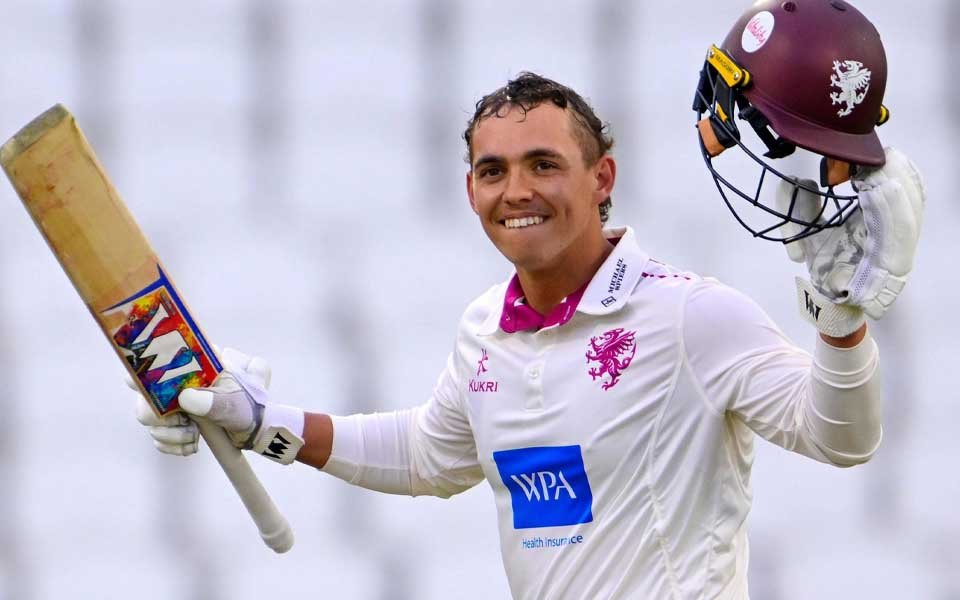
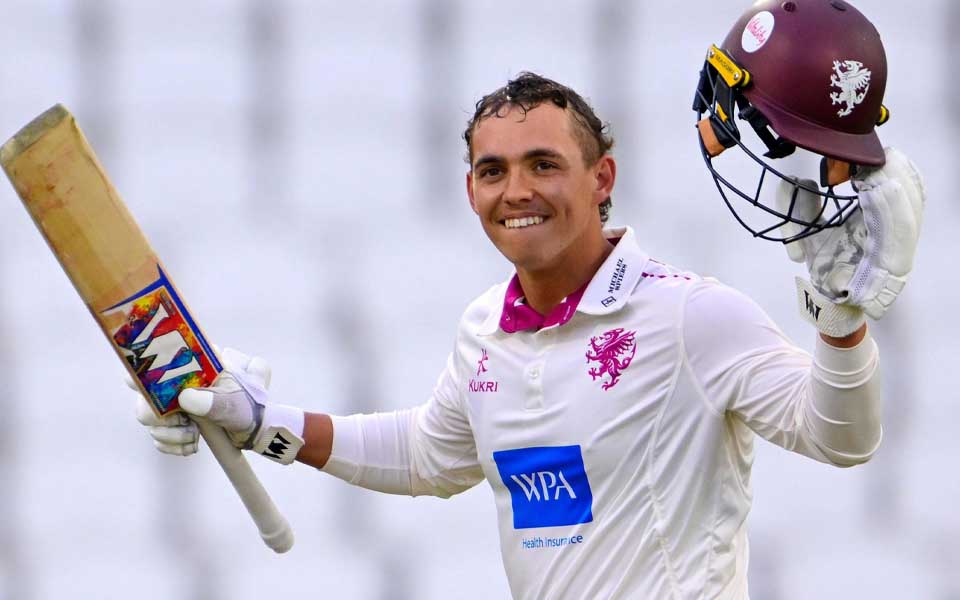
Josh Thomas completed an exceptional first full season for Somerset in 2026, accumulating 843 runs across all 14 County Championship matches as a 20-year-old opening batter. The young cricketer struck three centuries during the campaign, establishing himself as a cornerstone of Somerset’s top order alongside Tom Lammonby. His rapid rise came after making his debut in the final match of 2025 against Essex, where he grafted against quality bowling to make an immediate impression.
That early opportunity proved pivotal in shaping Thomas’s trajectory. The experience of facing a strong attack in his debut match gave him confidence heading into the 2026 season, when he was selected to open the innings from April onwards. His willingness to seize that chance set the foundation for what would become a breakthrough year.
“I would have definitely taken the season I had before the start of it. I got my chance in the last game of 2025 against Essex, when I had to graft against a good quality attack. It was very nice getting the runs especially with it being my debut and it put my name out there. It has helped me with this season as well and starting in the team in April. I took my opportunity and it paid off for me,” Thomas was quoted as saying by Somerset County Gazette.
How did Thomas break into Somerset’s first team?
The pathway to Somerset’s first team became clear to Thomas early in his development. Opening the innings represented the only realistic route into the county side, and during his time in the second XI, he actively pursued that position. His determination to bat at the top of the order proved decisive in securing his place.
“The only way into the first team was as an opener which was the only gap I saw. Playing in the Seconds I had to put my hand up and say I wanted to open the innings. I ended up doing alright and just loving doing the job. I never thought that I’d be an opener but now I’m loving it and hopefully I can carry on at the top of the order for as long as possible.”
The partnership between Thomas and Lammonby developed into one of Somerset’s most productive opening combinations throughout the season. The two batters built a strong understanding in the middle, communicating effectively during both successful phases and challenging periods. Thomas emphasised the importance of their mutual support when form dipped.
“‘Lammers’ is one of my best mates in the team and we get along so well out there in the middle. We kind of know each others games and what we need to say to each other when things aren’t going so well or when they are going well. You can go through bad periods as an opener but we have got to stick together and keep doing the right things,” he added.
What does Thomas say about his opening partnership?
Reflecting on his individual performances, Thomas identified a specific area for improvement during the winter break. While his consistency had been strong throughout the season, he felt he had not yet produced the largest possible individual scores. This became a focal point for his preparation away from the county circuit.
“Looking back I think that when I have got in I would have liked to have gone bigger with my scoring. I didn’t have any big hundreds so that’s something I can work on during the winter. However I try not to look too far ahead and take things as they come,” Thomas said.
Thomas headed to Fremantle Cricket Club in Australia for winter cricket, where he intended to continue developing his game at the top of the order. The standard of cricket available at the club gave him confidence in maximising his time in the middle during the off-season.
“The standard of cricket at Fremantle Cricket Club is very good and I will be looking to bat in the top order as much as possible, to get more time out in the middle,” he added.
Thomas’s maiden season for Somerset in 2026 saw him score 843 runs across 14 County Championship matches at the age of 20, striking three centuries in his breakthrough campaign.
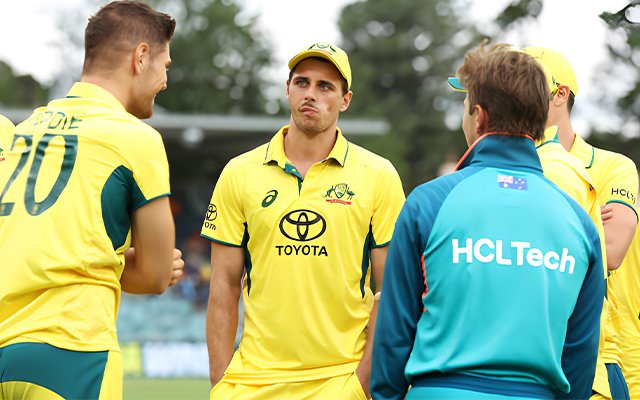

Lance Morris returned to competitive cricket on Sunday in a T20 match for Scarborough in Western Australia Premier Cricket, taking 2 for 14 off four overs. The 28-year-old Australian quick has not played top-flight cricket since March 2025, when he claimed career-best first-class figures of 5 for 26 in 20.3 overs against New South Wales at the WACA. Morris underwent pars stabilisation surgery for a lumbar bone-stress injury, following the same surgical pathway as Cameron Green.
Morris spent the entire 2025-26 season sidelined as he recovered from the procedure. The recovery process tested his resolve, but he has now progressed through rehabilitation and returned to match cricket.
“I’m really excited. I think it’s been the longest pre-season I’ve ever had, so I’m feeling really fit. It was good to get a game in for the local cricket club over the weekend and let a few go, so it was awesome,” said Morris as quoted by Cricinfo.
What does Morris say about his recovery?
Morris is set to play on Saturday for Western Australia against England in a one-day warm-up match at the WACA, a fixture expected to attract around 4,500 spectators. The match represents a significant opportunity for him to demonstrate his readiness for higher-level cricket. Morris reflected on his progress through the recovery process.
“I got to a point where essentially I had to have 12 months off cricket. It was either 12 months of pure rest and hoping that it heals naturally or address it with this surgical intervention and hopefully put it behind me for good,” said Morris.
“It was certainly tough at times. More recently, there were a few sessions there where I’d rock up to training and feel pretty average when I was bowling. [I] was [feeling] pretty down in the dumps. I feel really good at the moment, and I think I’ve pushed through a bit of a threshold and got back to that game intensity that we were looking for,” he added.
Why is Morris important to Australia’s pace attack?
Australia’s pace attack is entering a transition phase. Mitchell Starc turns 37 in January, Josh Hazlewood will be 36 in the same month, and captain Pat Cummins turns 34 next May. Back-up seamer Scott Boland is 37, while Michael Neser, who was on the South Africa tour, is 36. A fit and firing Morris will be music to the ears of national selectors, with fast-bowling depth vitally important as Australia’s attack navigates this generational shift.
Given his long lay-off, Morris has been overtaken in the national discussion, with attention turning to several other quicks. Jhye Richardson, who has overcome his own horror run of injuries, has started the Shield season in spectacular fashion, while youngster Mahli Beardman’s rising status was confirmed when he was named in Australia’s white-ball squads against England. While Richardson will be rested for Saturday’s hit-out against England, Morris and Beardman, 21, are set to spearhead a hostile pace attack that hopes England will be in for a torrid start to their tour. Beardman made his international debut in a T20I in Pakistan earlier this year.
“He’s obviously got a great reputation already, and he deserves it. He’s a star in the making, and I think he’s got all the attributes to not only be an incredible white-ball cricketer, but also multi-format. It’s exciting to come up against an amazing team in England; you just look at the star power that they bring over with them. It’s a big game, fingers crossed we can give them a bit of a shake,” said Morris.
-

 Athletics1 month ago
Abeokuta 10km Race winners praise organisers after ₦6m prize payout
-
Featured2 months ago
Bet9ja Foundation Ex-Internationals Cup: Babington Lift Giant Trophy, Pocket ₦2.5m After 3–1 Final Win
-
 Basketball7 months ago
PBA slaps ₱20k fine on Calvin Abueva for F2 upgrade vs Magnolia
-

 DLSU9 months ago
Shan Nunag shows composure beyond year in La Salle debut
-

 News9 months ago
Camilla Lamina shows calm leadership even off the bench
-
Football9 months ago
2026 Uganda Cup: The confirmed fixtures, venues & kick off times at round of 32
-
Foreign Pros9 months ago
‘Eric Chelle must pay compensation to quit Super Eagles post’
-
Others9 months ago
Sarah Babirye Kityo: The majestic return to 12th Parliament, to front sports talent development