
Uncategorized
End of an Era: Amat Canlas leaves UE fencing dynasty for family in Australia

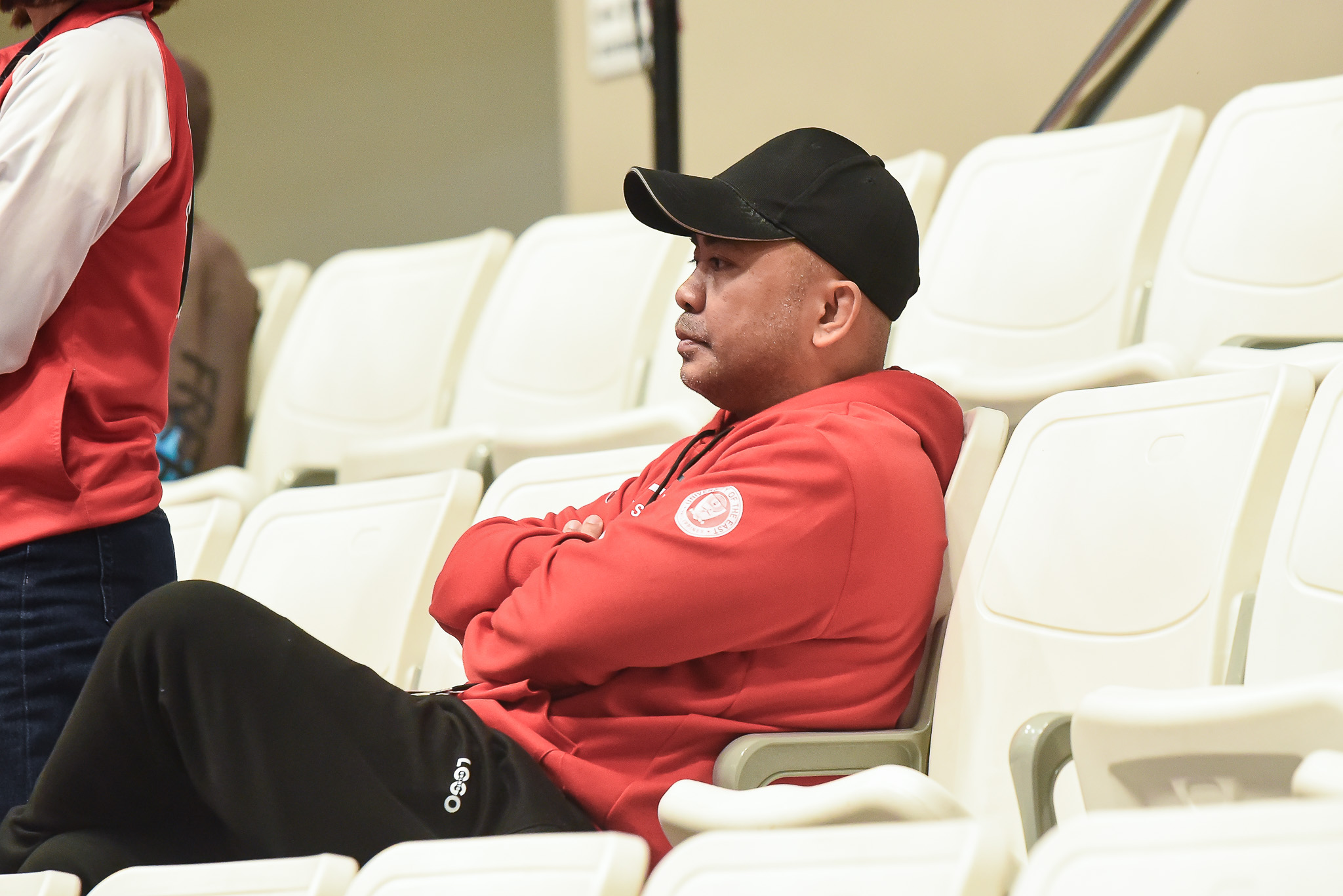
When the UAAP Fencing Championships concluded last Monday at the Makati Coliseum, the University of the East once again claimed three gold trophies, asserting its dominance in a sport the program helped build from scratch.
While UE did not sweep the event for the second consecutive season, the Red Warriors remain the benchmark in UAAP fencing — a legacy shaped almost entirely by one man: Amatov Canlas.
Nearly two decades since UE stormed the fencing scene, the men’s squad extended its reign to 12 straight titles, while the women’s team secured its 16th championship. The girls’ team’s dynasty was trimmed to 11, but the boys’ unit stretched its league-leading streak to 14.
All of this is a testament to Canlas’s vision and relentless dedication.
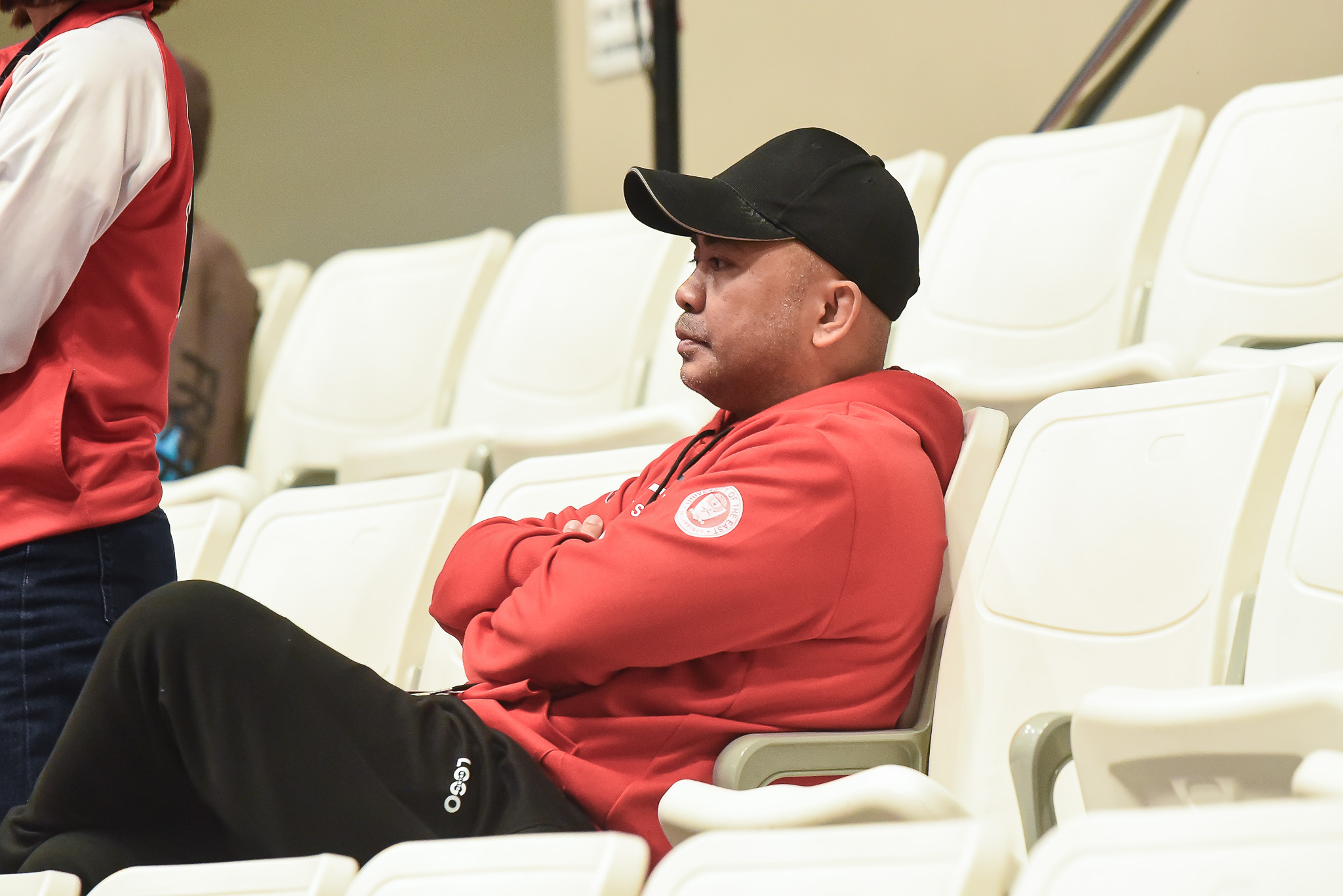
Monday, however, marked Canlas’s last day — at least for now — as head coach and program head of UE Fencing. Emotions ran high as he reflected on the journey.
“Sabi ko lang na ituloy nila ‘yung dynasty na sinimulan namin dahil hindi lang naman basta-basta ‘to eh. We started from nothing, malalim ‘yung ugat nung UE. Hindi ito basta-basta champion lang. Talagang from sa’kin pa, hanggang sa ngayon, sa present, eh talagang natuloy ‘yung pagiging dynasty namin,” said the former Red Warrior standout.
“Sa pag-alis ko, kung sino man ‘yung mga papalit na coach sa’kin, ituloy lang nila. And ang sabi ko, maging loyal sila sa UE kasi hindi rin naman sila magiging magaling kung hindi dahil sa UE. Kumbaga, pinaghirapan sila. Hindi dumating nang magaling na eh; ginawa sila ng UE.”
For Canlas, the legacy extends beyond titles. He hopes the culture he built — discipline, respect, and dedication — continues to thrive even after his departure.
“Yung respeto at kung ano ‘yung sinimulan ng UE sa UAAP. Hindi pa naman ako nagsasabing tapos na ako; nag-try lang ako ng ibang opportunity. Malay natin ‘di ba,” he shared.
Canlas has nurtured these athletes from a very young age, some from as early as eight years old. He has guided them not just toward championships, but toward national and Olympic aspirations.
“Kita mo naman ‘tong mga ‘to; hindi ko lang naman tinuruan ‘to noong high school. Eight years old pa lang hawak ko na ‘yan. Talagang tinrain ko na ‘yan, at goal ko talaga is national team. Ang goal ko talaga ay makarating sa Olympics,” he said.
“Yan ang mindset ng mga players ko, especially ‘pag foil. Kaya kung makita mo buong-buo talaga sila.”
(C) UAAP Season 88 Media Team
Education has always been equally important to Canlas. He emphasizes discipline both on and off the piste, ensuring that talent is matched by responsibility.
“Tsaka nasa academics din ako. Bata pa lang talaga, tinuruan ko na kung paano ‘yung discipline, eh. Gano’n talaga ‘yung ano nila sa’kin: academics and discipline. Kaya nga ako naka-produce ng Olympian because of the discipline. Kaya dalawang dekada kaming nag-champion sa UE, because of the discipline na ini-impose ko sa team,” he said.
“Napaka-importante sa’kin ang academics at discipline, lalo na ‘pag makita kong malaki ‘yung potential ng bata. Kailangang i-guide siya nang tama. Kasi sayang ‘yung talent ‘pag hindi siya ginuide ng tama. Yun rin ang maganda sa UE — ‘pag nagkaproblema ‘yung bata, tinatawag agad sa’kin ng College Secretary, ng High School Principal. Kaya nga hindi kami nahihirapan sa mga national team namin, kasi gano’ng naka-support ‘yung UE management.”
Canlas will be taking his expertise and family to Australia, leaving behind a dynasty and a thriving support system. His decision, however, is rooted in family priorities rather than personal ambition.
“Well, kung ako lang naman ‘yung kinuha, hindi naman ako pupunta kung ako lang namang mag-isa. Kaya ko tinanggap ‘to kasi sinama ‘yung pamilya ko. Kumbaga, do’n ko nakita na para sa mga anak ko ‘to, para sa family ko ‘to. Kasi ba’t naman ako aalis, eh comfort zone ko ‘to? Ok naman ‘yung buhay ko dito,” said the future head of the Tizona Fencing Club in Melbourne.
“Pero nakita ko ‘yung opportunity para sa mga anak ko, sa family ko, na ‘pag pumunta ako do’n, kasama sila. Kaya susubok ako kasi ang hirap namang tanggihan, parang no-brainer ka naman, lalo pa’t Australia. Alam naman natin sa Australia; nakita naman natin ‘yung quality of life do’n. Why not, hindi natin subukan? Para sa future ng mga anak ko ‘to, hindi naman ‘to para sa akin.”
Beyond UE, Canlas has also shaped Philippine fencing at large, mentoring national athletes and fostering a new generation of coaches and referees.
“Sa PFA, nag-iisip talaga kami ng mga coaching seminar. Mag-iinvite kami ng mga magagaling na coaches from other countries na dadalhin rito, para continuous ‘yung learning ng coaches. Kung ako talaga, mas magpupundar ako sa coach,” Canlas shared.
“Kasi ‘yung coach, ‘pag may magaling na coach, at aral ‘yung coach, makaka-produce ng magagaling na fencer ‘yan. ‘Yun ang nakikita kong dapat gawin, makapag-produce ng maraming-maraming coach na magagaling … all weapons,” he went on.
“PFA ang makakapag-decide diyan kasi sila ‘yung body. Pero d’yan magsisimula ‘yan, magagaling na coach, at magagaling na referee. Number one ‘yan, coach and referee. Dapat mag-tandem ‘yan, para makapag-produce tayo ng Olympian. Kasi ‘pag mahina ‘yung quality, madami lang tayo. Kaya ‘yan ang pinakamahalaga diyan — ‘pag may mga ganyang opportunity, gagaling talaga ‘yung coach.”
Canlas leaves behind not just champions, but a culture, a discipline, and a standard that will continue to define UE fencing — and Philippine fencing — for years to come.
The post End of an Era: Amat Canlas leaves UE fencing dynasty for family in Australia appeared first on Tiebreaker Times.
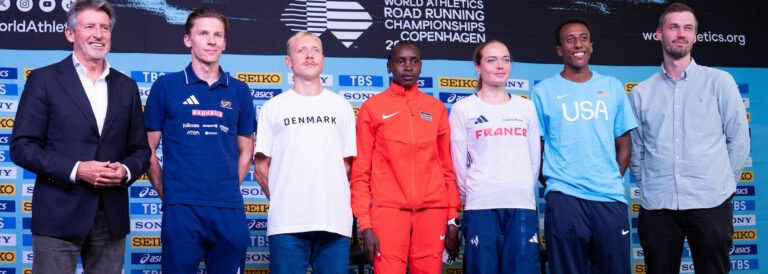

The world’s best road runners will share the streets with thousands of recreational athletes this weekend as Copenhagen hosts what World Athletics President Sebastian Coe described as an “extraordinary demonstration of humanity in running”.
Six world titles will be decided across the road mile, 5km and half marathon at the World Athletics Road Running Championships Copenhagen 26, with the elite races forming part of a two-day festival of running in the Danish capital.
Speaking at the pre-event press conference on Friday (18), Coe highlighted participation as one of the key pillars of World Athletics and praised Copenhagen for embracing a format that brings together runners of all levels.
“This weekend is an extraordinary demonstration of humanity in running,” said Coe. “I’m so pleased that participation, which is one of our core pillars at World Athletics, is being demonstrated so clearly on the streets of Copenhagen this week.”
It is a concept with which Copenhagen is already familiar. The city hosted the World Half Marathon Championships in 2014, an edition that helped pioneer the model of staging mass participation races alongside an elite global championship.
Christopher Røhl, Mayor of Culture, Leisure and Citizen Services for the City of Copenhagen, believes the return of a global road running championship provides an opportunity to build on that legacy.
“Copenhagen has shown that world-class sport and mass participation belong together,” he said.
“Whether you are running your first mile, your first 5km, or you are competing for a world title, you are all part of the same event. This is the kind of running community that we want to strengthen here in Copenhagen.”
Few athletes on the start line will understand that community better than Denmark’s Jacob Sommer Simonsen, winner of the Copenhagen Half Marathon in 2023.
The Danish champion has watched the popularity of the sport grow rapidly in his home city and is looking forward to experiencing the championships from the sharp end.
“It’s crazy to see how running, and especially road running, is blooming and exploding here in Denmark, and especially in Copenhagen,” he said. “It’s wonderful to be part of a time when running is so popular, so I’m just trying to soak it all in.”
While thousands will be taking to Copenhagen’s streets for their own personal challenges, the battle for the six world titles promises to be fierce with Africa’s finest geared to challenge for podium positions in tomorrow’s (Saturday) 5km and mile races and Sunday’s half marathon.
For Agnes Ngetich, Copenhagen offers the possibility of completing a remarkable trio of victories across three different surfaces.

The Kenyan started her year by winning the senior women’s title at the World Cross Country Championships in Tallahassee, before producing a dominant world-leading 3000m victory at the Monaco Diamond League. Now the world 10km record-holder turns her attention to the half marathon.
“That would be the dream, to win here,” said Ngetich. “We have a big line-up and, of course, everyone wants the title, but it would be my dream to win here. If I have a medal, it will be a nice way to close the season.”
Olympic 1500m bronze medallist Yared Nuguse arrives for the road mile just days after racing at the inaugural World Athletics Ultimate Championship in Budapest. The US middle-distance star will bring his season to a close in Copenhagen and believes he is ready to end it on a high.
“I’m in the fitness of my life right now,” said Nuguse. “Based on how I’ve been doing, I know I’m very ready to just hammer out a really good race.”
Whatever the outcome, Nuguse says his enthusiasm for racing remains as strong as ever.
“Running is going to bring me joy regardless of the result,” he added. “Especially here in Copenhagen, on the road, this being my last race of the season, I’m just really excited to see what I can do.”
France’s Agathe Guillemot will also contest the road mile at the end of a season that has taken her from cross country to indoor and outdoor track, the Ultimate Championship and now the roads.
The world cross-country mixed relay silver medallist said she was relishing the opportunity to finish her long campaign as part of such a large running festival and is targeting the podium before finally taking a break.

“I can’t wait to compete tomorrow,” said the European indoor 1500m champion. “Finishing the season with this kind of event makes me really happy because I have this amazing opportunity to share my final race with 60,000 people. I’m hoping to leave with a medal.”
European 10,000m champion Andreas Almgren is taking a different approach. After a track season highlighted by his first senior continental title, the Swede has deliberately turned towards the roads in search of a fresh challenge.
“I focused so much on the European Championships this year, so I wanted to do something completely different to feel very motivated again,” he said.
“This is the first stop of a very exciting autumn, so I’m really excited to go out there and road race again.”
For Coe, that combination of world-class competition, innovation and participation reflects what the World Road Running Championships were designed to achieve.
“We are, as an international federation, always out there trying to do things differently,” he said.
“This is really important for us. Innovation comes because you have the bravery to set out to do something differently that nobody else has done before, the resilience not to get deterred, and the focus to really execute. And that is what this weekend is all about.”
The post Copenhagen hosting ‘an extraordinary demonstration of humanity in running’ – Coe appeared first on Sports Network Africa.

KCCA Head Coach Brian Ssenyondo is optimistic that the team will only get better, after registering their first win of the season against Kataka on Tuesday at MTN-Omondi Stadium.
Ssenyondo has been under immense pressure following a sloppy start to the season that saw the team pick just a point in the first three games, with no goal registered.
The game against Kataka therefore was viewed as a launch pad to start the season afresh and relieve the pressure both for the coach and the players.
In his post-match interview, Ssenyondo refused to concede that the 1-0 win against Kataka took away some pressure but insisted it was long overdue for them to pick a positive result.
“I don’t think it’s a relief but it was long overdue since we last won a game and score a goal. Of course we know that when we score first, we are a hard team to beat, we will always have the three points, he said before adding, “You know football is always judged by results but we have always created chances, the only worry is that we don’t take them away but this win gives us the motivation to be better and improve going into the next games.”
As the League goes into a break, Ssenyondo believes it has come at the right time and offers an opportunity for him and the team to rectify some of the issues.
“I think the international break comes at the right time. We will have ample time to look at areas where we haven’t done really well in the first games and hopefully when we come back, we will look better.” He stated.
After the break, KCCA will visit URA on 9th October before facing Ntugasaze, UPDF, Lugazi and Mbarara City in the same month.
The post Ssenyondo anticipates improvement after win against Kataka appeared first on Kawowo Sports.


FIFA president Gianni Infantino is having the worst month of his decade in office.
An abandoned plan to sell a stake in the World Cup’s commercial future to private investors has triggered accusations of a “fundamental breach of trust” from UEFA, CONCACAF and the Asian Football Confederation.
Norway’s federation has called for his resignation.
England’s FA has withdrawn its backing for his re-election. Lawyers for UEFA say they are weighing legal action.
And yet, in Africa and much of South America, Infantino’s position looks remarkably secure.
The Confederation of African Football — 54 member federations, more than a quarter of FIFA’s total membership — unanimously reaffirmed its support for him in early August.
Argentina’s federation publicly thanked him for a decade of service.
CONMEBOL has said it won’t back any accelerated push to remove him.
Mexico’s federation broke with the rest of CONCACAF to stand by him. Even Donald Trump weighed in, warning on social media that removing Infantino would be a “terrible mistake” for FIFA.
It would be easy for European commentators to read this split as opportunism, or as smaller federations falling in line behind a powerful patron. That reading misses something important: for large parts of the footballing world outside Europe, Infantino’s decade in charge has coincided with a real, measurable redistribution of attention and opportunity toward their region — and they are not eager to gamble that away on a leadership change engineered largely by European federations.
Consider what has actually changed since Infantino took over from Sepp Blatter in 2016.
The World Cup expanded from 32 to 48 teams for 2026, opening the tournament’s final stage to national teams that historically had almost no realistic path there.
FIFA has funneled greater investment into African, Asian and North and Central American federations.
Continental competitions outside Europe — the Africa Cup of Nations chief among them — have grown into commercial and broadcast properties in their own right, rather than feeder tournaments whose best players immediately depart for European leagues.
None of this erases the legitimate governance questions raised by UEFA and its allies about the abandoned FIFA Forward Enterprise proposal, which would have handed private investors a stake in FIFA’s commercial operations without, critics say, adequate consultation of the federations that collectively own the sport.
Those are fair questions, and FIFA has itself acknowledged mistakes were made in how the plan was handled.
But it is worth asking why the loudest calls for Infantino’s head are coming overwhelmingly from the continent that has held the tightest grip on football’s institutions, revenues and prestige for the better part of a century — and why federations elsewhere, who have watched their own competitions and players gain unprecedented visibility over the past decade, are far less eager to see him go.
Former Moroccan international Houssine Kharja put it plainly in a recent interview, arguing that Europe’s opposition to Infantino should be understood in the context of football’s changing global balance rather than treated as a straightforward governance dispute.
He also pointed out that European football itself is saturated with private capital, questioning why FIFA should be held to a categorically different standard on new financing mechanisms.
Kharja’s central appeal — that Infantino and UEFA president Aleksander Čeferin sit down and resolve their dispute through dialogue rather than a boycott — deserves more attention than it has received.
Infantino has real questions to answer about how the FFE plan was designed and why it bypassed the consultation FIFA’s own members were entitled to.
But conflating those legitimate governance concerns with a verdict on his broader project — a more genuinely global football, with real institutional weight distributed beyond Europe — risks discarding a decade of progress that federations across Africa, Asia and the Americas are not, understandably, willing to give up without a fight.
The post Why the Global South Is Standing by FIFA president Gianni Infantino appeared first on Kawowo Sports.
-
 DLSU7 months ago
Shan Nunag shows composure beyond year in La Salle debut
-
 News7 months ago
Camilla Lamina shows calm leadership even off the bench
-
Football7 months ago
2026 Uganda Cup: The confirmed fixtures, venues & kick off times at round of 32
-
Foreign Pros7 months ago
‘Eric Chelle must pay compensation to quit Super Eagles post’
-
Football7 months ago
Divine Mukasa plays full time as Leicester City bows out of FA Cup to Southampton
-
 Cricket News7 months ago
T20 World Cup 2026: 'We've got to stay positive' – Afghanistan coach Jonathan Trott remains hopeful of reaching Super 8 despite back-to-back losses
-
 Basketball5 months ago
PBA slaps ₱20k fine on Calvin Abueva for F2 upgrade vs Magnolia
-
Others8 months ago
Sarah Babirye Kityo: The majestic return to 12th Parliament, to front sports talent development