CAF
AFCON 2025: The Good, The Bad, and The Ugly, and Why African Football Is at a Crossroads


For more than two decades, I have watched African football from almost every angle as a commentator, pundit, journalist, broadcaster, critic, sports industry leader, and from inside the corporate side of the global sports business.
And I say this with conviction:
AFCON 2025 was the most important African football tournament of our generation.
Not because it was perfect. But because it revealed, at the same time, how far we have come, and how close we are to getting it wrong.
This was not just another tournament. It was a leadership moment for African football.
So I reflect on AFCON 2025 through The Good, The Bad, and The Ugly, not as nostalgia, but as strategy.
The Good: Africa Is Ready for the World
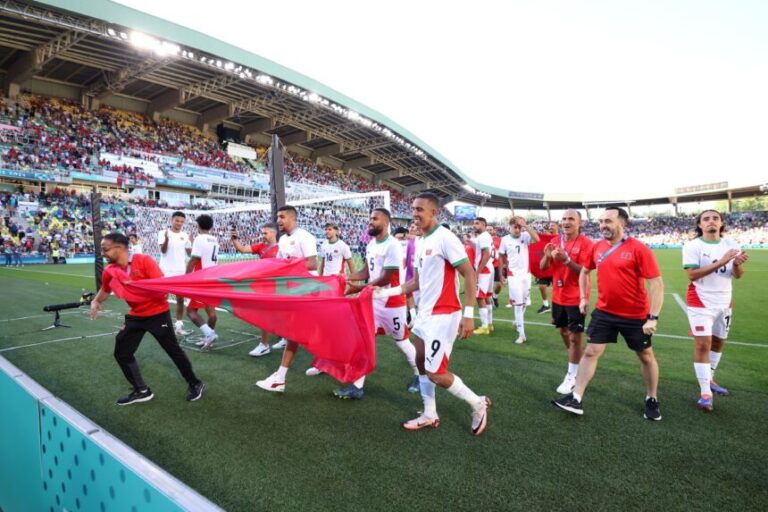
Morocco set a new benchmark.
From infrastructure to transport, stadia to hospitality, fan experience to destination appeal, AFCON 2025 felt genuinely world-class.
As Morocco prepares to co-host the 2030 FIFA World Cup with Spain and Portugal, this tournament sent a clear signal:
Africa is no longer chasing global standards. Africa is now delivering them.
On the pitch, the evolution is undeniable:
- Better football
- More modern coaching
- Players who are global brands
From Hakimi, Mané, Salah and Osimhen, to Mahrez, Ndidi, Onyango and a new generation announcing itself, AFCON is now one of the most important shop windows in world football.
This edition also attracted the highest number of Africa-eligible players born in Europe and the diaspora, a powerful vote of confidence in identity, competitiveness and continental relevance.
And then there was Brahim Díaz.
His Panenka against Edouard Mendy was not just a penalty. It was a statement of confidence, imagination and belonging.
CAF, too, deserves credit:
- Expanded sponsorship
- Stronger broadcast partnerships
- Even Netflix arrived
This was a professionally delivered tournament. Progress is real.
The Bad: Refereeing and the Crisis of Trust
But progress is fragile.
The dominant narrative of AFCON 2025 was not football. It was officiating.
From the group stages to the knockout rounds, questions around consistency, competence and credibility followed the tournament.
Referee mistakes are part of football. But when controversy becomes the main storyline, trust collapses.
The attempted walk-out by Senegal was a red line. That should never happen in modern football.
For CAF, refereeing is no longer a technical issue. It is a strategic risk.
African football now needs a fully professional refereeing ecosystem:
- Better training
- Better pay
- Clear accountability
You cannot build a world-class product on uncertain foundations.
Let’s circle back to the Senegal walk out!
The moment Senegal’s coach asked his players to leave the pitch was equally horrible and deeply despicable.
That should never happen again.
Because when coaches pull teams off the field, it doesn’t just disrupt a match, it destroys trust.
Trust in officials.
Trust in the competition.
Trust in the integrity of the game itself.
Once that trust is broken, it is very hard to rebuild.
The Ugly: When Gamesmanship Becomes Self-Sabotage
Some images should never represent African football.
Ball boys fighting goalkeepers. Security staff interfering in play. A captain throwing an opponent’s towel into the crowd.
That sequence in Morocco was not home advantage. It was embarrassing.
And beyond the optics, this matters:
- Broadcasters notice
- Sponsors notice
- Global audiences notice
AFCON is too valuable to be reduced to street theatre.

African sports journalists have played a huge role in the rise of AFCON and the global growth of our game.
But there is a line we are increasingly crossing.
When journalists become fans, credibility is the first casualty.
The scenes after the AFCON final, where Moroccan journalists booed Senegal coach Pape Thiaw, forcing a press conference to be cancelled, were not just embarrassing.
They were damaging.
And it wasn’t an isolated case.
Across the tournament, we saw reporters in national kits, waving flags in media tribunes, shouting with supporters, lining up for selfies, and blurring the boundary between coverage and partisanship.
Love your country.
But never lose your duty.
African football’s next phase of growth depends not only on players and administrators, but on a media corps that understands one thing:
Professionalism is not optional.
It is the standard.
The Bigger Question: What Kind of AFCON Do We Want?
AFCON 2025 is an inflection point.
Global attention is growing. The product is improving. The brand is finally gaining momentum.
And yet, at this exact moment, CAF is considering:
- Moving AFCON from biennial to quadrennial
- Introducing an African Nations League
This deserves deeper scrutiny.
Frequency is not AFCON’s weakness. It is one of its greatest strengths.
The rhythm. The continuity. The tradition.
UEFA’s Nations League has struggled to truly capture European fans in markets with stronger infrastructure and deeper commercial bases.
So the question must be asked:
Why dilute a brand that is finally rising?
Final Thought: This Is a Leadership Test
AFCON 2025 taught us two truths at once:
- African football is ready for the world
- African football is still vulnerable to itself
The challenge now is clear:
- Professionalise refereeing
- Strengthen governance
- Protect integrity
- Be cautious with structural experiments
AFCON is not just a tournament. It is Africa’s most powerful sporting asset.
As someone who has worked across media, broadcasting and the business of football, I believe this moment demands more than commentary.
It demands leadership, reform and courage.
Because institutions are not built in moments of comfort, they are built in moments of scrutiny.
AFCON 2025 gave us the spotlight. What we do next will define African football for a generation.
If AFCON is Africa’s most powerful sporting asset, where should CAF draw the line between home advantage and self-sabotage, and which non-negotiable standard must be enforced next to protect trust in the competition?
The post AFCON 2025: The Good, The Bad, and The Ugly, and Why African Football Is at a Crossroads appeared first on Sports Network Africa.




AFCON, Host Country Decisions, and Why African Football Needs an “Imbizo”
CAF’s recent decision to move the Africa Cup of Nations (AFCON) from a biennial tournament to a four-year cycle, alongside the introduction of an African Nations League, may appear progressive on the surface. But scratch beneath the headlines and a familiar pattern emerges: decisions driven by compromise, imitation, and short-term convenience rather than a clear, Africa-first football strategy.
This is not a criticism of change for its own sake. African football must evolve. But evolution without reflection risks erosion of heritage, of commercial value, and of the emotional bond between the game and its people. What African football urgently needs now is not another copied competition or calendar adjustment, but a continent-wide conversation. An African Football Imbizo.
I deliberately use the Zulu word Imbizo, a gathering convened by leadership to consult widely, listen deeply, and chart a collective path forward. CAF President Patrice Motsepe will understand its meaning. African football needs such a forum now more than ever.
AFCON: More Than a Tournament
AFCON is older than the African Union. It predates the independence of most African nations. When the first tournament was played in 1957, only four African countries had broken free from colonial rule. That context matters.
For nearly seven decades, AFCON has been Africa’s greatest sporting unifier. Every two years, the continent pauses, not just to watch football, but to see itself reflected. AFCON is hope for nations that may never reach a World Cup. It is culture, memory, rivalry, and pride. It is also CAF’s single most valuable commercial asset.
Yet over the last 20 years, AFCON has been steadily weakened by indecision and inconsistency: last-minute date changes, host country withdrawals, calendar clashes, and poor long-term planning. Instead of strengthening the tournament’s identity and value, CAF has allowed external pressures to reshape it.
Moving AFCON to a four-year cycle risks diluting what made it special in the first place.
The Calendar Myth
Much of the justification for recent changes rests on the international football calendar and conflicts with European clubs. But history tells a more nuanced story.
For decades, AFCON coexisted with European football without existential crisis. In the 1980s, European clubs routinely flew African stars to tournaments on private jets and back for league matches. AFCON 1980 was played in March. AFCON 1984 and 1986 thrived despite club-country tensions.
The real problems began not because of the calendar, but because of expansion, poor negotiation, and lack of strategic consistency.
AFCON 2019, held in Egypt in June–July, proved that a summer tournament works. There were no major club disputes, no calendar chaos, and no competition from the FIFA Club World Cup. Yet CAF failed to lock down that window. Instead, AFCON 2021 and 2023 were pushed back into January, citing rainfall concerns that ring hollow when qualifiers and World Cup matches are played year-round across the tropics.
The result? AFCON 2025 is being staged over Christmas, the most important family and travel period on the African calendar. Can anyone imagine the European Championship or Copa América being held over Christmas? Why should African fans be asked to choose between family, tradition, and their biggest football event?
This is not alignment. It is compromise at Africa’s expense.
Heritage vs Imitation
CAF has developed a worrying habit of copying UEFA structures without adapting them to African realities.
The CAF Champions League replaced the African Cup of Champions, a tournament that once defined African club football and produced legends before they ever went to Europe. The new format promised growth and glamour, but instead disrupted domestic leagues, created travel nightmares, and stripped away much of the competition’s soul.
The Confederation Cup replaced the African Cup Winners’ Cup, also known as the Mandela Cup , not because it failed Africa, but because UEFA scrapped its equivalent.
CHAN, the African Nations Championship, was introduced as an “original” idea but has largely become a scouting exhibition for European clubs, rather than a catalyst for strengthening African domestic leagues.
Now comes the African Nations League, another UEFA import.
UEFA’s Nations League exists to replace meaningless friendlies and generate extra revenue in a continent with seamless travel, elite infrastructure, and mature commercial ecosystems. Africa has none of these conditions at scale. During recent World Cup qualifiers, several nations were forced to host “home” games in foreign countries due to inadequate facilities, often in near-empty stadiums.
In that context, what exactly will an African Nations League achieve beyond fixture congestion and diluted attention?
AFCON does not need an annual substitute. It needs protection.
Host Country Decisions Without Vision
Host country inconsistency has been one of AFCON’s biggest self-inflicted wounds.
In 2007, CAF announced four hosts at once, Angola 2010, Equatorial Guinea & Gabon 2012, Libya 2013, based largely on assumptions about oil wealth and infrastructure readiness. Libya imploded politically, forcing a late switch to South Africa. Other hosts built stadiums but failed to fully capitalise on the opportunity due to poor promotion and planning.
Today, we know AFCON 2027 will be hosted by Kenya, Tanzania, and Uganda. Yet as attention focuses on Morocco 2025, how much deliberate marketing is already being done to position East Africa as the next AFCON destination?
Major tournaments are not just organised; they are sold years in advance.
CAF should be planning host nations and promotional strategies on a 10-year cycle, aligned with World Cups and Club World Cups, to maximise visibility, tourism, and commercial returns. Instead, decisions remain reactive and fragmented.

The Forgotten Jewel: African Fans
Perhaps the most damaging blind spot in CAF’s decision-making is its failure to understand the value of African fans.
Africa has over one billion people, the youngest population in the world, and a mobile-first, digitally engaged fan base that lives and breathes football. European clubs know this. That is why their social media accounts overflow with African engagement. That is why global brands partner with European teams to reach African consumers, not CAF.
AFCON 2024 and 2025 demonstrated what is possible when tournaments are staged close together: surging viewership, sponsorship growth, broadcast expansion, and renewed continental excitement. Yet instead of building on this momentum, CAF risks fragmenting attention with a new competition that lacks history, meaning, or emotional resonance.
Fans do not fall in love with formats. They fall in love with stories, rivalries, and tradition.
AFCON has those in abundance if CAF chooses to nurture them.
Why Africa Needs an Imbizo
African football stands at a crossroads. Aligning with the global calendar and respecting European clubs is necessary but it should not come at the cost of Africa’s football soul.
CAF must convene an African Football Imbizo, a genuine, inclusive forum bringing together federations, leagues, clubs, players, broadcasters, sponsors, digital experts, and fan representatives. Not to rubber-stamp decisions already made, but to ask hard questions:
What should AFCON represent in the next 30 years? How do we build club competitions that serve African realities? How do we monetise African fan engagement on African terms? How do we stop copying and start leading?
AFCON does not need to be diluted to survive. It needs to be defended, modernised intelligently, and celebrated unapologetically.
Africa does not lack passion, talent, or audience. What it lacks and urgently needs is strategic clarity rooted in its own identity.
That conversation must begin now.

The post AFCON, Host Country Decisions, and Why African Football Needs an “Imbizo” appeared first on Sports Network Africa.
-

 DLSU7 months ago
Shan Nunag shows composure beyond year in La Salle debut
-

 News7 months ago
Camilla Lamina shows calm leadership even off the bench
-
Football7 months ago
2026 Uganda Cup: The confirmed fixtures, venues & kick off times at round of 32
-
Foreign Pros7 months ago
‘Eric Chelle must pay compensation to quit Super Eagles post’
-
Football7 months ago
Divine Mukasa plays full time as Leicester City bows out of FA Cup to Southampton
-

 Cricket News7 months ago
T20 World Cup 2026: 'We've got to stay positive' – Afghanistan coach Jonathan Trott remains hopeful of reaching Super 8 despite back-to-back losses
-
Others8 months ago
Sarah Babirye Kityo: The majestic return to 12th Parliament, to front sports talent development
-

 Basketball7 months ago
Meralco moves on from Ismael Romero, taps Marvin Jones for PBA Comm’s Cup