Interviews
‘IPL is a different beast altogether, it is cricket on steroids’ – Chris Lynn’s massive praise for India’s premier T20 tournament [Exclusive]

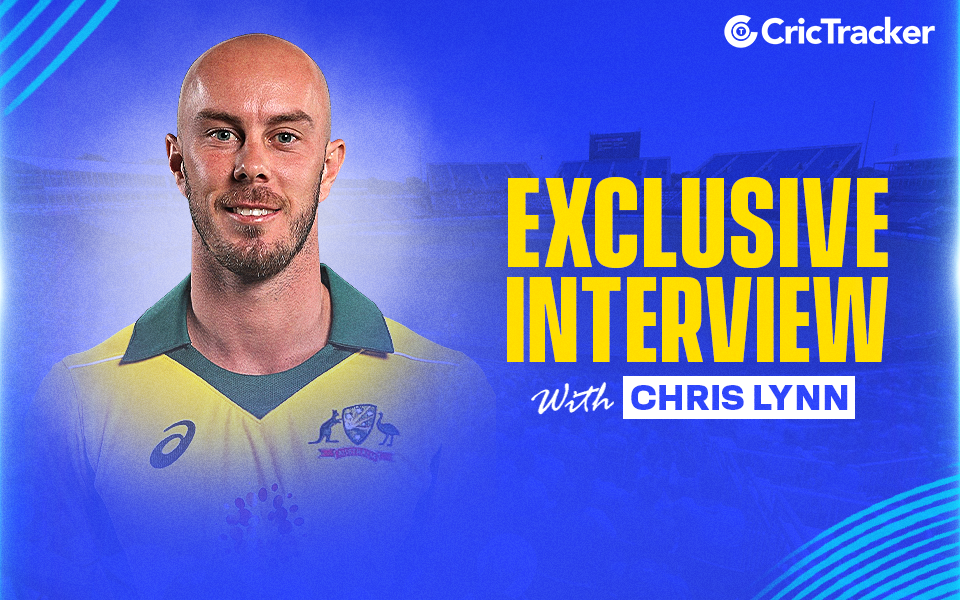
![‘IPL is a different beast altogether, it is cricket on steroids’ - Chris Lynn’s massive praise for India’s premier T20 tournament [Exclusive]](https://media.crictracker.com/media/attachments/1770717384120_image-(16).png)
Chris Lynn didn’t have a long international career as he played just four ODIs and 18 T20Is for Australia. However, the right-handed batter became a household name in franchise cricket with his explosive batting at the top of the order.
He gave fans some memorable moments during his Indian Premier League (IPL) career, representing teams like Deccan Chargers, Kolkata Knight Riders, and Mumbai Indians. However, none can come close to his phenomenal catch to dismiss AB de Villiers in a match between the Knight Riders and Royal Challengers Bengaluru in 2014.
During an exclusive interview with CricTracker, Lynn reminisced about the epic catch, explained how big a tournament the IPL is, revealed what he learned from Phillip Hughes’ tragic death and much more.
You became one of the first global T20 freelancers. Do you think franchise cricket has redefined cricketing success more than international caps ever did?
Oh, that’s a tough question straight off the bat. I think T20 cricket has brought a fresh energy to the game. In many ways, it’s the ultimate test of skill, no doubt about that. We’ve seen two-day and three-day Tests, and we’ve also seen thrilling five-day Tests that have been incredible to watch. As for one-day cricket, is it still alive? I believe it is. Should there be less of it? Yes, I reckon so, to make way for T20 cricket. As cricketers, or rather as entertainers, we’re here to grow the game, and I believe the best way to do that is through T20 cricket. That said, the purest form of the game, Test cricket, will always remain alive and strong.
If given a choice now, why would you pick? a long IPL career or a short but iconic international one, and why?
I think it’s got to be a long IPL career. I was fortunate enough to spend ten years in the IPL. I started at the Deccan Chargers under Darren Lehmann for two years, although I only played one game there. Then I had six amazing years at Kolkata Knight Riders, one of my favourite franchises I’ve been part of. After that, I spent two years at the Mumbai Indians, where again I only played one game. But that’s okay. The IPL has gone from strength to strength. When we talk about growing the game, the IPL is the backbone of that growth. The standard of cricket there is the best in the world. We’re now seeing 14-year-olds scoring hundreds. What better way is there to announce yourself than scoring an IPL hundred? To do that at 14 years of age is truly special.
The IPL is a different beast altogether. It is cricket on steroids, in my opinion. I had a relatively short international career, and I don’t believe I played my best cricket at that level. But I have no regrets. Looking back, I wouldn’t change anything. Playing for your country, even for one game, is incredibly special, and I was lucky enough to play a few more than that. Putting on the green and gold cap is something I’ll always cherish. Right now, we’re at a World Cup, with Australia coming off a heavy defeat in Pakistan. They’re up against Ireland in a couple of nights. For us, it’s all about bouncing back. As Australians, we love big games and we love World Cups, and we have the big-game players to match that. You look at the batting order with Mitch Marsh, Travis Head, and Glenn Maxwell, who is coming off a world-record double century in the last World Cup. It’s shaping up to be an exciting contest.
Tell us about that amazing AB de Villiers catch in the IPL at the start of your career.
Well, to be honest, it probably all started in my first game for Kolkata. I was nervous, mainly because I was batting with Jacques Kallis at the other end. He’s the GOAT in my eyes, the best cricketer the game, and the world, has ever seen. I was more nervous batting with him than anything else. To make it even tougher, I had Muttiah Muralitharan bowling at me. I had faced Murali twice before. The first time, he got me out first ball. The second time, he got me out second ball. So I was definitely on edge. I was a bit nervous, but I managed to get around 30 or 40.
I remember that game clearly. Virat Kohli was fielding at short cover, putting pressure on a youngster back then. I hit the ball, it took the edge of the square, and because there was a small bump between the pitch and the outfield, it kicked up and hit Virat on the cheek. I remember him going off with a split cheek, and I was thinking, oh no, first game for Kolkata and I’ve taken out the King. I was pretty nervous heading out to field after that, especially standing on the boundary and copping all sorts of sledging from the crowd. I remember they needed a few runs in the final over, with Vinay Kumar bowling to AB de Villiers. It was a really dewy evening in Sharjah. Anyone who’s played there knows how wet it gets. When the ball travels across the outfield, it’s like water sprays off it.
The ball went high into the lights, and as I moved to stop, I slipped. Suddenly I was on my backside, searching for the ball. In that moment, everything slows down. All I could think was that I had played my first and last game for Kolkata. Then the ball came out of the lights, and somehow, while still on my knees, I managed to go for it. I knew the boundary was close behind me, so once I got my hands around the ball, it was all about staying inside the field. I probably added a more spectacular dive for the cameras than was necessary, but it turned out to be a pretty cool moment. It’s one of those career defining moments you look back on and think, yeah, that was something special.
What’s the secret behind hitting sixes against Shaun Tait when he was bowling at 150 kph?
Get him before he gets me. No, look, I’ve always had the theory that the best form of defence is offence. Hold on a second, darling, Daddy’s on the phone. The best form of defence is offence. They call him the Wild Thing. He’s fast, he’s furious, and believe it or not, when the ball hits you at 150 kilometres an hour, it hurts. So my theory was simple. Go out there with a big bit of wood in your hand and use it. Be aggressive. If I could knock him off his length early, he might start bowling wide and give me a few more free hits. That’s something I enjoyed doing as a kid, taking on fast bowling. I was always happy to get stuck in on a quick, bouncy pitch. That’s the wild thing.
Looking back, how did the tragic loss of Phillip Hughes change your perspective on your cricket career?
Yeah, look, I think not only for myself, but for the wider cricketing community as well. Looking back, someone I’ve always looked up to is Darren Lehmann. He always used to say, the sun will come up tomorrow. That really hit home when Hughes passed away. At that time, cricket was everything to me. It was the be all and end all. But when you see a close mate go through what he did and then lose him, you realise that cricket is just a game.
It might sound strange, but I think I’ve actually had some success because of that realisation. I still train hard and work hard, but if I have a bad day, it doesn’t affect me the same way anymore. There are far worse things happening in everyday life. I get to play cricket, something I genuinely love doing. What happened was a horrible moment for everyone, but the way Hughesy could put a smile on people’s faces was incredible. No matter the time of day, morning or lunch, he was always so positive. He was all teeth, as he used to say, with that big grin on his face. From that moment on, cricket has just been a game for me.
In 2022, you mentioned that the MI side looked like “11 individuals” rather than a team. Looking back now, what did you mean by that, and what was missing at that time?
That was the last season, the second year after COVID. Look, the Mumbai Indians franchise is one of the greatest and proudest franchises in the world, not just in cricket but across any sport. I have a lot of respect for the Ambani family for the time, effort, and genuine care they show to every player, past and present. That’s something you can never fault. In T20 cricket, though, sometimes it just doesn’t click. Every team goes through that, and Mumbai in particular have always had eleven superstars in their lineup.
Not only that, they consistently produce young superstars. We’ve seen some incredible talent come through the system. As I said, in T20 cricket, we just couldn’t gel quickly enough to become that dominant Mumbai Indians side that Rohit Sharma has led to multiple titles. These things happen. There’s no criticism of the coaching staff or the players. Sometimes it clicks, sometimes it doesn’t. And sure enough, they go on to win another trophy. It almost feels like every team Akash Ambani is involved with ends up being the first to lift the cup.

Interviews
‘I would love to be part of CSK after KKR’ – Sufyan Mehmood credits MS Dhoni as inspiration [Exclusive]

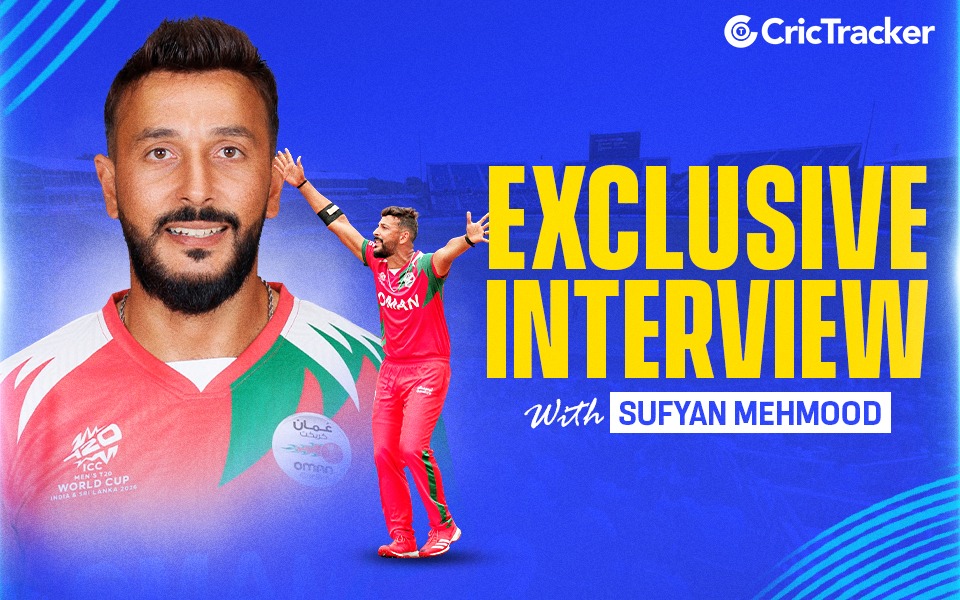
![‘I would love to be part of CSK after KKR’ - Sufyan Mehmood credits MS Dhoni as inspiration [Exclusive]](https://media.crictracker.com/media/attachments/1775820153620_interview---Sufyan-Mehmood-1-(1).jpeg)
Sufyan Mehmood, in an exclusive interaction with CricTracker, opened up about his cricketing journey, key learnings from the ICC Men’s T20 World Cup 2026, and his future aspirations in the game. During the conversation, Mehmood also shared his picks for the all-time top five pacers in T20 cricket. He further spoke about his favourite Indian Premier League (IPL) franchise he would love to be a part of.
The discussion also touched upon the possibility of a bilateral series between Oman and India. He spoke about the level of preparation required to compete against a world-class team. Mehmood also revealed that Jasprit Bumrah is his idol. He further mentioned receiving valuable advice from Indian cricketers recently, which has helped him understand the nuances of high-level cricket and improve his own game.
Excerpts from the interview:
1. Sufyan, people now want to know more about countries/players coming from associate nations. Could you please tell us where your cricket journey began, and who inspired you growing up?
Well, first of all, thank you so much for having me here. My cricketing journey actually started in school. I used to watch my brother play for his school team.
I was very passionate about cricket since childhood, but we mostly played in a park near our house with a softball or tennis ball. That’s where it all began. Then I played for my school, and from there I moved into age group cricket in Oman, starting with under 17. I then played under 19 as well and performed in both tournaments representing Oman.
After that, I got called up to the senior team in 2009 when I was just 17 years old. Since then, I have been playing cricket for Oman. As for who inspired me to take up the sport, it was my brother. I used to watch him play for his school team, and he would take me along with him. That’s where I started falling in love with the game.
2. What are your learnings from the ICC T20 World Cup 2026 campaign?
Well, from this campaign, I think we have learned a lot, especially about how to apply ourselves in pressure situations. In most of these three games, we were not very consistent with the ball, in terms of line, plans, and execution. With the bat as well, we lost too many wickets in the powerplay.
In T20 cricket, if you can click in at least two departments, you can do well and get the result. But in our case, none of the departments came together in a single game. In some matches, we bowled well in patches, and in others, we batted well in patches.
If everything had come together, it could have been a different story. So, it is more about handling pressure at this stage. I am not taking anything away from the opposition, but I would like to add that most of our players are featuring in the World Cup for the first time.
That matters a lot because playing in such a big event, where the whole world is watching, brings its own pressure, especially when you are experiencing it for the first time. I am confident the boys will come back strongly.
We saw in the Asia Cup how Aamir Kaleem performed against India. That is the kind of calibre our players have. This is just one bad tournament, and I am sure they will bounce back stronger.
3. What are your all-time top five fast bowlers in T20 Cricket?
Jasprit Bumrah, Naseem Shah, Marco Jansen, Matheesha Pathirana, Mohammed Siraj
4. If not KKR, which franchise would you love to be a part of in the IPL and why?
If not KKR, then I think it would be CSK because Chennai Super Kings. I am a fan of Chennai Super Kings because of MS Dhoni and he is a great leader. He has done a lot for India and that would be my dream team after KKR. I would like to be a part of CSK.
5. Let’s suppose India and Oman agree to a bilateral series. How would the Oman team prepare itself for India’s star-studded line-up, and how would such a series benefit Oman Cricket in the larger sense?
Basically, if we play a series against India, the preparation would, of course, be much tougher. That said, we try to treat every tournament and every team the same, so our preparation is always in full swing.
In terms of our cricket, it would help us a lot because the Indian team is very experienced and has many star players. The more we play against them, the more we learn.
Playing against strong teams and quality players helps raise your own standards as well, so it would definitely benefit us a lot.
6. Which pacer is your current idol, and have you received any advice from your idol?
I think right now it is Jasprit Bumrah. We met him during the Asia Cup. I have not taken any advice from him, but I really like how he keeps things simple. He sticks to his basics and backs his strengths.
If he is good at the yorker, he trusts it and continues to use it. He always operates within his strengths. Whatever the situation, even if things are not going his way, he believes in his skills and executes them. That is the best thing I admire about him.
7. What was the best piece of advice you received from an Indian cricketer after your game against India?
Well, after the game against India, I spoke to Abhishek Sharma. He has been to Oman before for the Emerging Asia Cup. I also had brief conversations with Hardik Pandya, Rinku Singh, and Suryakumar Yadav, and also received guidance from Gautam Gambhir.
The advice I sought from them was mainly about my batting, as I can bat as well. I asked about improving my power hitting and overall batting.
They were really helpful and explained everything in great detail. What I appreciated most was that they did not just give short answers and move on. They took the time to explain things properly, gave us confidence, and motivated us to do well. When such guidance comes from top players, it means a lot.
-

 DLSU7 months ago
Shan Nunag shows composure beyond year in La Salle debut
-

 News7 months ago
Camilla Lamina shows calm leadership even off the bench
-
Football7 months ago
2026 Uganda Cup: The confirmed fixtures, venues & kick off times at round of 32
-
Foreign Pros7 months ago
‘Eric Chelle must pay compensation to quit Super Eagles post’
-
Football7 months ago
Divine Mukasa plays full time as Leicester City bows out of FA Cup to Southampton
-
 Cricket News7 months ago
T20 World Cup 2026: 'We've got to stay positive' – Afghanistan coach Jonathan Trott remains hopeful of reaching Super 8 despite back-to-back losses
-
Others8 months ago
Sarah Babirye Kityo: The majestic return to 12th Parliament, to front sports talent development
-

 Basketball7 months ago
Meralco moves on from Ismael Romero, taps Marvin Jones for PBA Comm’s Cup