Cricket News
ICC revamps ODI and T20 World Cup formats to enhance competitiveness


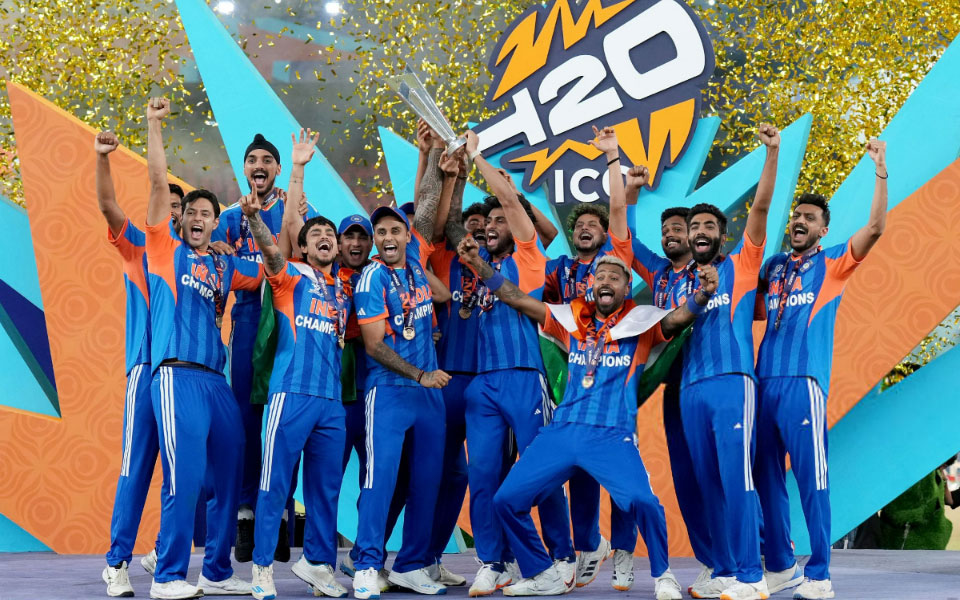
The International Cricket Council (ICC) has approved major changes to the formats of both the ICC Men’s Cricket World Cup and the ICC Men’s T20 World Cup, with the objective of increasing competitiveness, ensuring greater consequence at every stage of the tournaments, and providing enhanced opportunities for emerging cricket nations.
The revised structures are designed to create stronger competitive narratives from the opening matches through to the finals while maintaining meaningful qualification pathways for Associate Members.
ICC Cricket World Cup:
For the ICC Men’s Cricket World Cup, the tournament will continue to feature 14 participating teams but will adopt a revised four-stage competition structure. A new Super Series will be introduced before the traditional Group Stage, ensuring that matches from the outset of the tournament carry greater significance.
The competition will then progress through the Group Stage before advancing to a highly competitive Super 7 round, where the seven qualifying teams will compete in a single round-robin league. The top four teams from the Super 7 will qualify for the semi-finals, with the winners progressing to the final. The revised format has been designed to strengthen the importance of every match, ensuring that results in the opening rounds have a direct impact on qualification and progression.
| Previous Format | New Format |
| Two groups of 7 (42 matches) |
Round 1: (Teams 12, 13, 14) Round-robin ‘Super Series’ Top team progresses to Round 2 |
| Top 3 teams qualify for Super Six |
Round 2: Two groups of 6 (30 matches) Top 3 teams from each group plus the next highest placed team across both groups qualify for Super 7 |
| Suoer Six – Two groups of three (9 matches) |
Round 3: Super 7 – Round robin (21 matches) Top 4 teams from Super 7 progress to semis |
| Top two teams from each group progess to semis |
Semifinals (2 matches) 1 vs 4 & 2 vs 3) |
| Final |
Final |
ICC T20 World Cup:
The ICC has also approved changes to the ICC Men’s T20 World Cup format by expanding the second stage of the tournament from eight teams to ten teams while preserving opportunities for emerging nations to progress. Twenty teams will continue to compete in the opening stage of the tournament, with the top two teams from each group advancing to the newly expanded Super 10.
To further increase the stakes during the latter stages of the competition, a new Eliminator round will be introduced, in which the second and third-placed teams from the Super 10 groups will compete for the remaining places in the semi-finals.
| Previous Format | New Format |
|
Group Stage – 40 matches 4 groups of 5 teams each. Two teams from each group progress |
Group Stage – 30 matches 5 groups of 4 teams each. Two teams from each group progress. |
|
Super Eights – Two groups of four (12 matches) |
Super 10 – Two groups of five (20 matches) |
|
Top two teams from each group progress to semis |
Top team in each group confirms its spot in the semifinals |
| – |
Teams placed 2nd in groups play in the Eliminator against the Teams placed 3rd in the opposite group |
|
– |
Eliminators (2 matches) |
|
Semifinals (2 matches) |
Eliminators (2 matches) |
|
Final |
Final |
ICC T20 World Cup Qualifiers:
As part of the T20 World Cup pathway, the ICC will also introduce a new 16-team Global Tournament that will serve as the final qualifying competition for the ICC Men’s T20 World Cup. The event is intended to raise the standard of qualification by providing a highly competitive global platform for Associate Member nations while establishing a marquee international competition outside the World Cup itself. The tournament will offer emerging teams a clearer and more competitive route to qualification for the sport’s premier T20 event.
The qualification structure for the ICC Men’s T20 World Cup 2028 has also been revised. Scotland will enter directly into the Europe Regional Final in recognition of the exceptional circumstances surrounding its participation in the 2026 tournament. The remaining teams that competed at the 2026 T20 World Cup but did not secure automatic qualification will advance directly to the Global Qualifier.
The other eight places in the Global Qualifier will be determined through regional qualification, with two teams each qualifying from Africa, Asia and Europe, and one team each from the Americas and East Asia-Pacific. At the Global Qualifier, the highest-placed team from each region, together with the next three highest-placed teams overall, will qualify for the ICC Men’s T20 World Cup 2028, subject to the ICC’s minimum performance criteria.